🕵️ torry io dark web search engine
The internet is often compared to a vast, unfathomable ocean. Most of us spend our lives sailing on the surface, navigating the familiar waters of mainstream search engines, social media platforms, and news websites. However, beneath this visible layer lies a massive expanse of uncharted territory: the deep web and, deeper still, the dark web. For years, accessing this hidden realm required specialized software, technical know-how, and a certain degree of daring. Today, innovative tools are bridging the gap between the everyday internet (the clearnet) and these hidden networks. At the forefront of this evolution is the torry io dark web search engine.
If you are a researcher, a privacy advocate, a journalist, or simply a curious internet user, understanding how to navigate these hidden networks is becoming increasingly important. Torry.io has emerged as a powerful tool designed to demystify this process.
In this comprehensive guide, we will explore everything you need to know about this unique platform. We will dive into its core features, analyze its security protocols, compare it to its competitors, and provide a step-by-step framework for safe and effective navigation.

Understanding the Layers of the Internet
Before we can fully appreciate the utility of a specialized tool like Torry.io, it is crucial to understand the architecture of the internet itself.
The Surface Web
This is the internet you are using right now. It consists of websites that are indexed by standard search engines like Google, Bing, and Yahoo. Whenever you search for a recipe, read the daily news, or shop online, you are on the surface web. Surprisingly, this easily accessible layer accounts for less than 5% of the total internet.
The Deep Web
The deep web encompasses all the parts of the internet that standard search engines do not index. This is not necessarily a nefarious place; in fact, you use the deep web every day. It includes your online banking dashboard, your private email inbox, subscription-based academic journals, and corporate databases. You need specific credentials (like a username and password) or a direct link to access this information.
The Dark Web
The dark web is a small, deliberately hidden subset of the deep web. Websites on the dark web use encryption software to hide the identity and location of their servers. They typically use the .onion top-level domain, meaning they cannot be accessed via standard web browsers like Chrome or Safari without specialized configurations.
This is where a dedicated tor search engine comes into play. Because traditional web crawlers cannot penetrate the .onion network, users require platforms specifically engineered to map this encrypted landscape.
What is Torry.io?
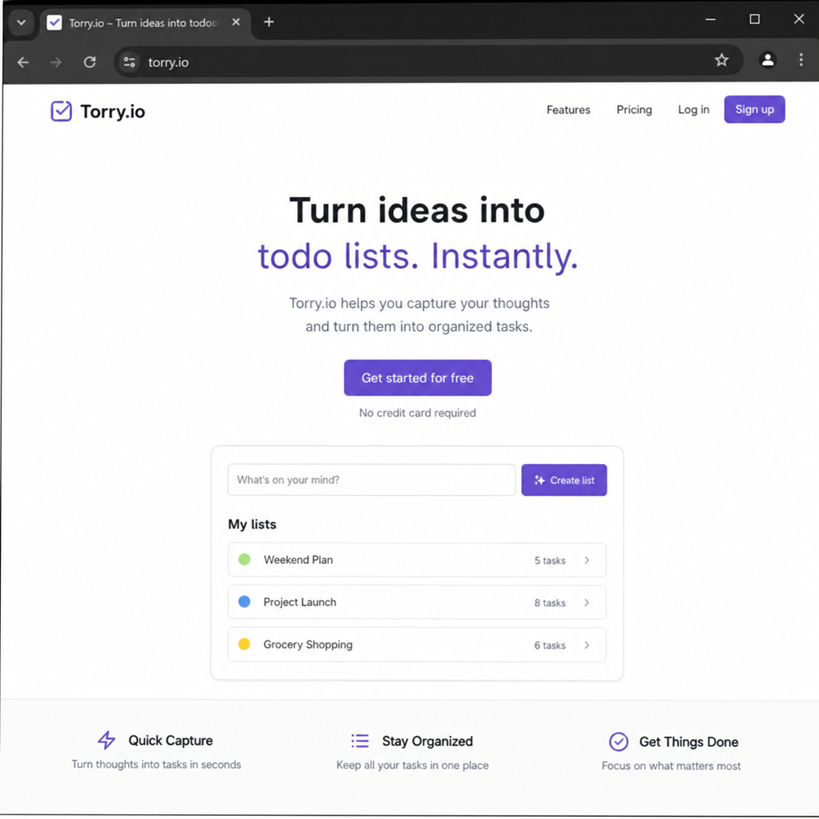
Torry.io is a specialized, privacy-focused search engine built to bridge the gap between the standard internet and the dark web. It operates as a highly efficient private search engine for onion links, allowing users to discover content that is otherwise invisible to standard search algorithms.
Unlike traditional search engines that rely on tracking cookies and invasive data collection to personalize search results, Torry.io is built on a foundation of absolute privacy. It is designed to act as a hidden services indexing platform, meaning it systematically scans, categorizes, and indexes .onion websites, making them searchable through a clean, user-friendly interface.
What makes Torry.io particularly fascinating is its dual nature. It exists both as a standard .com or .io website on the clearnet and as a hidden service on the Tor network. This duality provides unparalleled flexibility for users depending on their specific security needs and technical expertise.
Breaking the Barrier: Accessing the Dark Web on the Clearnet
Historically, the only way to access .onion links was by downloading and installing the Tor Browser—a modified version of Mozilla Firefox designed to route your traffic through the encrypted Tor network. While the Tor Browser remains the gold standard for absolute anonymity, it can be slow and sometimes intimidating for novice users.
This brings us to one of the most innovative aspects of this platform: how to use torry io without tor browser.
Through advanced routing technologies, Torry.io allows for browsing onion sites on regular browsers. It achieves this by acting as a Tor2Web proxy.
How the Tor Proxy Feature Works
When you type a search query into Torry.io using a standard browser like Google Chrome or Mozilla Firefox, the engine processes your request and fetches results from the dark web. If you click on an .onion link provided in the search results, Torry.io utilizes its tor proxy search engine features to resolve the link on your behalf.
- The Request: You click a dark web link on your standard browser.
- The Proxy: Torry.io’s servers communicate with the Tor network, fetching the data from the hidden .onion server.
- The Delivery: Torry.io delivers that data back to your standard browser over the clearnet.
This creates a seamless experience, allowing anonymous access to dark web content without requiring the user to install specialized software or configure complex network settings.
Note of Caution: While this feature is incredibly convenient, using a proxy on a regular browser does not provide the same level of endpoint encryption as using the native Tor Browser. We will discuss this further in the security section.
Core Mechanics: How Torry.io Indexes the Unseen
Have you ever wondered how a search engine finds websites that are explicitly designed to be hidden? It all comes down to sophisticated software engineering.
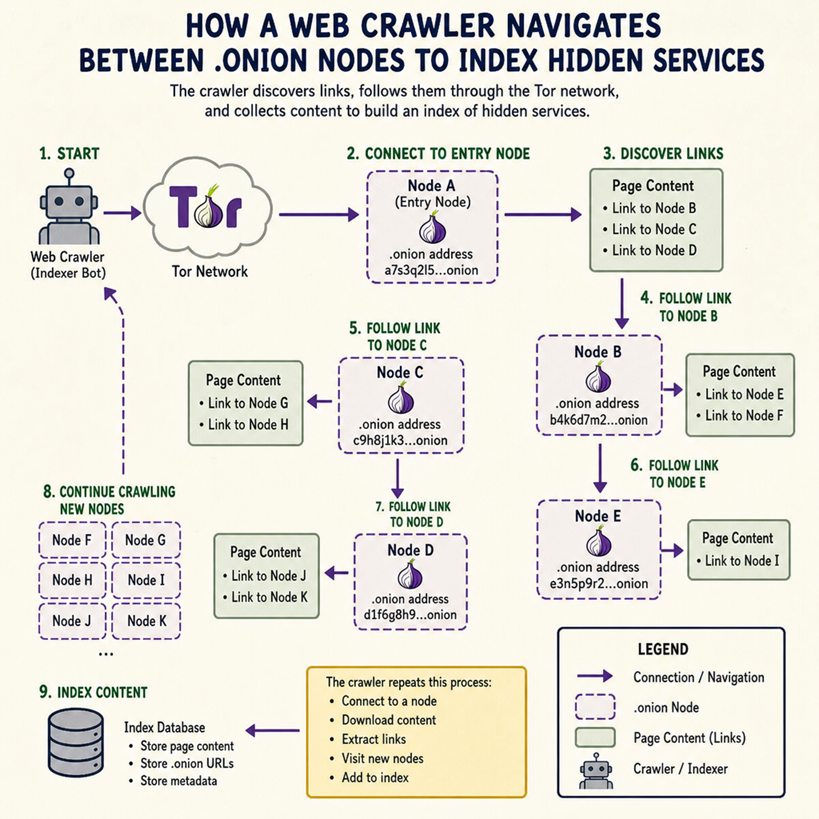
To provide accurate and relevant search results, Torry.io relies on advanced onion link crawler functionality. A web crawler (or spider) is an internet bot that systematically browses the World Wide Web, typically for the purpose of web indexing.
Crawling the Darknet
Crawling the dark web is fundamentally different—and far more difficult—than crawling the surface web. .onion sites are notorious for poor uptime; they frequently go offline, change their addresses, or restrict access. Furthermore, there are no central registries or massive interconnected link directories like those found on the clearnet.
Torry.io overcomes these hurdles by deploying resilient crawlers that are specifically optimized for the Tor network's latency. These bots crawl from one known .onion node to another, cataloging text, metadata, and site structures.
Directory Indexing
Beyond simple crawling, Torry.io excels at indexing hidden service directories. When the crawler discovers a repository of links (such as a dark web forum or a wiki), it parses through the directory, verifying the live status of the linked sites before adding them to its own search index. This ensures that users are presented with active, relevant links rather than the frustrating "Server Not Found" errors that plague older dark web search engines.
Privacy First: Is Torry.io Safe for Browsing?
When venturing into the deep and dark web, security is not just a feature; it is an absolute necessity. Users frequently ask: is torry.io safe for browsing?
The short answer is yes, Torry.io is safe, provided you understand the tool's parameters and maintain standard digital hygiene. However, a more detailed look at its privacy policies is required to fully understand its safety profile.
The No-Log Philosophy
One of the most pressing concerns for privacy advocates is data retention. Users rightly ask, does torry io track user data?
Torry.io is explicitly designed to support anonymous browsing. According to its operational philosophy, the search engine operates on a strict no-logs policy. This means:
- No IP Logging: The engine does not record your IP address when you submit a search query.
- No Search History: Your search terms are not tied to a user profile, nor are they sold to third-party advertisers.
- No Tracking Cookies: The platform actively rejects the use of persistent tracking scripts that follow you across the web.
By eliminating these common data-harvesting practices, Torry.io provides enhanced privacy for deep web searches, making it an excellent alternative even for surface web searches if you are looking to escape the targeted advertising ecosystem of Big Tech.
Security Caveats: Proxy vs. Native Tor
While Torry.io itself is safe and respects your privacy, it is vital to understand the difference in security when using its proxy feature versus using it within the Tor Browser.
If you are using Torry.io on Google Chrome to browse .onion sites, your ISP (Internet Service Provider) can see that you are visiting Torry.io, even if they cannot see the specific contents of the encrypted dark web page you are viewing. Furthermore, a regular browser is highly susceptible to fingerprinting (identifying your device based on screen resolution, installed fonts, and OS version).
For true, uncompromised safety, experts recommend using Torry.io inside the Tor Browser. By doing this, you combine the engine's vast index with the cryptographic routing of the Tor network, ensuring complete anonymity.
The Competitive Landscape: Torry.io vs. The Rest
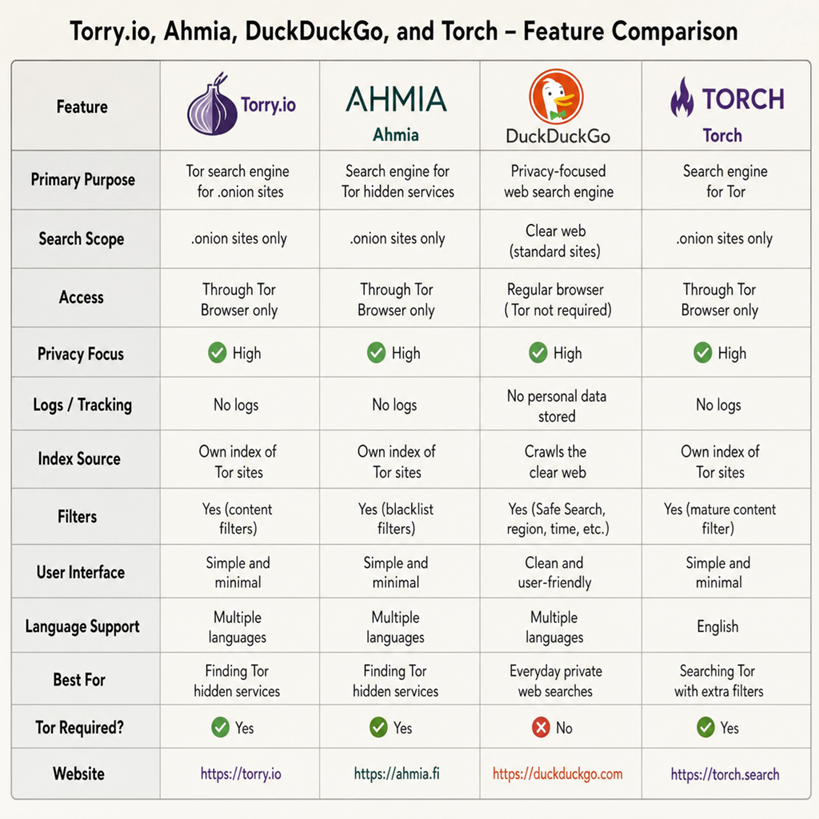
To understand where Torry.io stands, we must look at the broader ecosystem of the best dark web search engines 2024. The dark web search market is niche, but it is highly competitive. Let's compare Torry.io to some of its most notable peers.
Torry.io vs Ahmia Search
Ahmia.fi is perhaps the most well-known dark web search engine. Like Torry.io, Ahmia filters out explicit and illegal content, focusing on providing a safe search experience.
When analyzing torry io vs ahmia search, several distinctions emerge:
- User Interface: Torry.io offers a slightly more modern, streamlined interface that feels very familiar to clearnet users, whereas Ahmia maintains a very utilitarian, bare-bones aesthetic.
- Proxy Availability: Torry.io places a heavy emphasis on its Tor2Web proxy capabilities, allowing seamless clearnet-to-darknet browsing. Ahmia is primarily intended to be used directly via its .onion address within the Tor Browser.
- Result Filtering: Both engines do an excellent job of removing abusive material from their indexes. However, users often report that Torry.io's natural language processing provides slightly more relevant results for complex, multi-word queries.
Torry.io vs. DuckDuckGo (Onion Version)
DuckDuckGo is the default search engine on the Tor Browser. However, it is essential to understand that DuckDuckGo primarily searches the clearnet with absolute privacy. It does not actively crawl and index .onion sites. Therefore, if you are specifically looking for hidden services, Torry.io is far superior as a dedicated darknet indexer.
Torry.io vs. Torch
Torch is one of the oldest dark web search engines. While it boasts an enormous database of indexed pages, it is notorious for displaying unvetted, uncensored results and relying heavily on intrusive banner ads (often for illicit services). Torry.io is vastly superior for users who want a clean, ad-free, and ethically filtered search experience.
A Beginner’s Guide: Navigating the Darknet Safely
If you are new to the hidden web, the sheer volume of unknown variables can be intimidating. Fortunately, Torry.io serves as one of the premier darknet navigation tools for beginners.
Here is a step-by-step, actionable guide for accessing restricted deep web information safely using Torry.io.
Step 1: Establish Your Threat Model
Before you begin, ask yourself why you are accessing the dark web. Are you a researcher looking for academic data? A journalist communicating with a whistleblower? Or just a curious user?
- For casual curiosity: Using Torry.io via its clearnet proxy on a standard browser is usually sufficient, though a VPN is recommended.
- For sensitive research: You must use the Tor Browser.
Step 2: Use a Virtual Private Network (VPN)
Even if you are using Torry.io's proxy feature, it is highly recommended to activate a reputable, no-logs VPN (such as NordVPN, ExpressVPN, or ProtonVPN). A VPN encrypts your traffic before it even reaches your ISP. This ensures that your ISP cannot see that you are communicating with a dark web proxy portal.
Step 3: Accessing Torry.io
You can access the platform in two ways:
- Clearnet: Simply type the Torry.io URL into your standard web browser.
- Darknet: Open the Tor Browser and navigate to Torry.io's official .onion address (ensure you verify the address from a trusted source, as phishing links are common on the dark web).
Step 4: Mastering the Search Query
Because the dark web is not optimized with traditional SEO (Search Engine Optimization) techniques, you cannot always rely on vague keywords. Be specific.
- Instead of: "Free books"
- Try: "Open source DRM-free epub library index" Use quotation marks for exact phrasing, just as you would on a traditional search engine.
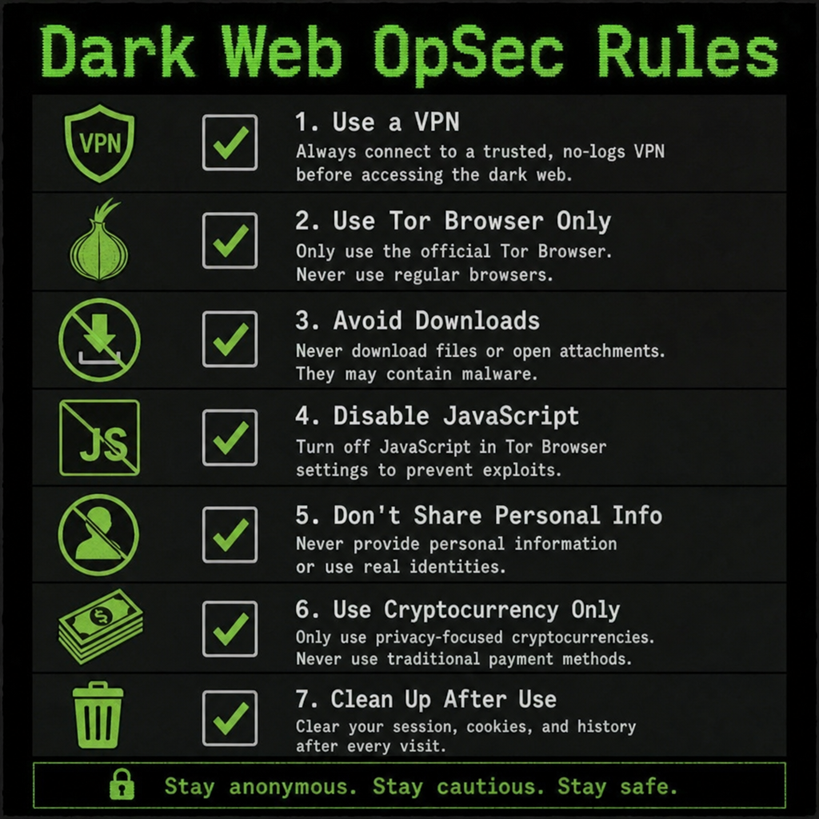
Step 5: Practicing Operational Security (OpSec)
When browsing .onion sites discovered via Torry.io, strictly adhere to these rules:
- Never use your real name or standard email address. Create an encrypted protonmail or similar temporary alias.
- Do not download files. Downloading a seemingly innocent PDF from a dark web server can expose your real IP address or infect your device with malware. If you must download documents for research, do so in an isolated Virtual Machine (VM).
- Disable JavaScript. If you are using the Tor Browser, set your security level to "Safest" to disable JavaScript, which is frequently used by malicious actors to exploit browser vulnerabilities.
Real-World Applications: Why Use Torry.io?
The dark web often suffers from a severe image problem, largely due to sensationalized media coverage focusing exclusively on illegal marketplaces and cybercrime. While those elements do exist, the technology underpinning the Tor network was initially created by the U.S. Naval Research Laboratory to protect government communications.
Today, tools like the torry io dark web search engine serve vital, legitimate purposes across the globe.
1. Championing Free Speech and Bypassing Censorship
In countries operating under oppressive regimes, the surface web is heavily monitored and censored. Citizens are routinely blocked from accessing global news, social media, and educational resources. Torry.io allows users in these regions to anonymously discover mirror sites (like the .onion versions of the BBC or ProPublica) to access uncensored information and report human rights abuses without fear of government retribution.
2. Whistleblowing and Journalism
Investigative journalists rely heavily on the anonymity of the dark web. SecureDrop, an open-source whistleblower submission system, operates exclusively on .onion networks. Journalists use search engines like Torry.io to locate secure communication nodes, while whistleblowers use them to find safe havens to upload classified documents exposing corporate fraud or government corruption.
3. Academic and Cybersecurity Research
Cybersecurity professionals use Torry.io to monitor the dark web for stolen corporate data, compromised passwords, and emerging malware threats. By indexing dark web forums, Torry.io allows threat intelligence analysts to stay one step ahead of cybercriminals, patching vulnerabilities before they can be widely exploited.
4. Bypassing Paywalls and Accessing Open-Source Data
The deep and dark web hosts massive repositories of public domain literature, open-source software, and academic papers that are otherwise locked behind exorbitant paywalls on the clearnet. Torry.io acts as a librarian, categorizing these vast archives for students and researchers.
Technical Deep Dive: The Challenges of Dark Web Indexing
To truly appreciate the value of Torry.io, it is worth exploring the technical friction inherent in the dark web. Why is it so hard to build a good tor search engine?
The Ephemeral Nature of Onion Services
On the surface web, domain names (like Google.com) are leased for years and mapped to static, reliable server IP addresses via the DNS (Domain Name System).
In contrast, .onion addresses are automatically generated cryptographic hashes (e.g., expyuz5tatcgrv5y.onion). These hidden services are often hosted on personal computers rather than massive, dedicated server farms. If the host turns off their computer, the website goes dark. This results in an incredibly high churn rate. A search engine index that is accurate on Monday might be 40% broken by Friday.
Torry.io mitigates this through aggressive recrawling schedules. Its algorithms prioritize checking the "heartbeat" of previously indexed sites. If a site fails to respond after a certain number of attempts, it is temporarily hidden from the search results, ensuring a cleaner user experience.
Fighting Spam and Malicious Content
Because there is no central authority governing the dark web, spam and phishing are rampant. Cybercriminals frequently clone popular .onion sites, changing one character in the URL to trick users into entering credentials.
Torry.io employs intelligent filtering mechanisms to combat this. By analyzing the inbound and outbound links of a hidden service, the engine can determine the authority and legitimacy of a site, pushing verified platforms higher in the search rankings and burying unverified or malicious clones.
The Future of Deep Web Search
As we look toward the future, the landscape of the dark web is shifting. In 2021, the Tor Project completely deprecated V2 onion addresses in favor of V3 addresses. V3 addresses are significantly longer (56 characters) and feature enhanced cryptography, making them completely immune to traditional directory enumeration attacks.
While this upgrade massively improved security, it made discovering sites organically nearly impossible for human users. You simply cannot memorize a 56-character string of random letters and numbers.
This architectural shift has cemented the necessity of robust search engines. Looking ahead at the best dark web search engines 2024 and beyond, we can expect Torry.io to integrate even more advanced technologies.
AI and Machine Learning Integration
Future iterations of dark web crawlers will likely utilize advanced Natural Language Processing (NLP) to better categorize the unstructured data found on darknet forums. By understanding the context of discussions rather than just keyword matching, Torry.io could provide incredibly precise results for researchers looking for specific threat intelligence.
Decentralized Indexing
We may also see a shift toward decentralized search indexes, where the computing power required to crawl the Tor network is distributed among volunteers, similar to how the Tor network itself operates. This would make the search engine virtually immune to takedowns and censorship.
Frequently Asked Questions (FAQ)
To wrap up our comprehensive guide, let's address some of the most common questions users have regarding this platform.
- 1. Is it illegal to use Torry.io? No. Accessing the dark web, using the Tor network, and utilizing search engines like Torry.io is perfectly legal in most democratic countries. The legality depends entirely on what you do once you get there. Buying illicit goods is illegal; reading uncensored news or browsing forums is not.
- 2. Can I get a virus just from searching on Torry.io? Merely submitting a search query on Torry.io is safe and will not infect your computer. However, clicking on links in the search results will take you to third-party websites. If you download files from these unknown sites or run malicious scripts, you risk infection. Always practice the OpSec guidelines detailed earlier.
- 3. Why are the search results sometimes slow? If you are using Torry.io via the Tor Browser, your connection is being bounced through three randomly selected relays across the globe to encrypt your identity. This cryptographic routing inherently causes latency. The slowdown is a byproduct of the Tor network, not necessarily the search engine itself.
- 4. How does Torry.io make money? Unlike surface web giants that monetize user data, privacy-focused engines usually rely on user donations, non-intrusive and non-targeted sponsorships, or grants from privacy advocacy groups.
Conclusion
Navigating the hidden layers of the internet no longer requires a degree in computer science. The torry io dark web search engine represents a significant leap forward in web accessibility and digital privacy.
By offering a seamless, intuitive interface, unparalleled onion link crawler functionality, and the unique ability to act as a bridge for clearnet browsers, it empowers journalists, researchers, and everyday users to explore the dark web safely. Whether you are using it to bypass regional censorship, protect your search history from corporate data brokers, or dive deep into hidden service directories, Torry.io stands out as one of the premier tools of 2024.
Remember, while tools can provide the avenue, ultimate security rests in your hands. Combine the power of Torry.io with strict operational security, a reliable VPN, and a healthy dose of common sense, and the vast, uncharted depths of the internet are yours to explore safely.