Essential Tips for Cryptocurrency Safety
Cryptocurrency is transforming the financial landscape. It offers exciting opportunities for investors worldwide. However, with these opportunities come significant risks. Understanding Cryptocurrency Safety is crucial. The irreversible nature of blockchain transactions makes security paramount. Once a transaction is made, it cannot be undone. Crypto wallet security is a key component of safeguarding your digital assets. Protecting your private keys and recovery phrases is essential. These are the keys to your crypto kingdom.
Effective risk management helps reduce the chances of financial loss by combining secure storage, careful planning, and ongoing awareness of emerging threats.
In this guide, we will explore essential tips for Cryptocurrency Safety. Whether you're a beginner or an experienced investor, these strategies will help you secure your assets.
Quick Cryptocurrency Safety Checklist
- Use a hardware wallet.
- Enable two-factor authentication.
- Never share your recovery phrase.
- Verify wallet addresses before sending funds.
- Keep software updated.
- Beware of phishing websites.
Why Crypto Security Matters
Cryptocurrencies have become a valuable part of the financial ecosystem. Their growing popularity attracts not only investors but also cybercriminals. These threats highlight the importance of robust security measures. Safety is vital because blockchain transactions are irreversible. Mistakes or breaches can lead to significant financial losses. Protecting your cryptocurrency requires vigilance and awareness of potential dangers.
Several reasons underscore the importance of digital asset protection:
- Irreversible nature of transactions
- Prevalence of cyber threats and scams
- High market value attracting malicious actors
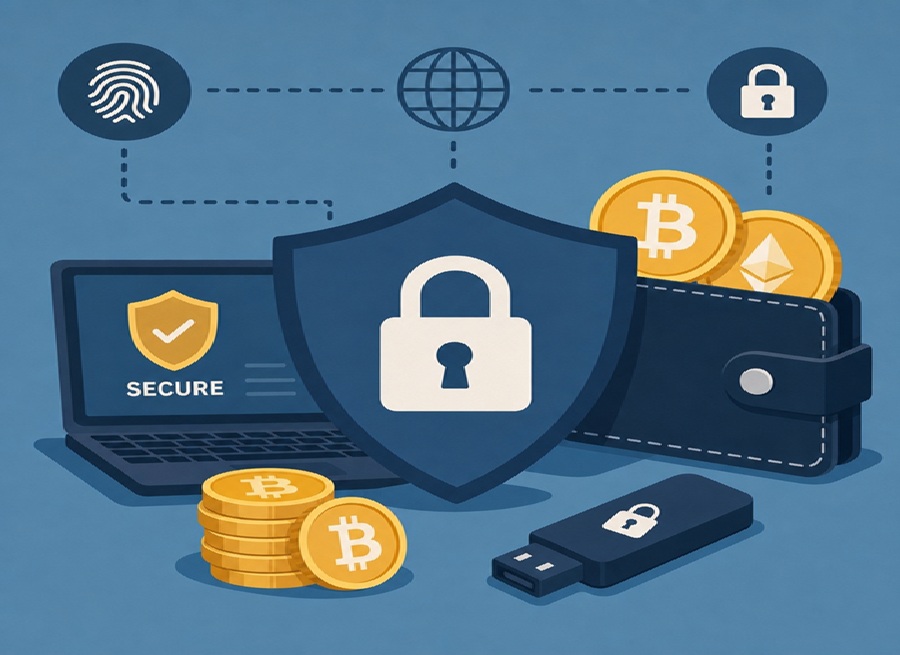
Moreover, the decentralized nature of cryptocurrencies adds a layer of complexity. There is no central authority to assist in case of loss or theft. This makes personal security measures even more critical.
Investors must act proactively to defend their holdings. Knowledge and precautionary strategies are indispensable for anyone involved in the crypto market. Understanding and mitigating risks are essential steps for safeguarding your digital assets.
Protecting your cryptocurrency also means understanding how the internet works and where different online services operate. Building this knowledge can strengthen your overall approach to digital asset protection. Learn more about the differences between the surface web, deep web, and dark web.
Understanding Cryptocurrency Risks
Cryptocurrency investments involve a unique set of risks. Unlike traditional assets, digital currencies have different vulnerabilities. Understanding these can help protect your investments from potential threats.
The volatile nature of cryptocurrency markets is one such risk. Prices can fluctuate wildly, sometimes within hours. This volatility presents both opportunities and dangers for investors.
In addition to market risks, technical risks pose significant challenges. Breaches in wallet or exchange security are common concerns. Understanding the technical landscape is crucial for effective risk management.
Regulatory risks also impact the cryptocurrency market. Governments worldwide are still shaping crypto regulations. Changes in legal frameworks can influence market conditions and investment strategies.
Key cryptocurrency risks include:
- Market volatility and sudden price changes
- Technical issues and security breaches
- Regulatory changes and compliance challenges
Recognizing these risks is the first step in creating a robust protection strategy. Investors need to stay informed and adapt to this evolving environment.
Crypto Wallet Security: Best Practices
Ensuring the security of your crypto wallet is crucial. It's the first line of defense against potential breaches. Implementing best practices can significantly reduce risks.
Hardware wallets offer enhanced protection compared to software wallets. These physical devices store private keys offline, minimizing exposure. They are less susceptible to hacking attacks.
Always enable two-factor authentication (2FA) on your wallet accounts. This adds an extra layer of security. Even if someone gains access to your password, they can't access your funds without your 2FA device.
Use strong, unique passwords for all your crypto-related accounts. Avoid using obvious information like birthdays. Regularly updating your passwords adds another security layer.
Keep your software updated. Wallet providers frequently release updates to patch vulnerabilities. Regular updates ensure you're protected against new threats.
Key wallet security practices include:
- Utilizing hardware wallets for offline storage
- Enabling two-factor authentication on accounts
- Maintaining strong, unique passwords
- Regularly updating software and firmware
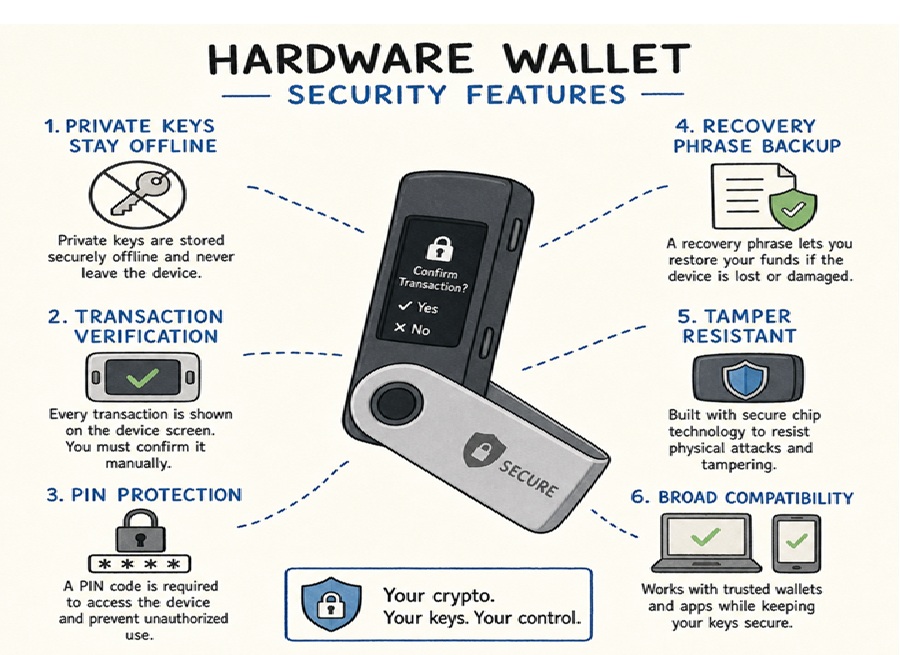
By following these best practices, you can safeguard your cryptocurrencies. Remember, proactive steps today can prevent potential losses tomorrow. Stay vigilant and prioritize security at every stage.
Strengthen your digital security by exploring these Crypto Wallet Security best practices, including operational security (OpSec), wallet protection, and safe cryptocurrency management.
Protecting Your Private Keys and Recovery Phrases
Private keys and recovery phrases are crucial for accessing your cryptocurrency. Losing them means losing access to your funds. Therefore, safeguarding these elements is essential. Never share your private keys or recovery phrases with anyone. Sharing this information can lead to unauthorized access. Always keep them confidential and protected from prying eyes.
Store your recovery phrases in a secure location. Consider using a fireproof and waterproof safe. Physical backups prevent loss from online threats like hacks or malware. When creating backups, ensure you make multiple copies. Store these copies in different secure locations to prevent complete loss. Redundancy is key to protecting your digital assets.
Important practices for protecting private keys and recovery phrases include:
- Never sharing them with others
- Using secure, physical storage options
- Creating multiple backup copies
- Keeping physical backups in secure, diverse locations
Prioritizing the safety of your private keys and recovery phrases helps preserve your access. This simple practice is a cornerstone of cryptocurrency safety.
Two-Factor Authentication and Strong Passwords
Two-factor authentication (2FA) is a powerful tool for securing your crypto accounts. It adds an extra layer of protection beyond your password. This makes it harder for unauthorized users to gain access. Implementing strong and unique passwords across all crypto accounts is vital. Avoid using the same password for multiple accounts. A strong password combines letters, numbers, and special symbols.
Consider using a password manager to store your passwords securely. This reduces the risk of losing them or using weak passwords. Regularly updating passwords enhances security and counters potential breaches.
To boost security:
- Enable two-factor authentication on all accounts
- Use unique, complex passwords for each account
- Utilize a reliable password manager
- Regularly change passwords to mitigate risks
Combining 2FA and strong passwords is crucial for crypto wallet security. These practices offer a robust defense against unauthorized access.
Strong password security and multi-factor authentication are essential for protecting your accounts. It's also important to understand how AI is being used in cybersecurity and online scams. Learn more about how dark web AI can present security and privacy risks.
Avoiding Scams, Phishing, and Social Engineering
The crypto world is rife with scams targeting unsuspecting users. Many scams seek to trick you into revealing sensitive information. Being vigilant and knowledgeable is your best defense. Phishing attacks often mimic legitimate sites or services. Always verify URLs before entering any details. Look for secure connections indicated by "https://" in the web address.
Social engineering preys on human psychology to gain trust. Attackers may pose as friends, support agents, or credible figures. Never share private keys, passwords, or recovery phrases with anyone.
To avoid falling victim to these scams:
- Verify website URLs carefully
- Beware of unsolicited messages asking for information
- Avoid clicking on unfamiliar links or attachments
- Keep your guard up against social engineering tactics
Staying alert is essential as scams evolve. Continuous education and skepticism can help you protect your assets. Strengthen your defenses by adopting these practices today.
Reduce your exposure to phishing, scams, and social engineering by using a privacy-focused search engine and browser. Learn more about the features and privacy benefits of the DuckDuckGo Browser.
Safe Internet Practices for Crypto Users
Maintaining a secure internet connection is crucial for cryptocurrency transactions. Avoid using public Wi-Fi when accessing your crypto accounts. Public networks can be easily compromised, posing a significant security risk. Using a VPN enhances your online privacy. It encrypts your internet connection, protecting your data from prying eyes. A VPN is a smart choice when connecting to potentially unsafe networks.
Here are some internet safety tips:
- Use a secure, private network for transactions
- Regularly update your browser and security software
- Avoid storing sensitive data on cloud services
- Be wary of suspicious pop-ups or downloads
Adopting these practices can help safeguard your digital assets. Always prioritize securing your internet connection when dealing with cryptocurrencies. Your vigilance is a key component of crypto safety practices.
Improve your online security by following proven internet safety practices, including using a reputable VPN, a secure browser, and other privacy-focused tools to better protect your data.
Choosing Secure Exchanges and Platforms
Selecting the right cryptocurrency exchange is vital for safe trading. Not all platforms offer the same level of security. Research and select exchanges with a robust security track record. Verify that the exchange uses advanced security measures. Features like cold storage, encrypted communications, and two-factor authentication (2FA) are essential. These elements add layers of protection for your assets.
Consider these factors when choosing an exchange:
- Reputation and security history
- User reviews and experiences
- Security features like 2FA and cold storage
- Customer support and responsiveness
Using a secure platform minimizes the risk of hacks and losses. Remember, the safety of your investments begins with the platforms you choose. Always remain vigilant and informed.
Cryptocurrency Risk Management Strategies
Effectively managing risks is critical in the volatile crypto market. Cryptocurrency investments can be unpredictable, necessitating a robust risk management plan. Diversification is a fundamental strategy to consider. Spreading investments across different cryptocurrencies reduces exposure to any single asset. This lowers the risk of large losses. Stay informed about market trends and potential impacts on your portfolio.
Implement regular reviews of your investments. Adjust as necessary based on market changes and personal goals. It’s important to remain flexible and adapt to shifting conditions.
Consider these risk management strategies:
- Diversify your investments
- Stay updated with market trends
- Review and adjust your portfolio regularly
- Set stop-loss orders to limit potential losses
Planning and strategic thinking are your best defenses against market unpredictability. Always approach the market with a clear strategy and risk management mindset. These practices help safeguard your investments over time.
Cryptocurrency Security Comparison Table
| Security Practice | Protection Level | Best For | Ease of Use |
|---|---|---|---|
| Hardware Wallet | ★★★★★ Very High | Long-term storage and large cryptocurrency holdings | Moderate |
| Software Wallet | ★★★☆☆ Medium | Everyday transactions and smaller balances | Easy |
| Cold Storage | ★★★★★ Very High | Offline storage of private keys | Moderate |
| Two-Factor Authentication (2FA) | ★★★★☆ High | Protecting exchange and wallet accounts | Easy |
| Strong, Unique Passwords | ★★★★☆ High | Preventing unauthorized account access | Easy |
| Password Manager | ★★★★☆ High | Managing multiple secure passwords | Easy |
| VPN | ★★★☆☆ Medium | Improving privacy on public networks | Easy |
| Keeping Software Updated | ★★★★☆ High | Reducing exposure to known security vulnerabilities | Easy |
| Recovery Phrase Backup | ★★★★★ Critical | Recovering wallet access after device loss or failure | Easy |
| Storing Funds on an Exchange | ★★☆☆☆ Lower | Short-term trading only | Very Easy |
Key takeaway: The strongest cryptocurrency security strategy combines multiple layers of protection, including a hardware wallet, secure offline backups of recovery phrases, two-factor authentication, strong passwords, and regular software updates. No single security measure can eliminate every risk.
Staying Informed and Adapting to New Threats
Remaining current with the latest security threats is essential for crypto safety. The landscape of cryptocurrency is rapidly evolving, with new risks emerging regularly. Staying informed helps you make timely and effective decisions. Adapting to these changes requires continuous learning and vigilance. Regularly update your security practices to match the latest threats. Knowledge is your best defense against unforeseen challenges.
Consider these actions to stay informed:
- Follow reputable crypto news sources
- Participate in online forums and communities
- Attend webinars and conferences to learn from experts
By staying informed, you can better anticipate and adapt to potential dangers. Proactive learning aids in maintaining robust cryptocurrency security.
Frequently Asked Questions (FAQ)
What is cryptocurrency safety?
Cryptocurrency safety refers to the practices used to protect digital assets, wallets, private keys, and personal information from theft, scams, hacking, and accidental loss. Good security habits greatly reduce the risk of losing access to your funds.
What is the safest way to store cryptocurrency?
For long-term storage, a hardware wallet is generally considered one of the safest options because it keeps private keys offline. Regardless of the wallet you use, always back up your recovery phrase and store it securely in an offline location.
Should I use a hardware wallet or a software wallet?
Hardware wallets provide stronger protection for larger or long-term holdings, while software wallets are more convenient for everyday transactions. Many users choose both—keeping most funds in cold storage and a smaller amount in a software wallet for regular use.
Why are private keys and recovery phrases so important?
Your private keys and recovery phrase control access to your cryptocurrency. Anyone who obtains them can potentially access your funds. Never share this information and always keep secure offline backups.
Can cryptocurrency transactions be reversed?
In most blockchain networks, confirmed cryptocurrency transactions are irreversible. Always verify the recipient's wallet address and transaction details before sending funds.
Is two-factor authentication (2FA) enough to protect my account?
Two-factor authentication significantly improves account security, but it should be combined with strong passwords, secure devices, updated software, and careful protection of your recovery phrase for the best overall security.
How can I recognize cryptocurrency scams?
Be cautious of guaranteed investment returns, fake giveaways, phishing websites, impersonation attempts, and unsolicited messages requesting your wallet credentials or recovery phrase. Always verify website addresses and official communication channels before taking action.
Should I keep my cryptocurrency on an exchange?
Exchanges can be convenient for trading, but they should not be considered long-term storage for significant holdings. Many investors transfer their cryptocurrency to a wallet where they control the private keys after completing trades.
How often should I update my wallet and security software?
Install security updates as soon as they become available. Updates frequently contain important fixes for newly discovered vulnerabilities and help protect your devices from emerging threats.
What is the biggest mistake new cryptocurrency users make?
Common mistakes include sharing recovery phrases, using weak passwords, falling for phishing scams, storing all funds on exchanges, and failing to back up wallet credentials. Following basic security practices can prevent many of these avoidable risks.
Conclusion: Building Strong Cryptocurrency Security Habits
Cryptocurrency offers greater control over your finances, but that control also comes with greater responsibility. Unlike traditional banking systems, there is often no way to reverse a transaction or recover lost funds if your wallet is compromised or your recovery phrase is exposed. Developing strong security habits is one of the most effective ways to protect your digital assets.
A well-rounded security strategy includes using trusted wallets, enabling two-factor authentication, creating strong and unique passwords, keeping devices and software updated, securely backing up recovery phrases, and remaining alert to phishing attacks and other online scams. No single tool can guarantee complete protection, but combining multiple security practices significantly reduces your overall risk.
Cryptocurrency security is an ongoing process rather than a one-time setup. Regularly review your wallet backups, verify account security settings, monitor for suspicious activity, and stay informed about emerging threats and best practices. Small, consistent improvements can make a significant difference over time.
Whether you're purchasing your first cryptocurrency or managing a diversified portfolio, taking a proactive approach to security helps protect both your investments and your privacy. Building good habits today can help you navigate the evolving cryptocurrency ecosystem with greater confidence.
To continue strengthening your digital security, explore our related guides on Cryptocurrency OPSEC, PGP Encryption Basics, and Privacy Protection Apps.