Dark Web Vendor Reviews: Why Ratings Aren’t Proof of Product Quality or Authenticity
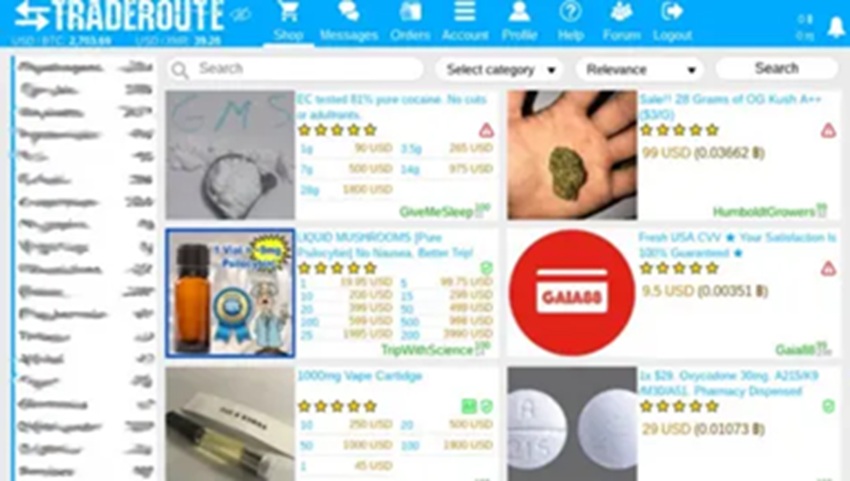
Searching for a product often starts with a simple question: Which listing or seller should I trust?
On conventional shopping platforms, consumers commonly turn to product reviews, ratings, photographs, seller feedback, and customer comments to answer it.
Underground marketplaces use many of the same trust signals.
A listing may display a large review count, a high rating, positive comments, claims of long-term seller activity, or other reputation indicators.
To someone searching for a specific product, those signals can look persuasive.
But there is an important distinction: a marketplace rating measures reputation within that system; it does not independently verify the product.
That distinction is especially important when the product's authenticity, composition, provenance, storage conditions, or manufacturing history cannot easily be established.
What Are Dark Web Vendor Reviews?
Dark web vendor reviews are feedback entries, ratings, or comments associated with sellers operating on underground marketplaces or related services.
Depending on the marketplace, reputation information can include:
- star or numerical ratings;
- review counts;
- customer comments;
- vendor feedback histories;
- seller badges or status indicators;
- claims about successful transactions;
- vendor longevity; and
- guarantee or dispute-resolution claims.
These systems are designed to reduce uncertainty.
The problem for researchers is determining how much uncertainty they actually remove.
Why Product Searchers Pay Attention to Ratings
Product searches are inherently comparative.
When multiple listings appear to offer similar products, users naturally look for differentiating signals.
Reviews can make a listing appear established.
A high rating can make it appear popular.
A large number of reviews can make the seller appear experienced.
Together, these signals can create a strong impression of credibility.
Yet none of them necessarily answers the central product question: Is the item actually what the listing claims it is?
Rating Is Not Product Verification
A rating generally reflects how users evaluate an experience.
Product verification asks a different set of questions.
| Marketplace signal | What it may indicate | What it does not establish |
|---|---|---|
| High vendor rating | Positive marketplace reputation | Product authenticity |
| Large review count | High visible feedback volume | Independent product testing |
| Positive customer comments | Reported customer experience | Composition or provenance |
| Long vendor history | Account or marketplace longevity | Quality of every product sold |
| Seller guarantee | Promised transaction protection | Independent verification of the item |
Can Dark Web Product Reviews Be Fake?
Reviews can potentially be manipulated in many online environments, including underground marketplaces.
Potential forms of manipulation include:
- fabricated reviews;
- coordinated feedback;
- copied review language;
- selective presentation of positive experiences;
- artificially inflated ratings;
- duplicate or recycled content; and
- reviews that make claims without independently verifiable evidence.
However, researchers should be careful with the word “fake.”
A suspicious pattern can justify further investigation without proving who created it or why.
Torzle's research on underground trade manipulation examines how fake reviews, ratings, and reputation signals can distort perceptions of marketplace trust.
Review Volume Does Not Equal Evidence Volume
One of the easiest mistakes to make when evaluating vendor reviews is to equate quantity with reliability.
A listing with 500 reviews may appear more credible than a listing with 20.
But the 500 reviews may not represent 500 independent observations.
They could contain repeated language, duplicated experiences, narrow customer perspectives, or information copied from a common source.
Researchers should therefore ask: How independent are these reviews?
What Makes a Review Useful as Research Evidence?
A review becomes more informative when researchers can establish context around it.
Useful questions include:
- When was the review posted?
- Does its language appear original?
- Does it discuss the actual product?
- Are similar reviews present elsewhere?
- Does the reviewer appear consistently across the marketplace?
- Are negative reviews visible as well as positive ones?
- Can important claims be independently corroborated?
This approach treats reviews as research material rather than unquestioned product recommendations.
Fake Reviews vs. Misleading Reviews
Not every problematic review is necessarily fabricated.
A review can be genuine while still providing weak evidence about product quality.
For example, a customer might report that a product “looked authentic.”
That is a statement about the customer's perception.
It is not necessarily evidence of manufacturing origin or authenticity.
Similarly, a customer may report that a product “worked as expected” without knowing its actual composition.
Researchers should distinguish:
- fabricated evidence;
- genuine but subjective evidence; and
- independently verifiable evidence.
Why Authenticity Is Particularly Difficult to Establish
Product authenticity usually requires evidence beyond reputation.
Depending on the product category, meaningful verification might involve manufacturer records, authorized supply chains, laboratory testing, serial-number validation, provenance documentation, or other independent evidence.
A customer comment does not automatically provide any of those things.
This becomes especially important in markets where counterfeit goods, altered products, or misleading descriptions are possible.
See Torzle's related research on darknet counterfeit operations and dark web product misrepresentation .
Product Quality and Product Authenticity Are Different Questions
Another common mistake is treating quality and authenticity as interchangeable.
They are not.
| Question | Meaning | Can reviews answer it alone? |
|---|---|---|
| Is the product authentic? | Does it originate from the claimed source? | No |
| Is the product consistent? | Does it match the claimed specifications? | Not reliably |
| Is the product safe? | Does it meet relevant safety standards? | No |
| Did customers report satisfaction? | What did reviewers claim about their experience? | Potentially |
| Is the seller reputable? | How is the seller perceived within the marketplace? | Partially |
Vendor Reputation Can Outlive Individual Products
A seller's overall reputation may be based on a long history of marketplace activity.
That history can create an impression that every new listing deserves the same level of confidence.
But vendor reputation and individual product verification are separate layers.
A vendor could have years of positive feedback while a newly listed product remains difficult to verify.
This is one reason researchers should avoid using historical reputation as a substitute for product-specific evidence.
Why “Trusted Seller” Can Be Misleading
“Trusted seller” sounds like a broad conclusion.
In practice, it may mean only that the vendor has accumulated positive feedback on a particular platform.
It does not necessarily mean:
- the seller's identity is known;
- the supply chain is documented;
- products have been independently tested;
- every listing is authentic;
- product descriptions are accurate; or
- future transactions will match historical experiences.
Torzle's guide to underground vendor verification explores why apparently trusted vendors remain difficult to independently verify.
Review Language Can Reveal More Than the Rating
Researchers should not focus exclusively on the numerical score.
The language surrounding the score may contain more useful information.
Questions worth examining include:
- Are reviewers describing specific observations?
- Do multiple reviews use unusually similar wording?
- Are claims highly generic?
- Do reviews discuss the product's appearance rather than independently verifiable characteristics?
- Do reviews make unusually strong claims about authenticity?
- Is criticism absent from a supposedly large customer base?
These are analytical questions, not instructions for interacting with vendors.
Ratings Can Be Influenced by the Marketplace Itself
Reputation is not produced in a vacuum.
The marketplace determines how reviews are displayed, counted, ranked, moderated, removed, or weighted.
Consequently, a rating can reflect both customer feedback and platform design.
Researchers should consider:
- which reviews are visible;
- whether negative feedback is retained;
- how ratings are calculated;
- whether older reviews remain prominent;
- whether vendors receive badges based on feedback; and
- how disputes affect reputation scores.
The Problem With Perfect Ratings
Perfect or near-perfect ratings can look reassuring.
But from a research perspective, they can also raise questions.
Real-world customer experiences often contain variation.
A complete absence of criticism may therefore deserve examination, particularly when accompanied by other unusual patterns.
Importantly, a perfect score is not proof of manipulation.
It is simply a signal whose context matters.
Review Timing Can Change the Interpretation
A rating snapshot hides the timeline behind it.
Researchers studying archived or observed marketplace data can compare reputation over time.
Potentially relevant changes include:
- rapid increases in review volume;
- changes in average ratings;
- new language appearing in reviews;
- changes to product descriptions; and
- changes to vendor identity or presentation.
Timeline analysis can help distinguish long-term reputation from short-term reputation events.
Product Photos Are Not Independent Proof Either
Product-search behavior often combines reviews with photographs.
A listing may display detailed images that appear to confirm what the product is.
But images can be reused, copied, edited, or sourced from elsewhere.
A convincing photograph therefore provides visual evidence about what someone wants the product to look like—not necessarily what will actually exist outside the listing.
This is particularly relevant when investigating fake claims, counterfeit products, and manipulated listings .
Reviews Can Reinforce Product Misrepresentation
Product misrepresentation becomes more persuasive when multiple marketplace elements tell the same story.
Consider a hypothetical listing containing:
- a professional-looking product image;
- a detailed description;
- a high rating;
- hundreds of positive reviews; and
- a claim that the vendor has operated for years.
Each element reinforces the others.
But if none independently establishes authenticity, the overall presentation may still be less certain than it appears.
Reviews as Social Proof
Social proof works because people often use the behavior or opinions of others to reduce uncertainty.
In product search, this can be especially powerful.
A user who knows little about a product may rely on other people's apparent experiences.
That makes review systems valuable research objects because they show how marketplaces construct credibility.
What Researchers Should Record
A structured research record can help prevent reputation signals from becoming conclusions.
| Field | What to document |
|---|---|
| Rating | Visible score and how it is presented |
| Review count | Total visible feedback |
| Review language | Recurring or unusual wording |
| Timing | Dates and apparent review clusters |
| Product claims | Claims about authenticity, quality, origin, or specifications |
| Images | Repeated or potentially reused visual material |
| Vendor history | Observable account or marketplace history |
| Independent corroboration | Whether claims can be checked outside the marketplace |
How to Interpret Vendor Reviews Without Overclaiming
A useful research framework is to classify information into three levels.
Level 1: Marketplace Claims
These include vendor descriptions, customer reviews, ratings, badges, and seller statements.
Level 2: Observable Patterns
These include repeated language, unusual timing, duplicated images, rating changes, and relationships between listings.
Level 3: Independent Evidence
This includes information from sources that do not depend on the marketplace's own reputation system.
The further a conclusion moves toward Level 3, the stronger its potential evidentiary foundation.
Why Independent Verification Matters
The fundamental limitation of marketplace reviews is circularity.
A marketplace says a vendor is reputable because users rate the vendor positively.
Users may trust the vendor because the marketplace shows a strong rating.
That feedback loop can reinforce itself without independently establishing product authenticity.
Independent evidence breaks that circle.
Dark Web Vendor Reviews vs. Traditional Online Reviews
The fundamental purpose of a review is similar across the internet: provide information about another person's experience. The main difference is how easily that information can be independently verified.
| Factor | Traditional Online Reviews | Dark Web Vendor Reviews |
|---|---|---|
| Reviewer identity | May be verifiable | Often anonymous or pseudonymous |
| Transaction verification | Sometimes available | Often difficult to verify independently |
| Platform moderation | Varies by platform | May be limited or inconsistent |
| Reputation manipulation | Possible | Can be a significant concern |
| Consumer protection | Often available to some degree | May be limited |
| Review permanence | Often relatively stable | Can disappear if a service disappears |
This doesn't mean conventional reviews are automatically trustworthy. Fake reviews exist across the internet. The difference is that anonymous environments can make independent verification particularly challenging.
Dark Web Vendor Reviews: A Research Perspective
Vendor reviews are valuable sources for studying how underground markets organize trust.
They can reveal what customers discuss, which products attract attention, how sellers present themselves, and how reputation develops over time.
But their value changes when they are used as proof of product quality or authenticity.
The appropriate question is not simply: “Does this vendor have good reviews?”
It is: “What exactly do these reviews establish, and what remains unverified?”
Frequently Asked Questions
Are dark web vendor reviews reliable?
Dark web vendor reviews can provide information about marketplace reputation, but they should not automatically be treated as independently verified evidence. Researchers should consider whether reviews are authentic, independent, representative, and supported by other evidence.
Do high dark web ratings prove product quality?
No. A high rating describes a reputation signal within a particular marketplace. It does not independently establish product quality, composition, authenticity, safety, or manufacturing standards.
Can dark web product reviews be manipulated?
Yes. Reviews and ratings can potentially be fabricated, copied, selectively presented, coordinated, or otherwise manipulated. Suspicious patterns should be treated as research indicators rather than automatic proof of fraud.
Can reviews prove that a dark web product is authentic?
No. Customer reviews generally report experiences or perceptions. They do not independently verify a product's origin, composition, manufacturer, supply chain, or authenticity.
What should researchers look for when studying vendor reviews?
Researchers can examine review language, timing, rating distributions, repeated phrases, review volume, product claims, and whether apparently independent signals can be corroborated elsewhere.
Why can a trusted vendor still sell an unverified product?
Vendor reputation and product verification are separate questions. A seller may have a strong marketplace reputation while individual products remain difficult to authenticate or independently assess.
Conclusion
Dark web vendor reviews can be useful research evidence, but they should never be treated as a laboratory test, manufacturer record, supply-chain document, or independent authenticity certificate.
A high rating can show that a vendor has accumulated positive reputation within a particular marketplace.
It cannot, by itself, prove that a product is genuine, safe, accurately described, or consistent with its advertised specifications.
For product-focused research, the distinction is crucial.
Popularity is not authenticity. Reputation is not verification. And review volume is not the same as independent evidence.
The most reliable investigative approach is therefore to treat marketplace reviews as one layer of evidence—and to examine what exists beyond the rating.