Dark Web Explained: What It Is, How It Works, and What You Need to Know
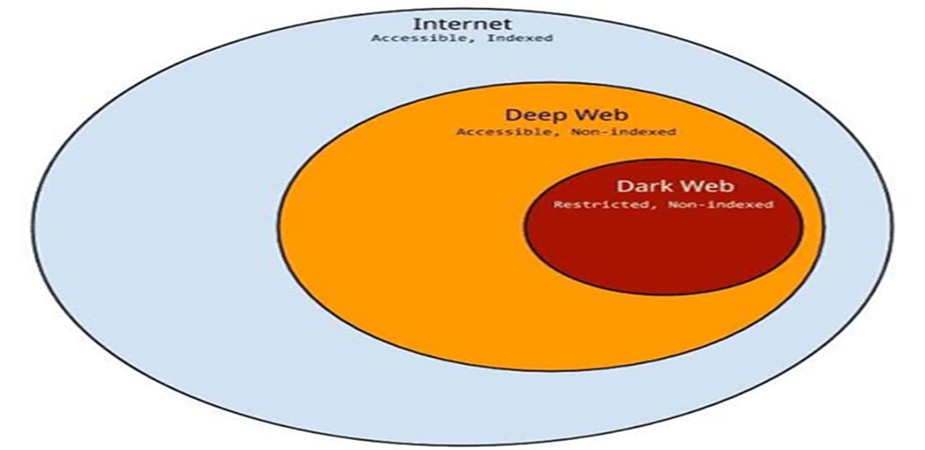
The phrase dark web gets loaded with drama. Headlines and fiction often treat it as a single secret underworld. The reality is simpler and more technical: it is a small part of the internet built so that both visitors and site operators can stay harder to identify.
This dark web explained guide covers what the dark web actually is, how it differs from the deep web, how Tor fits in, whether using it is illegal, and the risks that matter for ordinary people. No myths required.
A Brief History of the Dark Web
The Dark Web has its roots in the quest for online privacy and anonymous communication that started back in the 1990s. It all began with researchers at the U.S. Naval Research Laboratory who came up with onion routing. This clever technique masks a user's identity and destination by sending encrypted data through a series of relays.
Fast forward to the early 2000s, and you have Paul Syverson, Roger Dingledine, and Nick Mathewson taking this concept and turning it into Tor (The Onion Router). This innovation eventually led to the creation of .onion services, which are special websites that can only be accessed through the Tor network. While the Dark Web has gained a reputation for being a hub of criminal activity, it originally aimed to promote privacy, anonymity, and a way to fight against surveillance and censorship.
This article is about how the technology works and what the risks are. It does not provide instructions for illegal activity.
What Is the Dark Web?
The dark web is the portion of the internet that is deliberately hidden from normal search engines and ordinary browsers. Access usually requires specialized software — most often the Tor Browser — and sites often use special addresses (commonly ending in .onion) that only work on that network.
In plain terms:
The dark web is a hidden slice of the internet designed for stronger privacy and anonymity for both users and the services they visit.
Two things follow from that:
- It is still part of the internet, not a separate planet.
- Privacy tools can be used for legitimate reasons — and can also be abused. The technology and the misuse are not the same thing.
Deep Web vs Dark Web (and the Surface Web)
People often mix up three layers. Keeping them straight answers most confusion about deep web vs dark web.
| Layer | What it is | Examples |
|---|---|---|
| Surface web | Public sites search engines can index | News sites, blogs, public company pages |
| Deep web | Content that exists online but is not indexed | Email inboxes, online banking, private databases, paywalled accounts |
| Dark web | A small subset of the deep web that needs special software | Onion services, privacy-focused hidden sites |
You already use the deep web every day when you log into email or a bank account. The dark web is only a narrow, intentional corner of that non-indexed space. For more detail, see our guide to the surface web, deep web, and dark web.
How the Dark Web Works
On a normal website, your browser connects in a relatively direct way. Hosting details and network paths can reveal a lot about where a site lives and who is visiting.
On many dark web services, both the visitor and the site sit inside an anonymity network. The most common setup uses Tor:
- Traffic is encrypted in layers (“onion routing”).
- It passes through volunteer relays; each relay sees only a limited piece of the path.
- Onion sites are reached by long .onion addresses, not ordinary .com domains.
That design is how the dark web works at a high level: privacy is built into the routing, not bolted on afterward. For the technical path, see how Tor onion routing works.
How Tor Relates to the Dark Web
Tor and the dark web are related but not identical.
| Tor Browser / Tor network | Dark web |
|---|---|
| Software and network for private routing | Hidden services that require special access |
| Can also browse normal websites more privately | Specifically the hidden service ecosystem |
| A tool | An environment made of many independent sites |
You can use Tor only to read ordinary HTTPS sites with a hidden IP. You can also use it to reach onion services. The dark web is the second case — not “everything Tor touches.”
Why Anonymous Networks Exist
Onion routing and related ideas grew out of privacy and secure-communication research, not out of a plan to build a crime mall. People use these networks to:
- Protect sources and sensitive reporting
- Share information under censorship
- Study online threats safely
- Reduce everyday tracking
Criminals use the same privacy features. That dual use is why the dark web has a harsh reputation — high-profile marketplaces and forums made for illegal trade drew intense attention. The technology itself remains neutral, the same way email is neutral even though it is used for phishing.
Onion Sites, Search, and Marketplaces (High Level)
.onion sites are not listed in Google the way normal sites are. Discovery is messier: direct addresses, specialized indexes, or directories. That looseness also means fake mirrors and phishing pages are common.
Some privacy-oriented search approaches try to help people find material without traditional tracking; see our note on Tor search technology. Treat unknown directories with skepticism.
Dark web marketplaces have operated like anonymous storefronts and have often been tied to illegal goods and stolen data. Many have been seized or collapsed. Anonymity makes investigation harder; it does not make crime invisible. Background on how those ecosystems are structured (from a research angle) is in our piece on darknet marketplaces and listings.
Is the Dark Web Illegal?
Legal Uses of the Dark Web: Using privacy networks such as Tor is not inherently illegal in most countries. Millions of people use these networks for journalism, research, and everyday privacy to bypass censorship, reduce exposure to surveillance, communicate anonymously, and protect sensitive information.
Illegal Uses of the Dark Web: What you do still matters. Buying or selling weapons, committing fraud, trafficking stolen data, distributing malware, and other criminal activities are illegal whether they occur on a regular website or an onion site. The network does not rewrite the law. Several darknet marketplaces have been shut down by law enforcement in recent years, including Archetyp Market (2025), Abacus Market (2025), and Hydra Market (2022).
So: is the dark web illegal? Accessing privacy tools generally is not. Committing crimes through any channel is.
Myths vs Reality
| Myth | Reality |
|---|---|
| The dark web is the whole hidden internet | It is only a small part of the deep web |
| Everything there is illegal | Legitimate privacy and publishing services exist too |
| Tor makes you fully anonymous | Strong privacy, not a perfect shield — habits still matter |
| Nothing can be investigated | Mistakes, forensics, and financial trails still lead to cases |
Real Risks
- Scams — Fake shops, support bots, and “too good to be true” offers
- Malware — Untrusted downloads and documents
- Phishing clones — Lookalike onion addresses and pages
- Illegal content — Serious legal exposure if you seek or share it
- False confidence — Logging into personal accounts or reusing usernames can undo anonymity
Cryptocurrency and the Dark Web
Crypto is often linked to dark web stories because some illegal markets preferred digital payments. Cryptocurrency itself is widely used for legal purposes. Many blockchains are public ledgers, so “anonymous payment” is frequently overstated. For privacy-minded habits around digital assets, see our cryptocurrency operational security guide.
How Ordinary People Get Hurt (Without “Going There”)
Most people never visit an onion site. They still feel the effects when stolen passwords, phishing kits, or malware that circulated in underground spaces show up in everyday email and messaging. Strong unique passwords, multi-factor authentication, updates, and caution with links remain the practical defense. More options are in our roundup of privacy tools.
Frequently Asked Questions
What is the dark web in simple terms?
A hidden part of the internet that needs special software (usually Tor) to reach. It prioritizes privacy for users and site operators, and it can be used for both legitimate and illegal purposes.
Is the dark web the same as the deep web?
No. The deep web is everything not indexed by search engines (your email, bank login, private databases). The dark web is a small, intentionally anonymous subset of that.
How does Tor relate to the dark web?
Tor is the main network and browser people use to reach many dark web (onion) services. Tor can also be used only for private access to normal websites.
Can Google search the dark web?
Not in any useful, complete way. Onion services are not structured or indexed like the surface web.
Is everything on the dark web dangerous?
No. There are legitimate privacy and publishing uses. There is also harmful and illegal material. Caution and legal awareness still apply.
Can the dark web be shut down?
Individual sites and markets get taken offline regularly. The idea of anonymous networks is decentralized, so the broader concept does not disappear when one service falls.
Conclusion
What is the dark web? A privacy-oriented, hard-to-index corner of the internet, reached mainly through networks like Tor. Deep web vs dark web is the difference between “not in Google” and “requires special software on purpose.” How the dark web works is mostly layered routing and hidden services. Is the dark web illegal? The tools generally are not; specific crimes still are.
Separate the technology from the headlines, know the limits of anonymity, and keep ordinary security habits strong. That is enough to understand the topic without the mythology. More guides on Tor, privacy, and internet structure are on Torzle.