Dark Web Payment Fraud: Common Transaction Scams Researchers Should Recognize
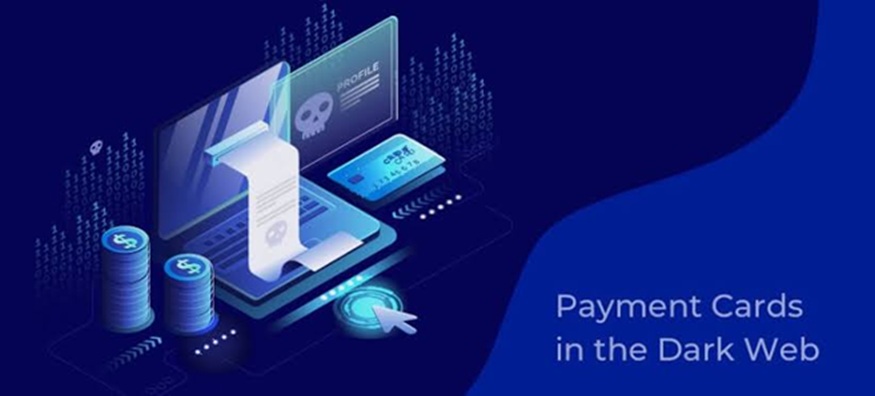
Payment is one of the strongest trust signals in any online marketplace.
A transaction record can make a claim appear real. A payment confirmation can make a seller appear legitimate. An escrow label can make a marketplace look safer.
But these signals can also be manipulated.
In underground markets, researchers may encounter claims that money was sent, received, held, refunded or released. The available evidence may include screenshots, messages, transaction references or marketplace status indicators.
The difficult part is determining what those records actually establish.
This article provides a research-focused taxonomy of common payment fraud patterns and explains how investigators can distinguish a claim from corroborated evidence.
What Is Dark Web Payment Fraud?
Dark web payment fraud is financial deception involving underground online markets, payment claims or transaction evidence.
The fraud may involve:
- false claims that money was sent;
- false claims that money was received;
- fake or misleading payment records;
- impersonation of payment services or marketplace staff;
- misleading escrow claims;
- fabricated dispute evidence;
- fake refunds or recovery offers; and
- pressure for additional payments.
These patterns are not unique to dark web markets. Similar forms of financial deception appear across many online environments.
What makes underground markets especially difficult to study is the limited ability to verify the people, platforms and records involved.
Why Transaction Fraud Is Effective
Payment information feels objective.
Numbers, timestamps, receipts and transaction references appear more reliable than ordinary promises.
This creates an important psychological advantage for scammers.
Instead of simply saying “trust me,” a fraudulent actor can point to something that looks like evidence.
Researchers should therefore ask:
Does this record prove the event, or does it only support someone's description of the event?
Common Dark Web Payment Fraud Patterns
1. Fake Payment Confirmation
A person claims that payment has been completed and presents a confirmation as proof.
The confirmation may appear convincing, but the underlying transaction may not be independently established.
For researchers, the key distinction is between:
- a displayed confirmation;
- a transaction record; and
- independent evidence that the intended recipient actually received the funds.
These are not necessarily the same thing.
2. False Payment-Received Claims
Another pattern occurs when a seller or intermediary claims that a payment was never received.
The buyer may have a record suggesting that the payment was made, while the recipient denies receiving it.
This can create a dispute in which both sides appear to have evidence.
Researchers should reconstruct the timeline rather than treating either statement as established fact.
3. Manipulated Receipts
Receipts can be powerful social-engineering tools because they look formal.
However, a receipt is a representation of a financial event. It is not necessarily independent proof of that event.
A useful investigation should ask where the receipt originated, whether its contents can be independently checked and whether other evidence supports it.
4. Payment Impersonation
Scammers may also present themselves as marketplace administrators, payment intermediaries or other trusted parties.
The objective is to borrow credibility from an institution or service that the victim already recognizes.
Researchers should examine whether the account, message or communication can actually be connected to the claimed organization.
5. False Escrow Claims
Escrow language can create strong confidence because it suggests that a neutral party is protecting the transaction.
But the word “escrow” alone does not establish that independent financial protection exists.
A marketplace-controlled status page may simply represent what the marketplace says is happening.
Researchers should distinguish between a claimed protection mechanism and an independently verified one.
6. Fake Refund Claims
A fraudulent transaction can sometimes lead to another deception involving a supposed refund.
A person may claim that funds are being returned but require another action or payment first.
This is particularly dangerous because the target may already be expecting money back.
A refund claim should therefore be treated as a separate claim requiring evidence.
7. Recovery Scams
People who have already lost money may become targets for recovery scams.
A new actor may claim to have special access, investigative ability or a method for recovering the missing funds.
The FTC warns that refund and recovery scams can target people who have already lost money to fraud. [FTC: Refund and Recovery Scams](https://consumer.ftc.gov/articles/refund-and-recovery-scams?utm_source=chatgpt.com)
The important research question is whether the supposed recovery service has any independently verifiable basis for its claim.
8. Additional-Payment Pressure
A scam may begin with one payment and then introduce another supposed requirement.
The explanation might involve a claimed fee, release requirement, verification step or administrative charge.
From an investigative perspective, every new payment demand should be treated as a new claim rather than automatically accepting the explanation provided.
9. Manufactured Transaction Disputes
Some disputes may be genuine. Others may involve selective or misleading evidence.
A participant may show only the messages that support their version of events while leaving out earlier or later communications.
This makes chronology especially important.
10. Fake Marketplace Status
A marketplace may display labels such as “paid,” “confirmed,” “protected” or “released.”
Such labels may be useful observations, but they should not automatically be treated as independent financial evidence.
The researcher should determine who controls the status information and whether it can be corroborated elsewhere.
Payment Fraud Taxonomy
| Fraud Pattern | Main Trust Signal | Research Question |
|---|---|---|
| Fake confirmation | Payment screenshot or message | Can the underlying payment be independently established? |
| False receipt | Formal-looking document | Does the receipt correspond to a genuine transaction? |
| False payment claim | Participant statement | What evidence supports the statement? |
| Impersonation | Trusted identity | Is the claimed identity authentic? |
| Fake escrow | Protection guarantee | Who actually controls the claimed escrow? |
| Refund scam | Promise of returned money | Is there independent evidence that a refund exists? |
| Dispute manipulation | Selective evidence | Does the full timeline support the narrative? |
| Fake marketplace status | Platform notification | Can the status be independently corroborated? |
Why Screenshots Are Weak Evidence on Their Own
Screenshots can preserve useful information, but they have important limitations.
A screenshot may show:
- a transaction number;
- a displayed amount;
- a timestamp;
- an account name;
- a payment status; or
- a confirmation message.
What it may not establish is whether the underlying information is genuine, complete or connected to the person making the claim.
This is why strong investigations rarely depend on one screenshot alone.
Claim, Record and Corroboration
A simple three-level framework can help researchers evaluate payment information.
| Level | Example | Research Meaning |
|---|---|---|
| Claim | “Payment was received.” | A person states that an event happened. |
| Record | A transaction record exists. | There is evidence of a recorded financial event. |
| Corroboration | Independent evidence supports the same conclusion. | The claim has stronger evidentiary support. |
The difference between these levels is one of the most important concepts in payment investigations.
What Cryptocurrency Records Can Show
Cryptocurrency transactions can produce public blockchain records, depending on the network involved.
These records can be useful for investigating transaction histories, but they do not automatically reveal the real-world identity or intent of every participant.
The FTC notes that cryptocurrency transactions are generally recorded on public blockchains and that transaction information can sometimes contribute to identifying people involved in a scam. [FTC: What To Know About Cryptocurrency and Scams](https://consumer.ftc.gov/articles/what-know-about-cryptocurrency-scams?utm_source=chatgpt.com)
Researchers should therefore avoid two opposite assumptions:
- that cryptocurrency is automatically anonymous; or
- that a blockchain address automatically identifies a person.
Payment Records Are Not the Same as Identity Evidence
A financial identifier can sometimes be observed without knowing who controls it.
This is particularly important in underground research because participants often use pseudonyms.
Researchers should keep financial evidence and identity claims separate unless there is sufficient evidence connecting them.
This is similar to the identity-verification problem discussed in Dark Web Identity Verification: Why Marketplace Claims Are Difficult to Trust .
How Payment Fraud Connects to Vendor Reputation
Payment fraud rarely operates in isolation.
A deceptive marketplace may combine payment claims with:
- vendor ratings;
- positive reviews;
- claims of longevity;
- guarantees;
- escrow promises; and
- apparent transaction history.
Together, these signals can create an impression of legitimacy.
Torzle examines this wider trust problem in Darknet Marketplace Deception: How Underground Markets Manipulate Trust .
Researchers can also compare payment claims with Dark Web Vendor Reviews: Why Ratings Aren’t Proof of Product Quality or Authenticity .
Red Flags Researchers Should Recognize
No single warning sign proves fraud.
However, several signals together can indicate that a payment claim deserves closer examination.
- extreme pressure to act immediately;
- payment evidence available only as a screenshot;
- conflicting transaction information;
- unexpected changes to payment instructions;
- claims that funds are “locked” without independent evidence;
- requests for additional money to release earlier funds;
- an alleged official contacting users through an unexpected account;
- refund promises that require another payment;
- marketplace records that cannot be corroborated; and
- strong guarantees that rely mainly on reputation.
How Researchers Can Evaluate a Suspicious Payment Claim
Step 1: Write Down the Exact Claim
Record what the person actually says.
For example: “The seller claims the payment was received.”
Do not immediately convert this into: “The seller received the payment.”
That small difference protects the investigation from assuming the conclusion.
Step 2: Preserve the Available Evidence
Record the source, date and context of screenshots, messages and other material.
Avoid relying on a cropped image without understanding where it came from.
Step 3: Build a Timeline
Place claims and records in chronological order.
A timeline can expose contradictions that are difficult to see when individual messages are examined separately.
Step 4: Separate Independent Sources
Ten pages repeating the same claim do not necessarily provide ten independent sources.
Researchers should identify the original source of each claim whenever possible.
Step 5: Identify What Remains Unknown
A good investigation records uncertainty.
If the evidence does not establish whether money was received, the conclusion should reflect that limitation.
What Researchers Should Not Do
Investigating payment fraud does not require participating in the financial activity being studied.
Researchers should avoid:
- making illicit purchases;
- sending money to test a suspected scam;
- attempting to defeat financial controls;
- obtaining stolen financial information;
- facilitating transactions; or
- publishing instructions that would make financial crime easier.
A non-participatory approach can still provide substantial insight through public reporting, archived material, documented cases and lawful evidence.
Payment Fraud and the Wider Underground Economy
Payment deception is one part of a larger underground ecosystem.
Markets depend on reputation, vendor identity, product claims and transaction trust.
If one part of that system is manipulated, other trust signals may be used to support it.
For example, a questionable payment claim may appear more believable when combined with:
- a long-standing vendor profile;
- positive ratings;
- claims of successful transactions;
- marketplace guarantees; or
- apparently independent reviews.
This is why payment fraud is best studied as part of the wider trust ecosystem rather than as an isolated transaction problem.
Related Torzle Research
The broader payment environment is covered in Dark Web Payment Scams: How Underground Transactions Are Abused, Faked & Manipulated .
For transaction evidence and verification problems, see Dark Web Payment Risks: Why Transaction Records Aren’t Always What They Seem .
Researchers examining marketplace trust can also read How Dark Web Vendors Build Trust—and Why It Can Be Misleading .
For broader marketplace red flags, see Dark Web Marketplace Red Flags: How to Evaluate Claims Without Buying Anything .
Payment-related research also overlaps with Cryptocurrency Safety Tips , which provides general financial-risk awareness.
Research Checklist
When evaluating a suspected payment scam, researchers can ask:
- What exactly is being claimed?
- Who made the claim?
- What evidence supports it?
- Is the evidence a screenshot, record or independent source?
- Can the underlying transaction be independently examined?
- Does the evidence establish sending, receiving or only an attempted payment?
- Are the parties' identities independently established?
- Are supposedly independent sources actually independent?
- Does the timeline contain contradictions?
- Was another payment demanded after the original event?
- What important facts remain unknown?
Final Takeaway
Dark web payment fraud is not simply about fake transactions.
It is often about manipulating the appearance of financial certainty.
A screenshot can make a payment appear real. An escrow label can make a marketplace appear safer. A transaction reference can make a story appear precise. A reputation system can make questionable claims appear credible.
None of these signals should automatically settle an investigation.
The strongest approach is to separate claims from records, records from corroboration, and financial identifiers from real-world identities.
For researchers, the goal is not to participate in underground transactions.
It is to understand how payment trust is manufactured, how transaction narratives are manipulated and where the available evidence stops being conclusive.
Frequently Asked Questions
What is dark web payment fraud?
Dark web payment fraud involves deceptive claims, records or transactions designed to obtain money, create false confidence or manipulate a financial dispute in an underground marketplace.
What are common dark web payment scams?
Common patterns include fake payment confirmations, false payment-received claims, manipulated receipts, impersonation, misleading escrow claims, disputed transactions and requests for additional payments.
Can a payment screenshot prove that money was sent?
No. A screenshot can be useful evidence, but it does not independently prove that funds were transferred, received or connected to the person making the claim.
Why are payment disputes difficult to investigate?
Payment disputes can involve incomplete records, conflicting accounts, pseudonymous participants and marketplace-controlled information. Researchers often need several independent sources before reaching a conclusion.
Can researchers study payment fraud without participating in transactions?
Yes. Researchers can examine public reporting, archived material, documented investigations, lawful transaction records and other non-participatory sources without making or facilitating an illicit transaction.