Darknet Social Engineering Kits: What Researchers Should Know About Scam Tooling
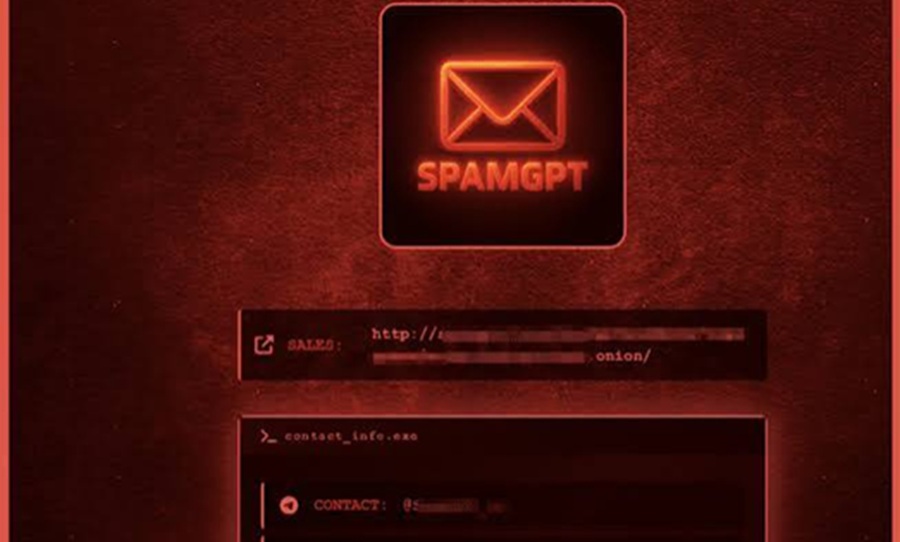
Searches for “social engineering kits” can lead to a confusing mixture of security research, legitimate testing tools, underground advertisements and outright scams.
The word kit can make an underground product sound simple: buy a package, use its components and achieve a predictable result.
Real-world fraud ecosystems are rarely that simple.
A social engineering operation may involve websites, accounts, personal information, communication channels, impersonation and financial infrastructure. A listing claiming to provide a complete solution may therefore represent only one part of a much larger system.
For researchers, the important question is not simply “What does this kit claim to do?” It is: “What can actually be verified?”
What Is a Darknet Social Engineering Kit?
There is no single technical definition of a darknet social engineering kit.
In underground advertisements, the term can describe a collection of resources presented as useful for deceptive activity.
Depending on the listing, sellers may claim that a kit includes:
- website or page templates;
- communication material;
- impersonation-related resources;
- account-related services;
- fraud-support infrastructure;
- automation features; or
- access to additional services.
These categories are intentionally broad. Underground listings often use marketing language that makes capabilities difficult to assess independently.
A researcher should therefore avoid treating the product description as a technical specification.
Why the Word “Kit” Can Be Misleading
The term suggests that all necessary components are packaged together.
In practice, a seller may be offering only:
- a template;
- a collection of files;
- a subscription;
- access to another service;
- a set of instructions;
- an advertised capability; or
- something that does not work as described.
This distinction matters because underground markets can contain both functioning services and deliberate scams aimed at other criminals.
A person researching scam tooling should therefore consider the possibility of tool-on-tool fraud: sellers themselves may deceive their customers.
To learn more, please explore Why Most Dark Web Markets Are Unsafe: Real Security Failures Explained
Social Engineering Kits vs. Legitimate Security Tools
Not every tool associated with social engineering is criminal.
Security professionals may conduct authorized phishing simulations, awareness assessments and controlled social engineering exercises.
| Category | Purpose | Key Difference |
|---|---|---|
| Security testing tool | Authorized assessment | Used within defined permission and scope |
| Awareness platform | Employee education | Designed to improve defensive behavior |
| Research material | Study and analysis | Does not require real-world targeting |
| Underground scam kit | Advertised fraud support | Often associated with unauthorized activity |
The most important distinction is authorization and intended use.
Where Social Engineering Fits Into a Larger Fraud Ecosystem
Social engineering is rarely isolated from other parts of an operation.
A broader ecosystem can contain several layers:
| Layer | Possible Function | Research Question |
|---|---|---|
| Information | Personal or organizational context | Where did the information originate? |
| Identity | Profiles and impersonation | Can the claimed identity be verified? |
| Communication | Email, messaging or phone contact | Can the communication channel be independently linked? |
| Website | Credibility or information collection | Who controls the infrastructure? |
| Reputation | Reviews and trust signals | Are the signals independent? |
| Payment | Financial conversion | What evidence supports the transaction claim? |
This broader view is important because an underground “kit” may interact with several of these layers without controlling all of them.
For a wider overview, see Social Engineering & Deception Ecosystems: How Scammers Use Websites, Databases, Phones & Social Media to Manipulate People .
How Underground Listings Market Scam Tooling
Underground sellers often present tools using familiar commercial language.
A listing may emphasize:
- features;
- compatibility;
- reviews;
- seller reputation;
- claimed reliability;
- customer numbers;
- guarantees; or
- limited availability.
These signals can make an underground listing resemble an ordinary software product page.
That appearance should not be confused with independent verification.
New Advance Technologies: AI + Social Engineering Kits = Mass-Targeting on Personal Information
Artificial intelligence is transforming social engineering by making cyberattacks faster, more convincing, and highly scalable. AI-powered social engineering kits can analyze publicly available personal information and generate customized messages that appear legitimate. Instead of targeting individuals manually, attackers can potentially automate thousands of personalized phishing attempts through email, social media, or messaging platforms.
This mass-targeting approach increases the risk of identity theft, financial fraud, account compromise, and privacy violations. AI can also imitate writing styles and create realistic conversations, making traditional warning signs harder to recognize. As these technologies advance, individuals and organizations must strengthen cybersecurity awareness, protect personal information, use multi-factor authentication, and verify suspicious requests through trusted channels. Responsible AI development and stronger security practices are essential to counter this emerging threat.
Product Claims Are Not Proof
One of the most important rules in underground-market research is:
A seller's claim proves that the seller made the claim. It does not automatically prove that the claimed capability exists.
| Signal | What It Can Establish | What It Cannot Establish Alone |
|---|---|---|
| Product description | What the seller advertises | Actual capability |
| Screenshot | What appears in an image | Authenticity or complete functionality |
| Review | Someone posted a review | That the reviewer is independent |
| Seller guarantee | A promise was made | That the promise will be honored |
| High sales count | A claimed transaction history | That the sales actually occurred |
| Technical demonstration | Some observable behavior | Every advertised feature |
Fake Reviews and Reputation Manipulation
Reviews are especially important because reputation is a major part of underground markets.
A seller with many positive reviews may appear safer than a seller with very few reviews.
But review systems can themselves be manipulated.
Possible problems include:
- fabricated reviews;
- coordinated reviews;
- duplicate comments;
- reviews from affiliated accounts;
- selective deletion;
- reputation inflation; and
- fake dispute histories.
Torzle examines this wider problem in Telegram Scams 2026: How Fake Accounts, Phishing, and Fraud Networks Operate .
Why Scam Tooling Can Be Sold to Other Scammers
Criminal markets have the same basic trust problem as other underground markets: buyers need to know whether sellers are honest.
That creates opportunities for secondary fraud.
A seller can advertise:
- nonexistent software;
- stolen products;
- repackaged material;
- outdated resources;
- limited functionality;
- fake access credentials; or
- services that disappear after payment.
Researchers should therefore treat the underground market itself as an environment where deception can occur at multiple levels.
Common Red Flags in Social Engineering Kit Listings
Researchers examining publicly observable listings can look for patterns that deserve additional scrutiny.
- Unusually strong guarantees: Claims of guaranteed outcomes are difficult to verify.
- Extreme success claims: Very high success rates require independent evidence.
- Anonymous testimonials: It may be impossible to establish who actually wrote them.
- Pressure to act quickly: Artificial scarcity can discourage careful evaluation.
- Copied descriptions: Similar wording across unrelated sellers can indicate reuse.
- Unclear ownership: The seller may provide little evidence about who created the product.
- Changing identities: Frequent username or branding changes can complicate continuity.
Fake Screenshots and Demonstrations
Screenshots can be useful evidence, but they are limited evidence.
A screenshot can show what appeared on a screen. It cannot automatically establish:
- when it was captured;
- who created the interface;
- whether the displayed data is genuine;
- whether the demonstration represents the advertised product;
- whether the software still functions; or
- whether the result was produced by the claimed system.
For this reason, researchers should avoid using screenshots as their only evidence for strong technical claims.
Seller Longevity Is Not Proof of Legitimacy
A long-running seller may appear more trustworthy than a new account.
Longevity can be useful context, but it is not proof of product quality, honesty or identity.
An established identity can:
- change ownership;
- change products;
- change marketplaces;
- be compromised;
- be deliberately misleading; or
- simply disappear.
Torzle discusses related continuity problems in Dark Web Vendor Ecosystems: How Researchers Analyze Anonymous Marketplaces .
How Researchers Can Evaluate a Kit Without Using It
Investigative research does not require purchasing or deploying suspicious tooling.
Document the Listing
Preserve the exact language used to describe the product.
Separate Claims From Observations
Write down what can actually be seen rather than repeating marketing language as fact.
Compare Independent Sources
Look for reporting, security research, court records, threat intelligence or other reliable sources that independently discuss the same ecosystem.
Track Changes Over Time
Changes to names, descriptions, reviews and infrastructure can reveal patterns that a single snapshot cannot.
Record Uncertainty
If a claim cannot be verified, say so.
Good investigative reporting does not need to make every unknown appear certain.
Safe Research Questions
Researchers studying underground social engineering tooling can focus on questions such as:
- What does the seller claim the product does?
- What evidence accompanies that claim?
- Who appears to control the seller identity?
- Has the identity appeared elsewhere?
- Are reviews independent?
- Do independent sources confirm the capability?
- Has the listing changed over time?
- What parts of the claim remain unverified?
Social Engineering Kits and Legitimate Security Research
Security professionals may use controlled simulations to measure whether employees recognize suspicious messages or requests.
The purpose is defensive: identify weaknesses, improve training and strengthen organizational controls.
This is fundamentally different from deploying deceptive infrastructure against people without permission.
Researchers should maintain clear boundaries around authorization, data collection, participant safety and reporting.
How Organizations Can Reduce the Risk
Defending against social engineering does not depend on recognizing every underground tool.
Organizations can reduce exposure by strengthening the processes that scammers attempt to manipulate.
- Use multi-factor authentication.
- Verify unusual payment requests independently.
- Train employees to recognize impersonation.
- Limit unnecessary public information.
- Monitor for fake company profiles and websites.
- Use established procedures for sensitive changes.
- Encourage employees to report suspicious requests without fear of blame.
Related Torzle Research
This article is part of Torzle's wider research into social engineering, underground markets, identity abuse and deception ecosystems.
- Social Engineering & Deception Ecosystems
- Dark Web Impersonation Risks
- Darknet Marketplace Deception
- Underground Trade Manipulation
- Vendor Identity on the Dark Web
- Dark Web Marketplace Red Flags
- Underground Identity Scams
Educational References
For general defensive guidance, readers can consult established cybersecurity and consumer-protection sources such as the U.S. Federal Trade Commission and the Cybersecurity and Infrastructure Security Agency.
These resources provide broader information about phishing, impersonation, social engineering and defensive security practices.
Frequently Asked Questions
What are darknet social engineering kits?
Darknet social engineering kits are collections of tools, templates, services or other resources advertised as helping facilitate deceptive activity. Researchers should treat marketplace descriptions as claims rather than proof of capability.
What can social engineering kits claim to contain?
Listings may claim to include website templates, communication material, impersonation resources, account-related services or other fraud-support components. The exact claims vary, and advertised features are not automatically verified.
Are darknet tool reviews reliable?
Reviews can provide useful research leads, but they are not independent proof. Reviews may be manipulated, fabricated, copied or generated by interested parties.
Why are underground tool listings difficult to verify?
Listings can disappear, sellers can change identities, screenshots can be selective and multiple accounts may repeat the same claims. Researchers should therefore distinguish advertisements from independently corroborated evidence.
Should researchers purchase or test scam tooling?
Researchers generally do not need to participate in transactions to study these ecosystems. Safer approaches include documenting public claims, preserving evidence, comparing independent sources and analyzing observable infrastructure.
How can organizations defend against social engineering tooling?
Organizations can reduce risk through multi-factor authentication, security awareness training, independent verification of sensitive requests, strong account controls and monitoring for impersonation and phishing.
Conclusion
Darknet social engineering kits should be viewed as part of a wider deception economy rather than as simple software products.
Some listings may describe real resources. Others may exaggerate capabilities, recycle existing material or exist primarily to defraud their own customers.
That makes verification more important than the product description itself.
For researchers, the safest and most useful approach is to study the claims, identities, infrastructure, reputation signals and relationships around these products without participating in criminal activity.
The central investigative rule is straightforward: advertised capability is a claim, not independent evidence.