Social Engineering & Deception Ecosystems: How Scammers Use Websites, Databases, Phones & Social Media to Manipulate People
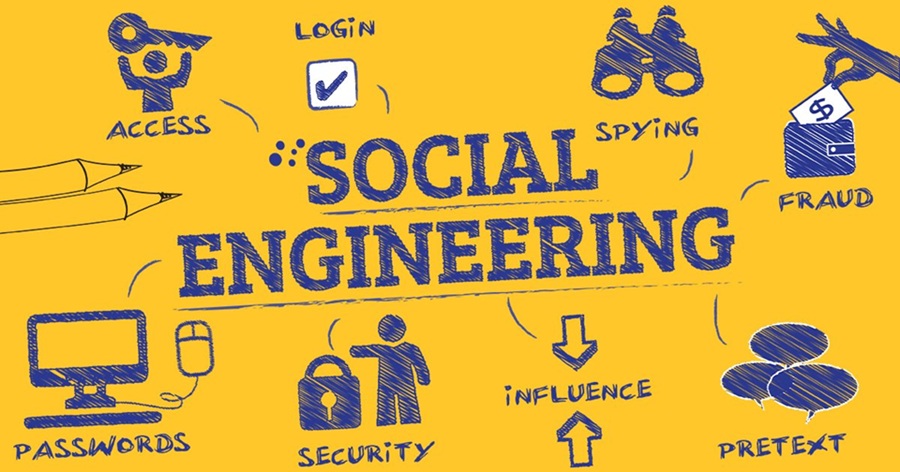
Social engineering is often described as a scammer tricking one person. That description is too simple.
Modern deception can involve an entire ecosystem of websites, personal information, phone calls, email accounts, social media profiles and payment requests.
One message may be only the first step. A fake website can create credibility. A phone call can add urgency. A social media profile can make the person appear real. Personal information can make the conversation feel private and convincing.
The result is a system designed to influence a decision.
This is why social engineering is better understood as an ecosystem of deception rather than a single technique.
What Is Social Engineering?
Social engineering is the use of deception and psychological pressure to influence someone into taking an action they would not normally take.
That action could involve:
- sharing personal information;
- revealing account details;
- opening a link or attachment;
- changing payment information;
- giving someone access to an account;
- trusting a false identity; or
- making a financial decision.
The technology can change, but the central idea remains the same: manipulate trust to influence behavior.
Why Social Engineering Is Different From a Traditional Cyberattack
A technical attack may attempt to exploit software or a computer system directly.
Social engineering often targets the person operating that system.
A legitimate-looking message can therefore become an attack surface. So can a phone call, a social media profile or a customer-support conversation.
| Attack Surface | How Trust May Be Manipulated | Common Warning Sign |
|---|---|---|
| Website | Imitating a trusted organization | Unexpected request or unfamiliar domain |
| Impersonating a colleague or company | Urgent or unusual request | |
| Phone | Creating authority or fear | Pressure to act immediately |
| Social media | Creating familiarity or social proof | New or suspicious profile |
| Personal information | Making a false story appear accurate | Unexpected use of private details |
The Basic Social Engineering Cycle
Many social engineering campaigns follow a broad pattern.
- Target: Identify a person, organization or group.
- Context: Create a believable reason for contact.
- Trust: Establish credibility or familiarity.
- Pressure: Encourage quick action.
- Request: Ask for information, access or another action.
- Escalation: Increase pressure if the target hesitates.
Not every scam follows all six stages. Some begin with a direct request. Others spend a long time building familiarity before making a request.
Websites as Deception Infrastructure
Websites can be powerful social engineering tools because people often associate professional design with legitimacy.
A deceptive website may imitate:
- a company;
- a financial service;
- a technology provider;
- a delivery service;
- a government organization;
- a customer-support portal; or
- another familiar online service.
The important point for researchers is that appearance is not proof of ownership.
A page can use familiar colors, logos and language while having no legitimate relationship with the organization it imitates.
This problem is particularly important in phishing and impersonation research. The FTC advises consumers not to rely on unexpected links and instead to contact organizations through contact information they already know to be genuine.
Why Fake Websites Work
A website can act as a second layer of credibility.
Someone may receive an unexpected message and initially doubt it. When they visit a professional-looking website that appears to support the story, that doubt may decrease.
The website therefore does not need to prove everything. It only needs to reinforce the story.
Personal Databases and Information Abuse
Personal information can make social engineering much more convincing.
A generic message may be easy to recognize as suspicious.
A message that correctly mentions a person's name, workplace, recent activity or relationship can feel very different.
This does not necessarily mean the attacker has direct access to a private database. Information can come from many sources, including public profiles, previous breaches, data brokers, exposed records and information shared by other people.
Researchers should therefore distinguish between:
- public information;
- legitimately obtained information;
- exposed information;
- stolen information; and
- claims about supposedly available information.
These categories can have very different evidentiary and legal implications.
Torzle explores related identity risks in Verified Darknet Links: How to Spot Trusted Onion Sites in 2026 .
Why Accurate Information Can Be Dangerous
People often assume that a scam is obvious because the scammer knows very little about them.
That assumption can be wrong.
Accurate details can create false confidence.
For example, knowing someone's employer does not prove that the person contacting them is connected to that employer.
Knowing a relative's name does not prove that a caller is a family member.
Knowing an account number or previous transaction does not prove that a message came from the real organization.
Information is not the same thing as identity.
Phone-Based Social Engineering
Phones provide a powerful channel because conversations happen in real time.
A caller can respond to hesitation, change the story and increase pressure.
Common themes include:
- account problems;
- security warnings;
- urgent payments;
- fake technical support;
- government impersonation;
- family emergencies; and
- business requests.
Caller identification is also not a complete identity check. Caller information can be manipulated, and the number displayed on a phone does not necessarily establish who is calling.
The safest approach is independent verification.
Why Urgency Matters
Many social engineering campaigns attempt to reduce the amount of time a person has to think.
The message may suggest:
- something bad will happen soon;
- an account will be closed;
- a payment must happen immediately;
- a security problem is already underway; or
- an opportunity will disappear.
Urgency is not proof of fraud by itself. However, unexpected urgency combined with a request for sensitive information or money is a strong reason to stop and verify.
Email and Business Email Compromise
Business email compromise, often called BEC, uses trust inside an organization.
The attacker may attempt to appear to be:
- a company executive;
- a supplier;
- a customer;
- a finance employee;
- a lawyer;
- a contractor; or
- another trusted business contact.
The goal can be to influence a payment, change account information or disclose sensitive data.
The important defensive lesson is simple: an email address alone should not authorize a high-risk financial action.
Why BEC Can Be Difficult to Notice
Business fraud can use information that is already known inside an organization.
That may include:
- names;
- job titles;
- suppliers;
- invoice details;
- company projects; or
- normal communication patterns.
This can make an unusual request look routine.
For that reason, organizations should have verification procedures that do not depend entirely on email.
Social Media as a Trust Layer
Social media can provide both information and identity signals.
Profiles may reveal:
- employment;
- friends and family;
- interests;
- locations;
- events;
- professional relationships; and
- recent activities.
Scammers can also use fake or compromised profiles to create familiarity.
A profile with photographs, followers, posts and a long history may look credible, but those signals do not automatically prove that the person behind the account is who they claim to be.
The FTC has warned that scams can begin through social media and that fake profiles may be used to create relationships before a financial or other harmful request is made.
Fake Profiles and Manufactured Credibility
A social engineering identity can be designed to answer the questions a target is likely to ask.
Does the person have a photograph?
Do they have followers?
Do they appear to have a job?
Do other accounts interact with them?
These are useful clues, but none is definitive.
Torzle examines this problem in Fake Dark Web Links: How to Avoid Costly Tor Scams (Checklist) .
How Different Channels Work Together
The most convincing deception may involve several channels at once.
| Channel | Possible Role | Investigative Question |
|---|---|---|
| Website | Creates a professional-looking destination | Who controls the site? |
| Database / personal data | Adds accurate personal details | Where did the information come from? |
| Phone | Adds urgency and authority | Can the caller be independently verified? |
| Creates a business or account context | Does the request match normal procedures? | |
| Social media | Creates familiarity and social proof | Is the profile genuinely controlled by the claimed person? |
| Payment request | Converts trust into action | Was the request independently confirmed? |
This combination is important because each layer can reinforce the others.
A phone call can point to a website. The website can repeat the story from the email. The email can contain information taken from a social profile.
The victim may therefore see several pieces of apparently independent evidence even though they are all part of one deception.
What Are Social Engineering Kits?
The term “social engineering kit” can refer broadly to collections of material or services designed to support deceptive activity.
In research discussions, this can include combinations of:
- templates;
- fake-page components;
- communication material;
- impersonation resources;
- account-related services; or
- other fraud-support infrastructure.
Underground advertisements may make strong claims about what such products can do.
Researchers should not automatically treat those advertisements as technical proof.
A product description is a claim. A screenshot is evidence of what was displayed in the screenshot. An independent investigation is stronger evidence of actual capability.
Fraud Enablement as a Business Model
Some underground ecosystems do not depend on one person doing everything.
Different participants may provide different services or resources.
One part of an ecosystem may involve information. Another may involve communication. Another may involve infrastructure. Another may involve financial activity.
This division can make an investigation more difficult because a single incident may involve several independent actors.
Darknet Scam Toolkits and Product Claims
Underground marketplaces may present fraud-related resources as if they were ordinary products.
Listings may use:
- ratings;
- reviews;
- screenshots;
- feature lists;
- seller guarantees;
- claimed success rates; or
- customer testimonials.
These signals can create the appearance of a normal commercial market.
They should still be treated as claims requiring verification.
Torzle's broader research on marketplace trust examines similar problems in Dark Web Payment Scams: How Underground Transactions Are Abused, Faked & Manipulated .
Persuasion Tactics Researchers Should Recognize
Social engineering often uses ordinary psychological ideas in harmful ways.
| Technique | How It May Appear | Defensive Response |
|---|---|---|
| Authority | “I am from your bank.” | Verify through an independent channel. |
| Urgency | “You must act now.” | Pause before acting. |
| Fear | “Your account will be closed.” | Check the account independently. |
| Familiarity | Using a friend's or colleague's identity. | Confirm using another channel. |
| Social proof | Reviews, followers or testimonials. | Look for independent evidence. |
| Scarcity | “This opportunity ends today.” | Do not let a deadline replace verification. |
How Researchers Investigate Deception Without Participating
Investigative research does not require researchers to test criminal services themselves.
A safer research model can focus on existing evidence.
1. Preserve the Original Claim
Record what the source actually claimed instead of rewriting the claim into something stronger.
2. Identify the Evidence
Separate screenshots, messages, profiles, websites, public records and other evidence.
3. Check the Source
Ask who created the information and whether that source has an incentive to mislead.
4. Compare Independent Sources
Several sources are useful only when they are genuinely independent.
5. Build a Timeline
A timeline can reveal contradictions that are difficult to see when information is reviewed separately.
6. Separate Identity From Claims
A username, email address or profile does not automatically establish a real-world identity.
7. Record What Cannot Be Verified
Good investigative writing should explain uncertainty rather than hide it.
Common Red Flags
A single warning sign does not prove that something is fraudulent. Several warning signs together deserve closer attention.
- Unexpected contact from a supposedly trusted organization.
- Pressure to act immediately.
- Requests for passwords or sensitive information.
- Requests to bypass normal business procedures.
- Links leading to unfamiliar websites.
- Claims that normal verification is unnecessary.
- Unexpected use of personal information.
- New social-media profiles claiming to represent familiar people.
- Unusual payment instructions.
- Threats, fear or artificial deadlines.
The FTC similarly warns consumers to be cautious of unexpected messages, impersonation and pressure to provide money or sensitive information.
Cybersecurity Best Practices Against Social Engineering
Technical security controls are important, but human verification procedures are also critical.
- Pause on unexpected requests. Urgency should not remove normal verification.
- Use known contact information. Do not rely on the phone number or link supplied in an unexpected message.
- Use multi-factor authentication. MFA can reduce the impact of stolen passwords.
- Verify sensitive financial requests separately. Especially when payment details or account information change.
- Limit unnecessary public information. Public details can provide useful context to scammers.
- Train employees regularly. Social engineering changes quickly and should not be treated as a one-time training topic.
The FTC recommends avoiding unexpected links and independently contacting an organization when a message might be legitimate.
Social Engineering vs. Technical Hacking
The boundary between social engineering and technical attacks is not always clean.
| Category | Primary Target | Example Risk |
|---|---|---|
| Technical attack | Software or infrastructure | Unauthorized access |
| Social engineering | Human decision-making | Disclosure or unauthorized action |
| Impersonation | Trust and identity | Believing a false person or organization |
| Phishing | Communication and trust | Following a deceptive message or link |
| BEC | Business processes | Fraudulent payment or account changes |
In real incidents, these categories can overlap. A compromised account can support social engineering. Social engineering can provide credentials that later enable technical access.
Ethical Hacking and Authorized Social Engineering
Social engineering is not always criminal.
Authorized security professionals may conduct controlled social engineering tests when they have permission and a clearly defined scope.
The important difference is authorization.
A legitimate security assessment should define what may be tested, who has approved the work, what information can be collected and how the results will be handled.
Researchers should not confuse studying a technique with having permission to deploy it against real people.
Why Social Engineering Ecosystems Are Difficult to Investigate
Several problems make this area challenging.
Claims Can Be Manufactured
A scam service can claim to have thousands of customers without providing reliable evidence.
Identities Can Be Layered
One username may not represent one person.
Infrastructure Can Disappear
Websites, accounts and profiles can change or disappear quickly.
Evidence Can Be Circular
Several sources may simply repeat the same original claim.
Victims May Have Incomplete Information
People often see only one part of a larger operation.
What Researchers Should Treat as Evidence
A useful investigation separates evidence into levels.
| Evidence Type | What It Shows | What It Does Not Automatically Prove |
|---|---|---|
| Profile | What an account presents | Who controls it |
| Website | What a page displays | Who operates it |
| Screenshot | What appears in the captured image | That the image is complete or authentic |
| Message | What someone communicated | That the sender is who they claim to be |
| Public record | What an authority or institution documented | Claims outside the record |
| Independent corroboration | Support from another source | Every part of the wider story |
How to Think Like an Investigator
When examining a suspected social engineering operation, ask five simple questions:
- Who is making the claim?
- What exactly are they claiming?
- What evidence supports the claim?
- Can that evidence be independently verified?
- What remains unknown?
These questions help prevent a common investigative mistake: confusing a convincing story with a verified fact.
Related Torzle Research
For impersonation and identity risks, see Dark Web Impersonation Risks: How Fake Profiles Can Manufacture Credibility .
For underground identity claims, read Dark Web Identity Verification: Why Marketplace Claims Are Difficult to Trust .
For fake identity claims and verification limits, see Fake Identity Claims on the Dark Web: What Researchers Can and Cannot Verify .
For marketplace deception and reputation signals, read Darknet Marketplace Deception: How Underground Markets Manipulate Trust .
For underground manipulation patterns, see Underground Identity Scams: Common Deception Patterns Researchers Should Recognize .
For payment-related social engineering, see Dark Web Payment Scams: How Underground Transactions Are Abused, Faked & Manipulated .
For broader digital fraud research, see Underground Finance Investigations: How Researchers Trace Claims Without Participating .
Educational References
The U.S. Federal Trade Commission provides consumer guidance on phishing, impersonation scams, unexpected calls and messages, and social-media scams. These resources are useful for understanding common deception patterns and defensive practices.
- Federal Trade Commission — Consumer guidance on phishing and impersonation scams.
- Federal Trade Commission — Consumer guidance on scams that begin through social media, calls and messages.
Final Takeaway
Social engineering is not simply a fake email or suspicious phone call.
It can be a connected ecosystem involving websites, personal information, social-media identities, email accounts, phone conversations and financial requests.
Each component can reinforce the others.
A website can make a message look legitimate. Personal information can make the story feel personal. A phone call can add urgency. A social profile can create familiarity. An email can make the request appear official.
That combination is what makes modern social engineering difficult to recognize.
The strongest defense is therefore not simply learning to spot one type of scam. It is learning to question the whole chain of trust.
Researchers can apply the same principle. Instead of asking whether one profile, website or message looks convincing, they can ask where each claim came from, whether the evidence is independent and what can actually be verified.
In the end, the most important distinction is simple: something can look convincing without being independently verified.
Frequently Asked Questions
What is social engineering?
Social engineering is the use of deception, impersonation, pressure or other psychological tactics to influence a person into revealing information, giving access, making a payment or taking another action.
How do scammers use websites in social engineering?
Scammers may use websites that imitate trusted businesses, services or organizations. These pages can create false confidence and encourage visitors to provide information or follow instructions.
How can personal databases support social engineering?
Personal information can help scammers make messages or conversations appear more believable. A person's name, workplace, relationships or other details can be used as trust signals.
Why are social media profiles useful to scammers?
Social media profiles can expose information about a person's identity, interests, work, relationships and routines. Fake or compromised profiles can also be used to create a false sense of familiarity.
What is business email compromise?
Business email compromise is a type of fraud in which attackers impersonate or compromise business accounts to influence employees into making payments, changing information or revealing sensitive data.
How can people defend against social engineering?
People can reduce risk by slowing down unexpected requests, independently verifying identities, avoiding links in unexpected messages, using multi-factor authentication and confirming sensitive requests through trusted channels.