Counterfeit Medicines Online: Risks, Dark Web Markets, and Consumer Safety
Counterfeit medicines have become a growing global concern as criminals exploit online platforms, unauthorized pharmacies, and hidden marketplaces to distribute fake pharmaceutical products. Unlike legitimate medication recalls, which are designed to protect patients from unexpected safety problems, counterfeit drugs are intentionally created to deceive consumers about their identity, ingredients, or source.
These fake medicines may contain incorrect ingredients, incorrect dosages, dangerous contaminants, or no active medication at all. Because counterfeit products often imitate genuine packaging and branding, consumers may not recognize the difference without proper verification through licensed healthcare providers or regulatory systems.
The internet has changed how counterfeit pharmaceuticals are advertised and distributed. While most online healthcare activity takes place through legitimate pharmacies and regulated services, criminal networks have also misused digital platforms, encrypted communication channels, and certain darknet marketplaces to reach potential buyers.
Understanding how counterfeit medicines operate requires looking beyond the technology used by criminals. It also requires understanding pharmaceutical supply chains, drug recalls, online fraud prevention, cybersecurity research, and the consumer protections designed to reduce harm.
For readers interested in how different parts of the internet operate, our guide explaining the differences between the surface web, deep web, and dark web provides useful background on how these online environments differ.
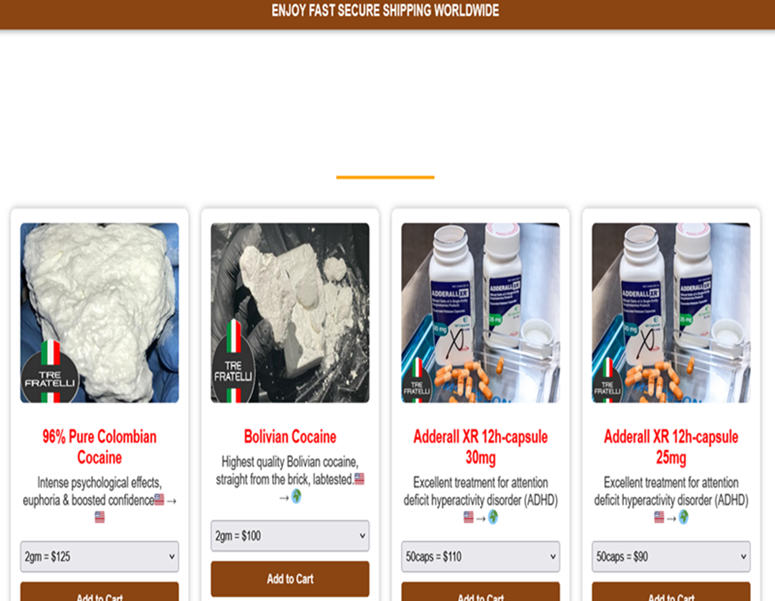
This article discusses counterfeit medicines, online fraud, and darknet activity from a cybersecurity, public health, and research perspective. It does not encourage illegal purchases, participation in criminal marketplaces, or unsafe medication practices.
What Are Counterfeit Medicines?
Counterfeit medicines are intentionally falsified pharmaceutical products designed to appear legitimate while misrepresenting their ingredients, manufacturer, origin, or quality. They are different from legitimate medication recalls, where an approved product is removed from circulation because a safety, manufacturing, or quality issue has been identified.
Counterfeit pharmaceuticals may imitate well-known brands, copy packaging designs, reproduce labels, or use fake expiration dates and lot numbers to appear authentic. However, the contents inside the package may be completely different from the genuine medication.
A counterfeit medicine may contain:
- No active pharmaceutical ingredient.
- An incorrect active ingredient.
- An incorrect dosage level.
- Unapproved substances or contaminants.
- Expired medication presented as new.
- Fake manufacturing information.
The danger is not always obvious. A product can look professional on the outside while failing basic pharmaceutical quality standards internally. Without laboratory testing or verification through legitimate supply chains, consumers may have no reliable way to determine whether a medication is authentic.
Counterfeit Medicines vs Drug Recalls
Drug recalls and counterfeit medicines are often discussed together, but they represent very different situations.
| Drug Recall | Counterfeit Medicine |
|---|---|
| A legitimate medication removed because of a safety, quality, or manufacturing issue. | A fake product intentionally created to deceive consumers. |
| Usually announced by manufacturers or regulatory agencies. | Usually produced and distributed outside regulated systems. |
| Public notices help consumers identify affected products. | Consumers often cannot verify authenticity without trusted sources. |
Understanding this difference is important because official recall systems exist to protect patients, while counterfeit products represent deliberate fraud and public health risks.
Why Fake Medicines Appear Online
The growth of online commerce has created new opportunities for legitimate healthcare access, but it has also provided criminal organizations with additional ways to advertise counterfeit products.
Fake medicines may appear through:
- Fraudulent online pharmacies.
- Unverified marketplace listings.
- Social media advertisements.
- Encrypted messaging channels.
- Illegal online distribution networks.
- Certain darknet marketplaces.
Criminal groups often target medications with high demand, limited availability, or significant price differences between countries. Products commonly targeted include lifestyle medications, prescription drugs, and treatments where consumers may search for cheaper or faster alternatives.
A major challenge is that counterfeit sellers frequently imitate legitimate businesses. They may create professional-looking websites, copy pharmacy logos, display fake certifications, or use misleading reviews to appear trustworthy.
Online Pharmacy Warning Signs
Consumers should be cautious when encountering websites or sellers that:
- Sell prescription medication without requiring a prescription.
- Offer prices that appear unrealistic.
- Hide their physical location or ownership information.
- Make guaranteed medical claims.
- Pressure customers into immediate purchases.
- Avoid normal healthcare verification procedures.
Legitimate online pharmacies operate within regulated healthcare systems and maintain clear accountability for the medications they provide.
Dark Web Markets and Counterfeit Pharmaceuticals
Some counterfeit pharmaceutical operations have used darknet marketplaces as part of their distribution strategy. These hidden services operate through privacy-focused networks designed to make website locations and user identities more difficult to determine.
It is important to separate privacy technology from criminal activity. Networks such as Tor are used by journalists, researchers, privacy advocates, and people living under censorship. However, like many technologies, they can also be misused by criminals.
Readers who want to understand how anonymous networks function can explore our educational guides covering hidden service navigation concepts and dark web search technology .
Darknet marketplaces attract criminal sellers because they may provide:
- Reduced identity verification.
- Anonymous communication options.
- International customer reach.
- Difficult attribution compared with traditional websites.
- Alternative payment systems.
However, anonymity does not remove risk. Buyers of counterfeit medicines face serious health dangers, while investigators increasingly use digital forensics, open-source intelligence, and financial analysis to identify illegal networks.
The Role of Cybersecurity Research
Researchers studying counterfeit pharmaceutical activity generally focus on understanding threats rather than participating in illegal marketplaces. Their work helps identify trends, analyze criminal infrastructure, and improve protection strategies.
Cybersecurity and public health researchers may examine:
- Public threat intelligence reports.
- Government recall announcements.
- Academic research.
- Online fraud campaigns.
- Supply chain vulnerabilities.
Responsible research helps organizations understand how counterfeit medicines spread and how prevention methods can improve over time.
How Counterfeit Medicines Enter Illegal Online Markets
Counterfeit medicines do not appear in isolation. They are usually part of larger criminal supply chains that exploit weaknesses in manufacturing, distribution, online advertising, and consumer trust. While legitimate pharmaceutical networks operate under strict quality controls, illegal sellers attempt to imitate those systems by using fake branding, misleading product descriptions, and anonymous communication channels.
Some counterfeit products originate from unauthorized manufacturing facilities, while others involve diverted legitimate medications that are altered, repackaged, or sold outside approved distribution channels. In both cases, the lack of regulatory oversight creates significant risks for patients.
Understanding these supply chains is important because counterfeit medicine investigations are not simply about websites or marketplaces. They involve global logistics, financial networks, cybersecurity threats, and public health challenges.
The Role of Online Platforms
The growth of online commerce has changed how counterfeit products are advertised and discovered. Criminal groups may use a combination of websites, social media platforms, encrypted communication channels, and hidden services to reach potential customers.
Some illicit sellers attempt to create an appearance of legitimacy by copying pharmaceutical websites, using fake reviews, displaying counterfeit certifications, or claiming to operate as international pharmacies.
For researchers studying online ecosystems, understanding the difference between legitimate online services and hidden networks is essential. Our guide explaining the different parts of the internet provides additional context about the surface web, deep web, and dark web.
Why Criminal Groups Use Anonymous Infrastructure
Some criminal organizations use privacy technologies to make investigations more difficult. Anonymous communication systems, cryptocurrency payments, and hidden services can create additional barriers for attribution, although they do not make criminal activity impossible to investigate.
It is important to separate privacy technology from illegal use. The same privacy tools that protect journalists, researchers, and individuals living under censorship can also be misused by criminals.
Cybersecurity analysts often study these environments through legal research methods, including open-source intelligence (OSINT), threat intelligence reports, and public investigations rather than participating in illegal activity.
Dark Web Markets and Pharmaceutical Threat Intelligence
Dark web markets represent one area researchers examine when analyzing online criminal activity. These platforms use privacy-focused technologies to conceal server locations and user identities, creating challenges for investigators.
However, studying these environments does not require purchasing illegal products or interacting with criminal sellers. Security researchers typically rely on publicly available information, historical data, law enforcement announcements, and threat intelligence reports.
The same analytical techniques used to study counterfeit pharmaceuticals are also applied to other online threats, including fraud networks, stolen data markets, and malicious infrastructure.
The Importance of OSINT Research
Open-source intelligence (OSINT) involves collecting and analyzing information from publicly available sources. It plays an important role in understanding how online threats develop and spread.
Researchers may examine:
- Public government warnings and recall databases.
- Security research publications.
- Academic studies on counterfeit medicine networks.
- Court documents and enforcement announcements.
- Blockchain transparency data.
- Publicly available online advertisements.
OSINT allows investigators to identify trends without directly engaging with illegal marketplaces. This approach helps protect both researchers and the public while producing valuable cybersecurity intelligence.
Blockchain and Cryptocurrency Analysis
Cryptocurrency is sometimes associated with illegal marketplaces because some criminal groups use digital assets for payments. However, blockchain networks also provide valuable investigative information because many transactions are permanently recorded on public ledgers.
Blockchain analysis companies and law enforcement agencies use transaction patterns, wallet relationships, and financial intelligence techniques to investigate criminal activity.
Understanding cryptocurrency security is also important for legitimate users. Our guide on cryptocurrency operational security explains general privacy and security principles for protecting digital assets.
Public Health Consequences of Counterfeit Pharmaceuticals
Counterfeit medicines create risks far beyond individual purchases. Their impact can affect healthcare systems, pharmaceutical companies, regulators, and communities worldwide.
Unlike legitimate medicines, counterfeit products often bypass:
- Quality-control testing.
- Manufacturing inspections.
- Storage requirements.
- Expiration monitoring.
- Pharmacological verification.
As a result, patients may receive products that are ineffective, contaminated, incorrectly dosed, or completely different from what they expect.
Treatment Failure
One of the most serious consequences of counterfeit medicine is delayed or ineffective treatment. Patients may believe they are receiving appropriate medication while their condition continues to worsen.
For diseases requiring precise medication levels, even small differences in active ingredients can have serious consequences.
Antibiotic Resistance Concerns
Counterfeit antibiotics represent a particular public health concern. Medicines containing insufficient active ingredients may fail to eliminate infections completely.
Incomplete treatment can contribute to the development of antibiotic-resistant bacteria, making future infections harder to treat.
Impact on Healthcare Trust
The spread of counterfeit medicines can also damage confidence in healthcare systems. Patients who encounter fake products may lose trust in legitimate pharmacies, manufacturers, or medical providers.
Maintaining strong regulatory systems and public awareness campaigns is therefore essential for protecting healthcare reliability.
How Drug Recall Systems Protect Patients
Drug recall systems exist to identify and remove potentially dangerous products before they cause widespread harm. They represent one of the strongest safety mechanisms within modern pharmaceutical regulation.
Government Monitoring and Recall Alerts
Regulatory agencies monitor medication safety through manufacturing inspections, adverse event reports, laboratory testing, and communication with pharmaceutical companies.
When a safety concern is identified, recall notices typically provide important details such as:
- Product name and manufacturer.
- Lot numbers affected.
- Reason for recall.
- Potential health risks.
- Recommended consumer actions.
Consumers should rely on official recall announcements rather than unofficial online claims when checking whether a medication is affected.
International Cooperation Against Counterfeit Drugs
Because pharmaceutical supply chains operate globally, counterfeit medicine investigations often require cooperation between multiple organizations and countries.
Authorities may collaborate through:
- Customs investigations.
- Healthcare regulators.
- Cybercrime units.
- Pharmaceutical manufacturers.
- International public health organizations.
This cooperation helps identify counterfeit production networks, remove dangerous products, and improve consumer protection.
How Researchers Investigate Counterfeit Medicine Networks
Investigating counterfeit pharmaceutical activity requires cooperation between cybersecurity professionals, healthcare researchers, regulators, and law enforcement agencies. Unlike traditional crime investigations, online counterfeit networks often involve multiple countries, digital infrastructure, cryptocurrency transactions, and rapidly changing communication channels.
Researchers focus on understanding how these networks operate, identifying emerging risks, and sharing intelligence that can help protect consumers. The goal is not to interact with illegal sellers or participate in underground activity, but to analyze available information and improve defensive capabilities.
Cybersecurity Threat Intelligence
Threat intelligence teams monitor digital environments to identify patterns associated with fraud, counterfeit products, phishing campaigns, and other cyber-enabled crimes.
Their work may include analyzing:
- Fraudulent websites impersonating legitimate pharmacies.
- Malicious advertising campaigns.
- Fake customer support channels.
- Credential theft campaigns targeting healthcare organizations.
- Data leaks connected to criminal activity.
This type of research helps organizations understand how criminals adapt their methods and allows security teams to develop stronger prevention strategies.
For readers interested in cybersecurity and privacy research, understanding how anonymous technologies work provides useful context. Our guide on privacy tools and security practices explores legitimate technologies used to improve online protection.
Dark Web Research and Ethical Boundaries
The dark web is often discussed in connection with criminal activity, but research into hidden services can also support legitimate cybersecurity and public interest investigations.
Ethical researchers follow strict guidelines, including:
- Avoiding illegal transactions or purchases.
- Using publicly available information whenever possible.
- Protecting personal data discovered during investigations.
- Following applicable laws and institutional policies.
- Documenting findings responsibly.
Privacy-focused technologies have legitimate applications in journalism, research, and protecting sensitive communications. Tools designed for anonymity should not automatically be associated with unlawful behavior.
For additional background on privacy networks and anonymous browsing technologies, readers can explore our guides covering Tor-related infrastructure and privacy concepts.
How Consumers Can Avoid Counterfeit Medicines
The most effective defense against counterfeit medicines is purchasing medication through trusted healthcare channels and remaining cautious about unrealistic online offers.
Counterfeit sellers often rely on urgency, low prices, fake credibility signals, and misleading advertisements to convince consumers to bypass legitimate healthcare providers.
Use Licensed Pharmacies
Consumers should purchase medicines only from licensed pharmacies that follow recognized healthcare regulations. Legitimate pharmacies require appropriate prescriptions when legally required and obtain products through approved supply chains.
Be cautious of websites that:
- Sell prescription medications without requiring proper authorization.
- Offer prices significantly below normal market rates.
- Promise guaranteed cures or instant results.
- Hide their physical location or licensing information.
- Use aggressive advertising tactics.
Check Medication Packaging Carefully
Although counterfeit medicines can be difficult to identify visually, consumers should pay attention to unusual changes in packaging or product appearance.
Warning signs may include:
- Spelling mistakes on labels.
- Missing manufacturer information.
- Damaged or altered packaging.
- Unexpected tablet color or shape changes.
- Missing lot numbers or expiration dates.
If medication appears different from previous prescriptions, consult a pharmacist or healthcare professional before taking it.
Monitor Official Recall Information
Consumers should rely on official sources when checking whether medications have been recalled. Social media posts, forums, or unofficial websites may contain incomplete or inaccurate information.
Reliable recall information usually includes:
- Medication name.
- Manufacturer details.
- Affected batch or lot numbers.
- Reason for the recall.
- Instructions for consumers.
The Role of Privacy and Security Awareness
Although counterfeit medicine is primarily a public health issue, it also demonstrates the connection between cybersecurity, privacy, and online safety.
Criminal groups frequently combine multiple technologies, including anonymous communication platforms, cryptocurrency systems, and fraudulent websites. Understanding these technologies helps researchers and consumers recognize potential risks.
Privacy awareness is useful beyond dark web research. Everyday browsing habits, online shopping, and personal data protection all benefit from stronger security practices.
For example, privacy-focused browsers and search tools can reduce unnecessary tracking during normal internet use. Our article on DuckDuckGo privacy protection explains how privacy features work in everyday browsing environments.
The Difference Between Privacy and Illicit Activity
A common misconception is that privacy technology exists primarily for criminal purposes. In reality, encryption, anonymous communication, and privacy tools are widely used by ordinary individuals, businesses, journalists, and organizations.
The important distinction is the purpose behind the technology. Protecting personal information and researching cybersecurity threats are legitimate activities, while producing, selling, or distributing counterfeit medicines is illegal and dangerous.
Frequently Asked Questions About Drug Recalls and Counterfeit Medicines
What is a drug recall?
A drug recall is an official action taken to remove a medication from distribution because it may have safety, quality, manufacturing, contamination, or labeling problems. Recalls help protect patients by preventing continued use of potentially harmful products.
Are all recalled medicines counterfeit?
No. Most drug recalls involve legitimate pharmaceutical products that developed a safety concern after manufacturing, testing, or post-market monitoring. Counterfeit medicines are intentionally fake products designed to imitate legitimate medications.
Why are counterfeit medicines dangerous?
Counterfeit medicines may contain incorrect ingredients, incorrect dosages, contaminants, or no active medication at all. Because their contents are unknown, they can cause treatment failure, serious health complications, or life-threatening reactions.
Can counterfeit medicines be found outside the dark web?
Yes. Counterfeit medicines may appear through many unauthorized channels, including fraudulent websites, illegal online pharmacies, social media advertisements, and physical distribution networks. The dark web represents only one part of a much larger counterfeit ecosystem.
How do cybersecurity researchers study counterfeit medicine activity?
Researchers use methods such as open-source intelligence (OSINT), threat intelligence analysis, academic research, public records, and regulatory information. Ethical investigations focus on understanding threats without participating in illegal activity.
How can consumers verify medicine safety?
Consumers should purchase medications from licensed pharmacies, follow medical advice, check official recall announcements, and consult healthcare professionals when something appears unusual.
Final Thoughts: Protecting Public Health in a Digital World
Counterfeit medicines demonstrate how modern criminal activity can combine traditional fraud with digital technology. While online platforms and privacy tools have legitimate uses, criminals may attempt to exploit the same infrastructure to distribute harmful products.
Drug recall systems, regulatory oversight, cybersecurity research, and consumer awareness all play important roles in reducing these risks. No single organization can solve the problem alone; effective prevention requires cooperation between healthcare providers, technology experts, regulators, and the public.
The safest approach for consumers remains simple: purchase medication through trusted healthcare channels, verify information through official sources, and avoid unauthorized sellers offering unrealistic promises.
For readers interested in broader topics involving online privacy, search technology, and cybersecurity research, Torzle provides educational resources covering subjects such as privacy-focused search engines, responsible internet research, and digital security practices.
Understanding how online ecosystems work is one of the most effective ways to recognize risks, protect personal information, and make safer decisions in an increasingly connected world.