How Underground Document Markets Fuel Identity Theft
Most people only think about identity theft when a bank sends a fraud alert or a company emails a breach notice. By then the data has often already moved. After large corporate or government breaches, personal records are frequently packaged and offered in closed online spaces. Understanding that pipeline helps ordinary users respond calmly and protect themselves.
This article explains, in plain language, what tends to happen to stolen personal information, the difference between traditional and synthetic fraud, why biometrics add new complications, and the concrete steps that still reduce risk. It is written for people who want to defend their own data—not for anyone looking to exploit it.
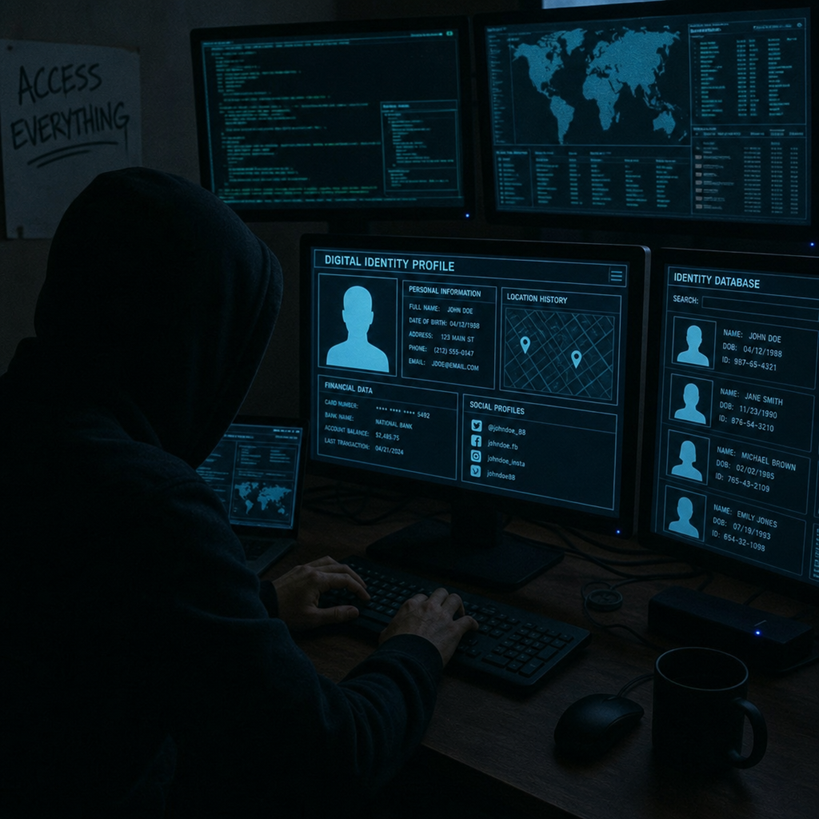
What is An Underground Document Markets
Underground document markets are online platforms where various types of documents, often sensitive or restricted, are bought and sold. These markets operate on the dark web, which is a part of the internet not indexed by standard search engines and requires specific software, like the Tor browser, to access.
The Types of Documents Available
- Government Documents: Classified reports, intelligence briefings, or other sensitive government information.
- Corporate Documents: Confidential business plans, financial reports, or proprietary research.
- Personal Documents: Identity documents, medical records, or personal correspondence.
- Academic Papers: Unpublished research, theses, or dissertations.
- Legal Documents: Court filings, contracts, or other legal papers.
These markets often use cryptocurrencies like Bitcoin for transactions to maintain anonymity. Sellers may offer documents that have been leaked, stolen, or obtained through other means. Buyers can range from journalists and researchers to competitors seeking an edge or individuals with a personal interest in the information.
What Happens After a Data Breach
When a large organization loses customer records, the information rarely stays with the original attackers. It is sorted, combined with data from other leaks, and offered to others who specialize in fraud. These secondary markets exist in encrypted forums and hidden services that require specialized software such as Tor to reach. The same privacy tools that protect journalists and researchers are also used by people trading stolen data—an important reminder that technology itself is neutral.
Typical stages look like this:
- Collection — Data is taken through phishing, malware, or direct system compromise.
- Cleaning and matching — Names, addresses, dates of birth, and government identifiers from different sources are linked together.
- Packaging — Records are grouped into sets that range from basic contact details to more complete profiles.
- Resale — The packages appear in closed markets or private channels.
Communication in these spaces usually relies on end-to-end encryption and privacy-focused payment methods. That operational security is one reason law enforcement investigations take time and coordination across borders.
Why Complete Profiles Are Especially Valuable
Partial records (an email and password, for example) are common and relatively cheap because the supply is huge. More complete sets—name, date of birth, government ID number, address history, and financial details—are harder to assemble and therefore more useful for serious fraud. With enough pieces, someone can attempt to open new credit accounts, file false tax returns, or take over existing services.
Prices fluctuate with supply and demand. After major breaches the volume of available records rises and individual prices often fall. The exact numbers change frequently and are less important than the underlying reality: once your data is out, it can be reused for years.
Traditional Identity Theft vs. Synthetic Fraud
Traditional identity theft is straightforward: someone uses a real person’s details to act as that person. The victim usually notices when unexpected charges appear or collection calls start. Banks and credit bureaus have improved at spotting these cases.
Synthetic identity fraud is different. It combines real pieces of information (often a Social Security number belonging to a child, an elderly person, or someone who rarely checks credit) with invented details. The resulting persona does not match any living individual. Fraudsters slowly build a credit history for this fictional identity, then borrow large amounts and disappear. Because no real consumer is monitoring the file, detection is slower and losses fall mainly on lenders.
Parents can reduce one common source of synthetic fraud by checking whether a credit file already exists for a minor child and by placing a freeze on that file until the child is old enough to need credit. Many credit bureaus make this process free.
Physical Documents and Forgeries
Digital data is only part of the picture. Some fraud still requires physical or scanned identity documents. Templates and tutorials circulate in the same underground spaces, and the quality of counterfeits has improved. Modern government IDs, however, contain security features—microprinting, holograms, optically variable ink, and machine-readable data—that remain difficult to reproduce perfectly. Businesses and border agencies continue to rely on these checks.
Buying or using counterfeit identity documents is illegal and carries serious risk for the purchaser, including scam vendors who take payment and deliver nothing, or worse. From a defensive standpoint, the practical lesson is simple: treat digital scans of birth certificates, passports, and licenses as sensitive. Store physical copies securely and avoid uploading them to untrusted services.
Biometrics and Data Brokers
As more services move to fingerprint or face recognition, stolen biometric data becomes more attractive. Unlike a password, a fingerprint cannot be changed. High-resolution photos and voice samples taken from social media or breached verification systems can also be misused, including in deepfake attempts against remote identity checks.
Data brokers add another layer. These companies legally collect and sell marketing profiles built from public records and online activity. When a broker is breached, or when criminals purchase data through front companies, the result can be highly detailed dossiers. Reducing your footprint with broker opt-out services and limiting unnecessary public sharing of personal details lowers the raw material available for both legitimate and illegitimate use.
How Law Enforcement Responds
Agencies such as the FBI, Europol, and national cyber units regularly target large marketplaces and forums. Takedowns, undercover work, and blockchain analysis have disrupted major operations. The pattern is familiar: one large site closes and smaller successors appear. That “whack-a-mole” reality is why individual defenses matter so much. You cannot rely solely on the next marketplace seizure to protect your own accounts.
Practical Steps That Still Work
Assume some of your data is already available and focus on making it harder to use.
Prevention habits
- Credit freezes — A freeze prevents most new credit accounts from being opened in your name. You can lift it temporarily when you need to apply for legitimate credit. This remains one of the highest-value steps available to individuals.
- Credit monitoring and fraud alerts — Free or low-cost monitoring from the major bureaus notifies you of new inquiries. A fraud alert asks lenders to take extra verification steps.
- Strong, unique passwords and modern multi-factor authentication — Prefer authenticator apps or hardware security keys over SMS codes, which can be intercepted through SIM swaps. A password manager makes unique credentials practical. For more on privacy-supporting tools, see our roundup of privacy tools.
- Limit data broker exposure — Opt-out services and manual requests reduce the amount of personal information that is legally aggregated and later vulnerable to secondary misuse.
- Care with biometric and high-resolution media — Be selective about where you submit face or fingerprint data and about the quality of photos and voice recordings you post publicly.
If you learn your data was in a breach
- Read the notice carefully to learn exactly what was taken.
- Change passwords on affected accounts and anywhere else you reused them.
- Place a fraud alert or freeze with the credit bureaus.
- Consider an IRS Identity Protection PIN if a Social Security number was involved, and file taxes early when possible.
- Review recent bank and credit-card statements for small test charges as well as larger ones.
- If you find clear evidence of fraud, report it at IdentityTheft.gov and consider a local police report for documentation with banks and creditors.
These steps are the same ones recommended by consumer protection agencies. They do not require specialized technical knowledge, only consistency.
For readers who also research online threats or use anonymity tools for legitimate work, good operational habits matter. Verifying onion addresses, avoiding phishing clones, and using Tor Browser’s higher security settings reduce the chance of secondary compromise while you investigate. Our guides on avoiding Tor scams and the complete guide to anonymous browsing cover those practices in detail. Basic PGP verification remains useful whenever you need to confirm the authenticity of a signed message or key.
Legality and Anonymity
The legality of these transactions can be questionable, as they often involve the distribution of copyrighted material or confidential information without authorization. However, the anonymity provided by the dark web makes it difficult for authorities to track and prosecute those involved.
Frequently Asked Questions
Is my data already on the dark web?
After years of large breaches, many people’s basic records have appeared in secondary markets at some point. That does not mean active fraud is occurring. Monitoring, freezes, and unique credentials greatly reduce the chance that available data can be turned into new accounts or takeovers.
What is the difference between a credit freeze and a fraud alert?
A freeze blocks most new credit applications until you temporarily lift it. A fraud alert tells lenders to take extra steps to verify identity but does not block applications by itself. Freezes generally provide stronger protection against new-account fraud.
Can synthetic identity fraud affect me even if I monitor my own credit?
Synthetic fraud often uses a real Social Security number paired with invented personal details. The resulting credit file may not appear on your own reports. Checking for unexpected credit files in a child’s name and freezing minors’ files are the most direct consumer defenses against this pattern.
Are biometric logins safer than passwords?
They are convenient and resistant to remote guessing, but stolen biometric data cannot be rotated the way a password can. Prefer systems that store biometric templates on the device rather than in large central databases, and treat high-resolution face and voice data as sensitive.
What should I do first after a breach notification?
Determine exactly what data was exposed, change affected passwords, enable stronger authentication, and place a fraud alert or credit freeze. Then monitor statements and credit reports for unusual activity. Official recovery checklists are available at IdentityTheft.gov.
Conclusion
Underground trading of personal data is a persistent side effect of large-scale breaches and the high value of identity information. The scale can feel discouraging, yet the most effective defenses remain accessible: credit freezes, careful authentication, reduced data-broker exposure, and prompt response when a breach is announced.
You do not need to become a cybersecurity expert. Consistent habits—unique passwords, modern multi-factor authentication, freezes on credit files, and skepticism toward unexpected requests for personal documents—close off the easiest paths for misuse. Stay informed, act early when notices arrive, and treat your personal data as something worth protecting with the same care you give physical keys and important papers.
For related reading on safer research practices and privacy tools, see our guides to the layers of the internet, verified link directories, and current privacy tools.