Key Dark Web Resources for Research and Situational Awareness in 2026
What are Dark Web links?
Dark web links or resources are websites, services, or tools that are intentionally not accessible through standard web browsers or search engines and require special software or configurations to access. They exist within overlay networks (most commonly Tor) that are designed to provide privacy, anonymity, or censorship resistance. However, for the Dark web to exist, it needs to fit into the internet.
These resources exist to support anonymity, censorship resistance, and secure communication. While often misunderstood, many dark web services serve legitimate purposes such as academic research, whistleblowing, journalism, and privacy advocacy.
How the Internet is Structured
The internet is commonly divided into three conceptual layers based on accessibility, visibility, and indexing, rather than size or importance.
Surface Web: The Surface Web is the publicly accessible portion of the internet that is indexed by standard search engines such as Google, Bing, and DuckDuckGo. Users can access this content through regular web browsers without requiring special software, authentication, or additional configurations. Examples include news websites, educational platforms, government websites, public blogs, and other openly available online resources. This is the part of the internet that most people interact with on a daily basis.
Deep Web: The deep web includes online content that is not indexed by standard search engines and typically requires authentication, direct access, or specific permissions. This content is not hidden for anonymity, but rather for privacy, security, or functional reasons. Examples include: Email inboxes, cloud storage accounts, Private databases. privacy communities and academic journals. The deep web makes up a significant portion of the internet and is largely routine and legitimate.
Dark Web: The Dark Web refers to intentionally hidden online services that operate within
privacy-focused overlay networks
and require specialized software, such as the Tor Browser, or specific configurations to access.
Unlike the Surface Web, these services are not indexed by traditional search engines and often use
unique addresses such as Tor's .onion domains.
Dark Web services can support legitimate uses including privacy research, journalism, whistleblower communication, censorship-resistant publishing, and anonymous discussion platforms. Examples include Tor-based resources such as the Ahmia search engine , which helps users discover publicly available onion services, and Tor Taxi , a directory-style resource focused on onion service discovery and verification.
Accessing Dark Web services requires privacy-aware browsing practices, as hidden services can vary significantly in reliability, security, and purpose. Users should verify addresses carefully, avoid untrusted links, and understand the risks associated with unknown online services.
Surface Web vs Deep Web vs Dark Web
Although the terms are often used interchangeably, the surface web, deep web, and dark web each serve different purposes. Understanding these differences helps researchers, students, and privacy-conscious users navigate the internet more effectively.
Learn more about the different layers of the internet, including the Surface Web, Deep Web, and Dark Web. Our guide, Understanding the differences between the Surface Web, Deep Web, and Dark Web , explains how these areas differ in accessibility, indexing, purpose, and privacy characteristics.
| Layer | Indexed by Search Engines | Access Method | Examples |
|---|---|---|---|
| Surface Web | Yes | Any web browser | News websites, blogs, company websites |
| Deep Web | No | Browser with authentication | Email, cloud storage, academic databases, banking portals |
| Dark Web | No | Tor Browser or compatible privacy network | Onion services, whistleblower platforms, privacy forums |
Common Misconceptions About the Dark Web
The dark web is frequently misunderstood because media coverage often focuses on cybercrime. In reality, the technology itself is simply a privacy-focused network. Like the public internet, it contains both legitimate and illegal content.
The Dark Web Is Not Entirely Illegal
Many people assume visiting the dark web is illegal. In most countries, including the United States, Canada, and much of Europe, simply accessing the Tor network is legal. What remains illegal are unlawful activities conducted through any network, whether on the surface web or the dark web.
Most of the Internet Is Actually the Deep Web
The deep web is often confused with the dark web. However, the deep web includes everyday services such as email accounts, online banking, university databases, cloud storage, and private business portals. These services are not indexed by search engines but are completely legitimate.
Tor Does Not Guarantee Complete Anonymity
Tor significantly improves privacy, but it cannot protect users who reveal personal information, download malicious files, or ignore good operational security practices. Privacy depends on user behavior as much as technology.
Not Every Onion Site Is Trustworthy
Anyone can create an onion website, which means researchers should carefully verify addresses before accessing them. Cross-checking onion URLs through multiple trusted sources can help reduce the risk of phishing, impersonation, and outdated links. Our guide on trending darknet sites in 2026: ecosystem trends, categories, and safety practices provides additional information on evaluating onion services and approaching hidden services with greater awareness.
Security Best Practices for Researchers
Whether you're conducting cybersecurity research, academic studies, or open-source intelligence (OSINT), maintaining good security practices helps reduce unnecessary risks.
- Use the latest version of the Tor Browser and keep it updated.
- Verify onion addresses through multiple trusted directories before visiting them.
- Enable Tor Browser's Safer or Safest security level when appropriate.
- Avoid downloading files unless absolutely necessary.
- Consider opening downloaded documents inside an isolated virtual machine.
- Never reuse passwords between onion services and regular websites.
- Use strong, unique passwords together with a password manager.
- Verify PGP fingerprints before trusting signed messages or downloading software.
- Avoid revealing personally identifiable information while researching anonymous networks.
- Learn about additional privacy technologies in our Privacy Tools Guide.
Personal Disclaimer
The List of Dark Web Site Resources for Researchers
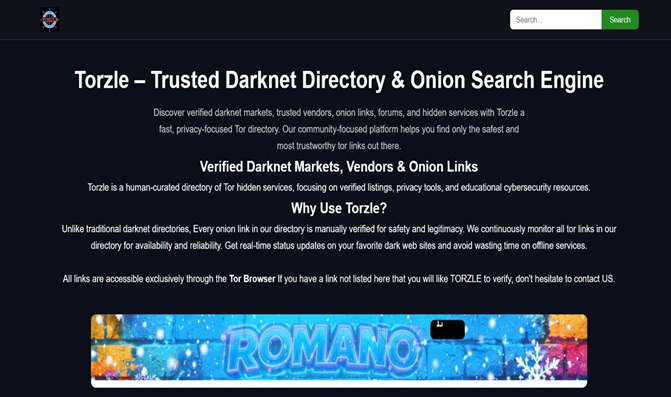
Researchers often use directories, search engines, and curated resource lists to locate publicly known onion services. Educational directories such as Torzle App organize links by category and help users discover research resources more efficiently.
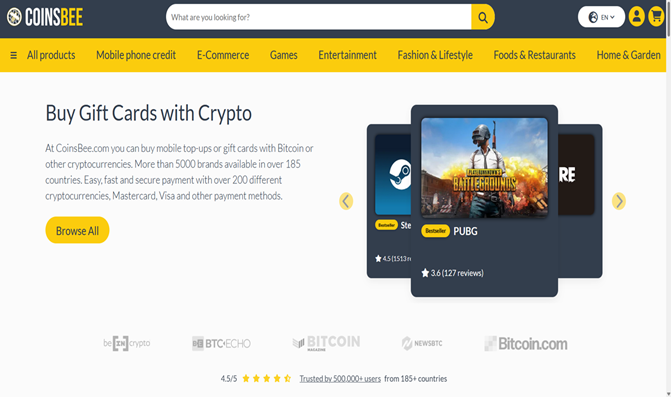
Coinsbee is a cryptocurrency payment platform that enables users to purchase digital gift cards, prepaid payment cards, mobile phone top-ups, gaming credits, and selected digital services using cryptocurrency. The platform acts as a bridge between digital assets and everyday spending, allowing users to pay with crypto without first converting it to traditional currency.
Purpose
Coinsbee is designed for people who want to spend cryptocurrency on everyday products and services. It offers access to thousands of gift cards and digital products from global retailers, making it a convenient option for users who prefer crypto payments.
Supported Cryptocurrencies
- Bitcoin (BTC)
- Ethereum (ETH)
- Litecoin (LTC)
- Monero (XMR)
- Tether (USDT)
- USD Coin (USDC)
- Binance Coin (BNB)
- Solana (SOL)
- Dogecoin (DOGE)
- Numerous additional cryptocurrencies and tokens
Common Use Cases
- Purchasing gift cards for major online retailers and streaming services.
- Buying gaming credits and digital entertainment vouchers.
- Recharging prepaid mobile phone plans in supported countries.
- Using cryptocurrency for online purchases where direct crypto payments are unavailable.
- Converting cryptocurrency into practical spending power without selling assets through a traditional exchange.
Limitations
- Product availability varies by country and region.
- Most purchases are non-refundable once the gift card or voucher has been delivered.
- Gift cards are subject to the terms and restrictions of their respective merchants.
- Cryptocurrency transaction fees and exchange-rate fluctuations may affect the final purchase cost.
- Coinsbee facilitates payments but does not control the policies of third-party brands or retailers.
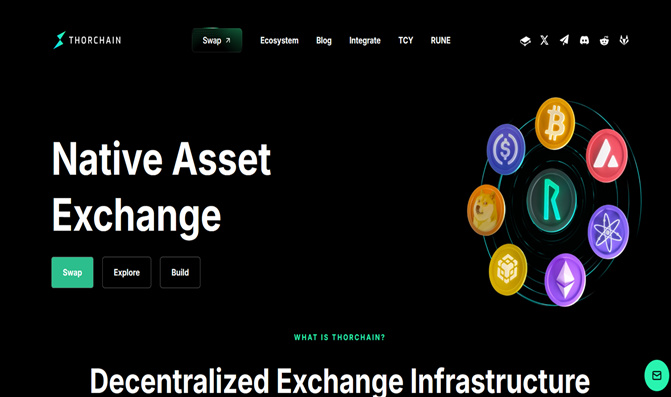
THORChain is a decentralized, non-custodial cross-chain liquidity protocol that enables users to swap native cryptocurrencies directly between different blockchains without relying on centralized exchanges or wrapped tokens. The protocol is powered by automated liquidity pools and is designed to facilitate permissionless, transparent, and censorship-resistant digital asset exchanges.
Purpose
THORChain aims to make decentralized cross-chain trading simple by allowing users to exchange native cryptocurrencies while retaining custody of their assets. It is widely used within the decentralized finance (DeFi) ecosystem by individuals seeking greater control over their funds and reduced reliance on centralized services.
Supported Assets
- Bitcoin (BTC)
- Ethereum (ETH)
- BNB Chain assets
- Avalanche (AVAX)
- Dogecoin (DOGE)
- Litecoin (LTC)
- Bitcoin Cash (BCH)
- Cosmos ecosystem assets
- THORChain's native token (RUNE)
Common Use Cases
- Swapping cryptocurrencies across different blockchains without using a centralized exchange.
- Maintaining custody of digital assets throughout the trading process.
- Providing liquidity to earn protocol rewards.
- Accessing decentralized finance (DeFi) applications and services.
- Diversifying cryptocurrency holdings through permissionless cross-chain exchanges.
Limitations
- Transaction fees depend on the blockchain networks involved.
- Price slippage may occur during large swaps or periods of low liquidity.
- Users are responsible for securely managing their wallets and private keys.
- Supported assets and blockchain integrations may change as the protocol evolves.
- Like other DeFi protocols, smart contract and protocol risks should be considered before use.
Researchers and cryptocurrency users often reference THORChain when studying decentralized exchanges (DEXs), cross-chain interoperability, and privacy-focused financial tools. For additional educational articles on cryptocurrency privacy, Tor, and security resources, explore Crypto Opsec tips.
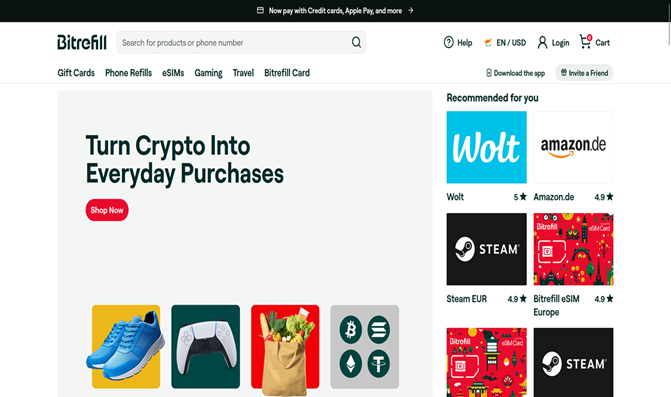
Bitrefill is a cryptocurrency commerce platform that enables users to spend digital assets on everyday products and services without first converting them into traditional currency. The platform offers digital gift cards, mobile phone top-ups, eSIMs, prepaid payment cards, and other products from thousands of brands, making it easier to use cryptocurrency for daily purchases.
Purpose
Bitrefill is designed to help cryptocurrency users purchase goods and services directly with their digital assets. Its goal is to simplify crypto spending by providing instant access to gift cards, prepaid products, travel services, and mobile connectivity in numerous countries.
Supported Cryptocurrencies
- Bitcoin (BTC)
- Lightning Network payments
- Ethereum (ETH)
- Litecoin (LTC)
- Dogecoin (DOGE)
- Dash (DASH)
- USDT and selected stablecoins
- Additional cryptocurrencies supported through integrated payment providers
Common Use Cases
- Purchasing digital gift cards from major international retailers.
- Buying prepaid Visa cards and other payment products where available.
- Refilling prepaid mobile phone balances.
- Purchasing eSIM data plans for international travel.
- Using cryptocurrency for everyday online purchases without selling crypto through an exchange.
Limitations
- Available products and supported brands vary by country and region.
- Digital gift cards and prepaid products are generally non-refundable after delivery.
- Merchant-specific terms, expiration dates, and regional restrictions may apply.
- Cryptocurrency network fees and exchange-rate fluctuations can affect the total purchase cost.
- Certain payment cards and services may not be available in all jurisdictions.
Bitrefill is frequently referenced by cryptocurrency users, digital nomads, and privacy-conscious individuals looking for practical ways to spend digital assets. For additional educational resources on cryptocurrency, Tor, privacy tools, and online security, explore Cryptocurrency Safety.
Frequently Asked Questions
Is the Dark Web Illegal?
No. Accessing the Tor network is legal in many countries. Illegal activities remain illegal regardless of whether they occur on the public internet or anonymous networks.
Can Google Search Onion Websites?
Generally no. Most onion services are intentionally excluded from traditional search engines because they operate within private overlay networks. Specialized onion search engines and curated directories are commonly used instead.
Why Do Journalists and Researchers Use Tor?
Journalists, researchers, and human rights organizations often use Tor to protect confidential communications, reduce online tracking, and access information in regions where censorship exists.
What Is an Onion Address?
An onion address is a domain ending in .onion that can only be accessed through the Tor network. These addresses are cryptographically generated rather than registered through traditional domain registrars.
Are All Onion Websites Safe?
No. Like the public internet, onion services vary in quality and trustworthiness. Always verify URLs through reliable sources and avoid downloading unknown files or sharing sensitive information.
Where Can I Learn More?
To continue learning about the Tor ecosystem, online privacy, and dark web research, visit Torzle, an educational directory providing curated resources, security guides, and research information. It helps readers better understand how hidden services work, recognize common risks such as scams and impersonation attempts, and develop safer online research practices.
Conclusion
The dark web represents only a small portion of the internet, yet it plays an important role in privacy, anonymous communication, cybersecurity research, journalism, and censorship resistance. While anonymous networks can be misused, they also provide valuable infrastructure for legitimate research and secure communication around the world.
Understanding the differences between the surface web, deep web, and dark web allows researchers to evaluate information more accurately and avoid many common misconceptions. Combining reliable resources with strong operational security—including verifying onion addresses, keeping software updated, and following established privacy practices—helps create a safer research environment.
Continue exploring the Tor ecosystem with our educational resources. Learn how the Torch search engine helps users discover onion services, explore our collection of privacy and security tools for safer online research, or browse the Torzle research directory to find verified resources, guides, and information about the Tor network and online privacy.