Russian Market Shop Explained: Risks & Security Guide
Understand what Russian Market Shop is, why it attracts attention in cybersecurity discussions, and how you can reduce the risk of credential theft, identity fraud, and other cyber threats.
Introduction
The internet has transformed how people work, communicate, shop, and manage their finances. Unfortunately, it has also created opportunities for cybercriminals to profit from stolen digital information. One name that frequently appears in cybersecurity reports and threat intelligence discussions is Russian Market Shop.
Although the name often appears in news reports, security blogs, and cyber threat research, many people are unsure what it actually represents. Some assume it is simply another website, while others believe it is responsible for every major data breach. In reality, understanding Russian Market Shop requires understanding the broader ecosystem of dark web marketplaces where stolen digital information is bought and sold.
Security professionals study these marketplaces because they provide valuable insight into emerging cybercrime trends. Information advertised on these platforms often originates from malware infections, phishing attacks, compromised devices, password theft, or previously disclosed data breaches. The marketplaces themselves do not create every piece of stolen information, but they can serve as locations where cybercriminals attempt to monetize compromised data.
Learning how these cybercrime ecosystems operate is important for everyone—not because people should visit them, but because understanding the risks makes it easier to recognize warning signs, improve account security, and strengthen personal online privacy.
If you're new to how different parts of the internet function, our guide on Differences Between the Surface Web, Deep Web and Dark Web provides helpful background before exploring cybersecurity topics like Russian Market Shop.
In this guide you'll learn:
- What Russian Market Shop is
- Why it became well known
- Why cybersecurity experts monitor these marketplaces
- What types of stolen information commonly appear in cybercrime markets
- How individuals can reduce the risk of identity theft and credential compromise
What Is Russian Market Shop?
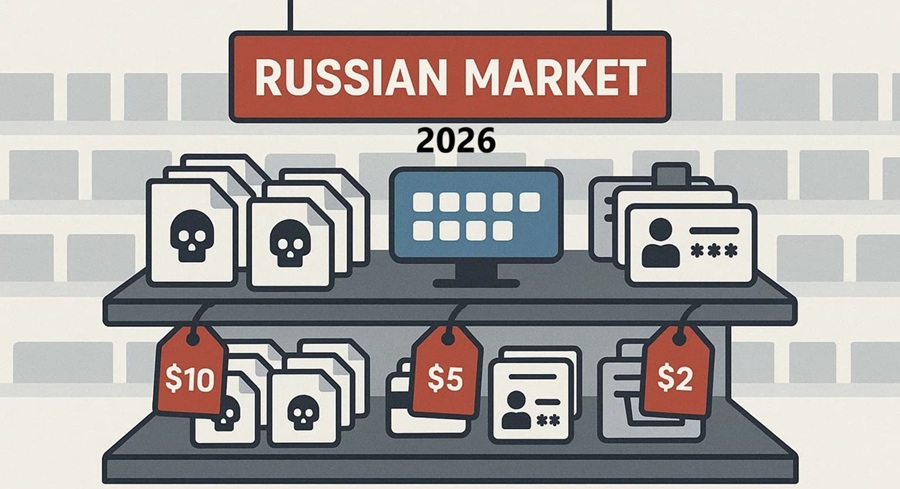
Russian Market Shop is a name commonly associated with a cybercrime marketplace discussed by cybersecurity researchers and threat intelligence organizations. Reports describe it as a marketplace where stolen digital information may be advertised or exchanged by cybercriminals.
Unlike legitimate online marketplaces that sell legal products or services, cybercrime marketplaces revolve around illegally obtained digital assets. These may include stolen usernames, passwords, browser information, session data, financial records, and other compromised information originating from cyberattacks.
It is important to understand that cybersecurity researchers study these marketplaces to identify new threats, warn potential victims, and improve defensive security measures. Organizations involved in cyber threat intelligence monitor criminal activity to better understand emerging attack trends and help companies respond before attacks become more widespread.
The marketplace itself is only one part of a much larger cybercrime ecosystem that includes phishing campaigns, credential theft, infostealer malware, social engineering attacks, ransomware operations, and large-scale data breaches.
Understanding this broader picture helps explain why security researchers pay close attention to marketplaces like Russian Market Shop even if most internet users never encounter them directly.
Readers interested in privacy-focused search technologies can also explore our article about Torch Search , which explains how researchers discuss search tools in the context of internet privacy and security awareness.
Why Russian Market Shop Became Well Known
Russian Market Shop became widely discussed because cybersecurity researchers repeatedly observed references to it in threat intelligence reports. As cybercrime evolved over the last decade, marketplaces that specialized in stolen digital information became increasingly important to criminal operations.
Several trends contributed to its visibility within cybersecurity discussions.
Growth of Cybercrime Marketplaces
Over the past decade, cybercrime has become increasingly organized. Rather than individual hackers operating alone, many criminal groups now function as businesses with specialized roles.
Some groups focus on developing malware, others steal credentials through phishing campaigns, while additional actors attempt to profit by advertising stolen information through criminal marketplaces.
This specialization has created a cybercrime economy where different criminal actors perform different tasks, increasing efficiency while making investigations more challenging for law enforcement.
Cybersecurity companies monitor these developments because they reveal how digital threats continue evolving.
Expansion After Major Marketplace Shutdowns
Law enforcement actions have successfully disrupted numerous cybercrime marketplaces over the years. However, history shows that when one marketplace disappears, others often attempt to fill the gap.
As older platforms became unavailable, cybersecurity researchers observed users migrating toward alternative marketplaces. This continual movement contributes to ongoing changes across the cybercrime ecosystem and explains why marketplace names periodically gain public attention.
The constant evolution of these communities highlights why organizations rely on continuous cyber threat intelligence instead of assuming that criminal activity disappears after a single enforcement action.
Increasing Demand for Stolen Digital Information
Modern life depends on online accounts. Banking, shopping, healthcare, education, remote work, cloud storage, cryptocurrency, and social media all rely on digital identities.
As more valuable services move online, stolen credentials have become increasingly valuable to cybercriminals. Rather than attacking every victim directly, criminals may attempt to profit by selling compromised information to others within underground markets.
This demand fuels continued criminal activity and reinforces the importance of password security, multi-factor authentication, and cybersecurity awareness.
What Types of Data Are Commonly Traded?
Cybersecurity reports describe several categories of stolen information that may appear across cybercrime marketplaces. Understanding these categories helps explain why compromised accounts can create significant risks for both individuals and organizations.
The descriptions below are provided solely for educational cybersecurity awareness. They are intended to help readers recognize why protecting digital information is important and should not be interpreted as operational guidance regarding cybercrime.
Stolen Usernames and Passwords
Compromised login credentials remain among the most common forms of stolen digital information. Passwords may originate from phishing attacks, malware infections, reused passwords, or previously disclosed data breaches.
Once credentials become exposed, criminals may attempt account takeovers, identity theft, or financial fraud. This is one reason cybersecurity experts consistently recommend using unique passwords for every online account.
Browser Cookies
Web browsers store cookies to help users remain signed in and remember website preferences. When these files are stolen, they may expose sensitive session information and increase security risks depending on the website and its protections.
Although cookies improve convenience for legitimate users, protecting devices from malware helps reduce the risk of unauthorized access to browser data.
Session Tokens
Many websites rely on temporary session information that allows users to remain authenticated while browsing. Cybersecurity researchers monitor attempts to steal this information because compromised session data may increase the impact of account compromise.
Organizations increasingly deploy additional security controls to reduce risks associated with stolen session information.
Infostealer Logs
One of the most discussed categories within recent cybersecurity research involves infostealer logs. These logs may contain information collected from malware-infected devices, including browser data, saved passwords, application information, or system details.
Security teams closely monitor infostealer malware because infections can expose multiple online accounts from a single compromised device. We'll examine infostealer malware in greater detail in the next section of this guide.
Financial Information
Cybercriminals frequently target financial information because it can facilitate fraud or unauthorized transactions. Financial institutions continue investing heavily in fraud detection, customer authentication, and transaction monitoring to reduce these risks.
Consumers can further improve security by enabling transaction alerts and regularly reviewing account activity.
Device Fingerprints
Modern websites often collect technical information about devices for fraud prevention and security purposes. When combined with other compromised information, device-related data may contribute to broader cybercrime investigations or fraud attempts.
Understanding how digital identity extends beyond usernames and passwords highlights why comprehensive cybersecurity practices remain essential.
In the next part of this guide, we'll explore infostealer malware, examine the major security risks associated with Russian Market Shop, and explain how stolen credentials contribute to identity theft, financial fraud, corporate breaches, and other cyber threats.
Understanding Infostealer Malware
One of the biggest reasons cybersecurity professionals pay attention to marketplaces like Russian Market Shop is the growing threat of infostealer malware. Over the past several years, infostealers have become one of the most common ways cybercriminals collect stolen credentials and other sensitive information from infected devices.
Unlike ransomware, which immediately demands payment from victims, infostealer malware is designed to quietly gather information. Security researchers have observed that infected computers may contain saved passwords, browser cookies, autofill information, cryptocurrency wallet data, browsing history, and other digital information that criminals attempt to monetize.
The malware itself can spread through phishing emails, fake software downloads, malicious advertisements, pirated applications, or compromised websites. Once installed, it attempts to collect information without the user's knowledge before transmitting the stolen data to criminal operators.
Because many internet users allow browsers to save passwords, a single infected computer may expose dozens—or even hundreds—of online accounts. This is why cybersecurity experts recommend combining password managers with multi-factor authentication instead of relying solely on browser-saved passwords.
Organizations that monitor cyber threat intelligence frequently analyze trends involving infostealer malware because infections often precede larger attacks, including account takeovers, business email compromise, and corporate network intrusions.
Protecting devices through software updates, trusted security software, safe browsing habits, and phishing awareness significantly reduces the likelihood of malware infections.
Major Security Risks Associated with Russian Market Shop
The greatest concern surrounding Russian Market Shop is not the marketplace itself—it is the broader criminal ecosystem that profits from stolen digital information. Once personal or corporate data is compromised, victims may experience a wide range of security issues that extend far beyond a single online account.
Below are some of the most significant risks associated with stolen credentials and compromised digital identities.
Identity Theft
Identity theft occurs when criminals use stolen personal information to impersonate another individual. Depending on the information involved, this may include opening financial accounts, making fraudulent purchases, or attempting to access additional online services.
Even partial personal information can become valuable when combined with data obtained from previous data breaches. This is one reason cybersecurity experts encourage people to monitor breach notifications and regularly review financial statements.
Financial Fraud
Compromised financial information can lead to unauthorized purchases, fraudulent transfers, or attempts to access banking and payment accounts. Financial institutions continue investing heavily in fraud detection systems, but consumers also play an important role by monitoring account activity and reporting suspicious transactions quickly.
Enabling transaction alerts provides an additional layer of visibility whenever unusual activity occurs.
Account Takeovers
One of the most common consequences of stolen credentials is an account takeover. If a username and password become compromised, criminals may attempt to access email accounts, social media platforms, cloud storage, gaming services, or workplace applications.
Email accounts are particularly valuable because they often serve as password recovery hubs for many other online services. Protecting your primary email account should therefore be considered a top cybersecurity priority.
Corporate Breaches
Businesses face additional risks when employee credentials are compromised. Even a single stolen account can create opportunities for unauthorized access if security controls are weak.
Cybersecurity teams therefore monitor compromised credentials carefully and encourage employees to report suspicious login activity immediately. Many organizations also implement zero-trust security models that continuously verify user identities rather than assuming authenticated users remain trustworthy indefinitely.
Cryptocurrency Theft
Cryptocurrency users face unique risks because digital assets are often irreversible once transferred. Attackers frequently target wallet credentials, recovery phrases, browser extensions, or phishing victims in an attempt to steal cryptocurrency holdings.
Individuals who own digital assets should consider dedicated security practices, including hardware wallets where appropriate and strong protection of recovery information. Readers interested in improving operational security can also explore our guide to cryptocurrency OPSEC best practices.
Privacy Violations
Not every cybercrime results in immediate financial loss. Sometimes the greatest impact involves the exposure of private information, personal communications, browsing activity, or sensitive documents.
Privacy violations can affect personal relationships, employment opportunities, and overall digital trust. Practicing good online privacy habits helps reduce unnecessary exposure of personal information.
How Cybercriminals Exploit Stolen Credentials
Stolen usernames and passwords are valuable because many people reuse the same password across multiple websites. Once one account becomes compromised, attackers may attempt to access additional services using the same credentials—a practice commonly referred to as credential stuffing.
Credential stuffing relies on password reuse rather than sophisticated hacking techniques. If individuals use unique passwords for every account, the effectiveness of this type of attack decreases dramatically.
Cybercriminals may also combine information from multiple sources. For example, credentials exposed during historical data breaches may later be combined with information gathered through phishing campaigns or malware infections.
Email accounts frequently become primary targets because they provide password reset capabilities for banking, shopping, cloud storage, and social media services.
Organizations counter these threats by deploying login anomaly detection, risk-based authentication, suspicious session monitoring, and multi-factor authentication. These security controls help identify unusual login behavior even when correct passwords are entered.
Understanding how stolen credentials are abused reinforces the importance of maintaining strong password hygiene and protecting every online account—not just financial services.
Who Is Most at Risk?
Although anyone who uses the internet can become a victim of cybercrime, certain groups face higher levels of exposure due to the amount of sensitive information they manage or the value of their accounts.
People who reuse passwords across multiple websites remain among the highest-risk users. If one website suffers a data breach, identical passwords on other services may also become vulnerable.
Remote workers are another common target because they frequently access business systems from multiple locations and devices. Compromised workplace credentials can potentially affect entire organizations.
Small businesses often face elevated risk because they may have fewer dedicated cybersecurity resources than larger enterprises while still handling valuable customer information.
Cryptocurrency investors, online sellers, digital content creators, and individuals with large social media audiences may also attract increased attention from cybercriminals due to the potential financial value of their accounts.
Ultimately, however, cybercriminals frequently rely on scale rather than carefully selecting individual victims. Automated attacks may target thousands—or even millions—of accounts at once.
Warning Signs Your Data May Have Been Compromised
Many victims do not realize their information has been exposed until suspicious activity begins appearing across multiple accounts. Recognizing early warning signs allows users to respond more quickly and reduce potential damage.
Some of the most common indicators include:
- Unexpected password reset emails you did not request.
- Login alerts from unfamiliar devices or locations.
- Multi-factor authentication requests that appear unexpectedly.
- Unauthorized purchases or payment notifications.
- Friends reporting unusual messages sent from your account.
- Security notifications from websites warning of suspicious logins.
- Unknown devices listed in your account's active sessions.
- Emails informing you that your information appeared in a known data breach.
If you observe any of these warning signs, change affected passwords immediately, enable multi-factor authentication where available, review recent account activity, and contact the relevant service provider if necessary.
Improving overall privacy habits can also reduce future exposure. Our guides covering privacy-focused search and recommended privacy tools provide additional strategies for strengthening your digital security.
In Part 3, we'll cover practical identity theft prevention strategies, password security best practices, multi-factor authentication, organizational defenses, common misconceptions, frequently asked questions, and the final verdict on Russian Market Shop and the broader cybercrime ecosystem.
How to Protect Yourself
While cybercrime continues to evolve, there are many practical steps individuals can take to reduce the risk of credential theft, identity fraud, and account compromise. No single security measure is perfect, but combining multiple layers of protection significantly improves your overall cybersecurity.
Use Unique Passwords
One of the most effective ways to protect your online accounts is to use a unique, strong password for every website and service. Reusing passwords across multiple accounts creates unnecessary risk because a single data breach can expose access to many other services.
Strong passwords should be long, difficult to guess, and not based on personal information such as birthdays or names. Using different passwords for every account greatly reduces the impact of credential stuffing attacks.
Password Managers
Remembering dozens of unique passwords is difficult, which is why many cybersecurity professionals recommend using a reputable password manager. These tools securely store passwords, generate strong random credentials, and make it easier to avoid password reuse.
A password manager also simplifies updating passwords after a data breach or security incident.
Enable Multi-Factor Authentication (MFA)
Multi-factor authentication (MFA) adds an extra verification step beyond a password. Even if criminals obtain your login credentials, MFA can help prevent unauthorized access by requiring an additional authentication factor.
Whenever possible, enable MFA on email accounts, financial services, cloud storage, work accounts, and social media platforms. These accounts often contain the most valuable personal information.
Keep Software Updated
Software updates frequently include important security patches that fix known vulnerabilities. Keeping your operating system, browser, applications, and mobile devices up to date reduces the likelihood that attackers can exploit outdated software.
Automatic updates are a convenient way to stay protected without manually checking for new releases.
Watch for Phishing Attempts
Phishing remains one of the most common ways attackers steal credentials. Be cautious when receiving unexpected emails, text messages, or direct messages asking you to log in, verify account information, or download attachments.
Always verify the sender, inspect website addresses carefully, and avoid clicking suspicious links. When in doubt, visit the organization's official website directly instead of using links contained in unsolicited messages.
Monitor Breach Notifications
Organizations occasionally disclose security incidents affecting customer data. Paying attention to breach notifications allows you to change passwords quickly before attackers can reuse compromised credentials.
Regularly reviewing security alerts from the services you use is an important part of long-term account security.
Secure Your Email Account
Because email accounts are often used to reset passwords for other services, protecting your email should be a top priority. Use a strong unique password, enable MFA, and review account recovery settings periodically.
If your email account remains secure, recovering from other account compromises becomes much easier.
Review Active Sessions
Many online services allow users to review devices currently signed into their accounts. Periodically checking active sessions helps identify unfamiliar logins and gives you the opportunity to sign out unknown devices.
Reviewing account activity is a simple habit that can reveal suspicious behavior before more serious damage occurs.
How Organizations Can Reduce Risk
Businesses face different cybersecurity challenges than individual users because they often manage sensitive customer information, intellectual property, and critical business systems. A single compromised employee account can sometimes have organization-wide consequences.
Organizations can reduce risk by implementing layered cybersecurity practices, including:
- Require multi-factor authentication for employees.
- Enforce strong password policies and discourage password reuse.
- Provide regular cybersecurity awareness training.
- Deploy endpoint detection and response (EDR) solutions.
- Monitor for exposed corporate credentials using dark web monitoring services.
- Keep software, operating systems, and security tools updated.
- Restrict user privileges using the principle of least privilege.
- Develop and regularly test an incident response plan.
- Monitor authentication logs for unusual login behavior.
- Perform routine security assessments and vulnerability management.
No security strategy completely eliminates cyber risk, but combining preventive, detective, and response measures helps organizations strengthen resilience against evolving threats.
Russian Market Shop and the Broader Cybercrime Ecosystem
Russian Market Shop is best understood as one example of a broader cybercrime ecosystem rather than an isolated phenomenon. Cybercrime today involves numerous interconnected activities, including phishing, malware distribution, credential theft, financial fraud, ransomware, and identity theft.
Cybersecurity researchers study these ecosystems to identify trends, improve defensive strategies, and help organizations respond more effectively to emerging threats.
Marketplaces discussed in threat intelligence reports represent only one stage in a larger criminal process. Stolen information often originates from compromised devices, phishing campaigns, or previously disclosed data breaches before appearing in criminal marketplaces.
For readers interested in learning more about how the dark web differs from the broader internet, our guides on Tor Taxi, Hidden Wiki, and Excavator provide educational overviews focused on internet privacy and cybersecurity awareness.
Understanding these topics helps readers recognize online risks without encouraging or participating in illegal activity.
Common Misconceptions
Only Large Companies Become Victims
Small businesses and individual users are frequently targeted because attackers often rely on automated campaigns that affect thousands of accounts at once.
Strong Passwords Alone Are Enough
Strong passwords are essential, but they should be combined with multi-factor authentication, software updates, and phishing awareness to provide stronger protection.
The Dark Web Is Entirely Illegal
The dark web is simply a part of the internet that requires specialized software to access. While criminal activity exists there, researchers, journalists, and privacy advocates have also used anonymity technologies for legitimate purposes.
If My Password Was Leaked, There's Nothing I Can Do
Changing the password immediately, enabling MFA, reviewing account activity, and monitoring for suspicious behavior can significantly reduce future risk.
Cybersecurity Is Only an IT Department's Responsibility
Cybersecurity is a shared responsibility. Individuals, businesses, software developers, and service providers all contribute to protecting digital information.
Frequently Asked Questions
What is Russian Market Shop?
Russian Market Shop is a name commonly referenced in cybersecurity research describing a cybercrime marketplace associated with stolen digital information. Security professionals monitor discussions surrounding these marketplaces to better understand emerging cyber threats.
Is Russian Market Shop real?
Cybersecurity companies and law enforcement agencies have publicly discussed marketplaces using this name in threat intelligence reporting. However, users should avoid attempting to access or interact with suspected cybercrime marketplaces.
Why is Russian Market considered dangerous?
It is associated with discussions about stolen credentials, compromised personal information, and other data linked to cybercrime. The primary concern is the criminal ecosystem surrounding compromised digital identities rather than the name itself.
What are infostealer logs?
Infostealer logs refer to collections of information gathered by infostealer malware from infected devices. They may include saved passwords, browser information, cookies, application details, and other sensitive data.
How can I check if my data was involved in a breach?
Pay attention to official notifications from organizations you use, review security alerts, and promptly update passwords whenever a breach affects one of your accounts.
What is the best defense against credential theft?
Use unique passwords, enable multi-factor authentication, keep software updated, remain alert for phishing attempts, and regularly monitor your accounts for unusual activity.
Final Verdict
Russian Market Shop has become a well-known topic within cybersecurity because it represents broader concerns surrounding stolen credentials, identity theft, infostealer malware, and the growing cybercrime economy. Rather than focusing on individual marketplaces, the more valuable lesson is understanding how compromised digital information can affect both individuals and organizations.
The good news is that many successful cyberattacks rely on preventable weaknesses, including password reuse, outdated software, and phishing. By practicing strong password security, enabling multi-factor authentication, maintaining updated devices, and staying informed about emerging threats, users can significantly reduce their risk.
Cybersecurity is an ongoing process rather than a one-time task. Building good digital habits today can help protect your personal information, financial accounts, and online identity well into the future.
For more educational resources on online privacy, cybersecurity awareness, and understanding internet technologies, explore our additional guides, including Telegram Hacking Channels Explained, Best Privacy Tools, and Understanding the Different Parts of the Internet.