Understanding Dark Web Payment Methods
Discussions about the dark web often focus on hidden websites, anonymous communication, and privacy technologies. However, another important part of this ecosystem is the way value moves between individuals and organizations.
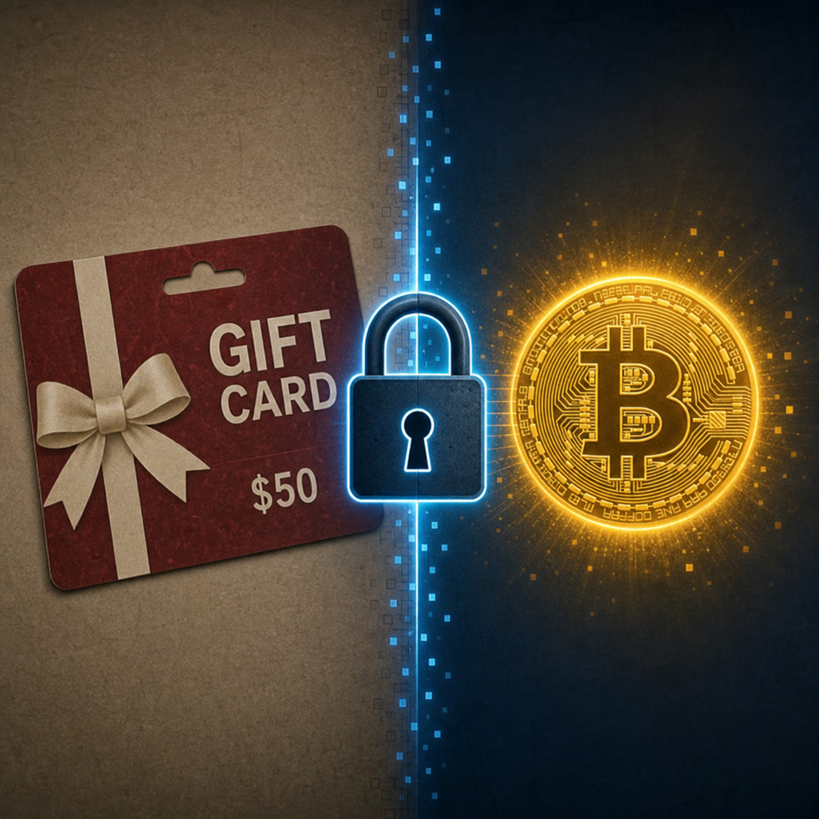
Bitcoin and gift cards are two payment methods frequently mentioned in connection with underground marketplaces, online fraud investigations, and digital privacy discussions. Although they operate very differently, both demonstrate an important reality of modern finance: every payment system creates some form of record or digital footprint.
Bitcoin relies on blockchain technology. Every transaction is permanently recorded on a public ledger, allowing researchers and investigators to analyze payment patterns. Gift cards work differently, relying on retail systems, activation records, and redemption histories.
Neither method provides perfect anonymity. Bitcoin is often misunderstood as completely private, while gift cards are sometimes viewed as impossible to trace. In reality, both have limitations and risks that users, researchers, and cybersecurity professionals should understand.
To understand why these payment methods appear in discussions about hidden online networks, it helps to first understand the different layers of the internet. The differences between the surface web, deep web, and dark web explain why some online services operate outside traditional search engines and websites.
Why Payment Privacy Became an Important Topic
The growth of digital services has created a constant balance between convenience and privacy. Traditional payment systems such as credit cards and bank transfers are designed around identity verification, fraud prevention, and financial regulation.
These systems are useful for everyday commerce, but they also create detailed records. Banks, payment processors, merchants, and advertising networks can collect information about transactions, purchasing patterns, and user behavior.
As concerns about online privacy increased, new technologies emerged that attempted to reduce unnecessary exposure of personal information. Cryptocurrency introduced decentralized digital payments, while prepaid cards created alternatives that did not always require direct connection to a bank account.
However, privacy and anonymity are not the same thing. A payment method can reduce some types of tracking while still leaving behind other forms of evidence.
- Bitcoin: Reduces dependence on traditional financial institutions but creates permanent blockchain records.
- Gift cards: Can separate purchases from traditional banking systems but may still generate retailer and usage data.
- Traditional payments: Provide convenience but usually include stronger identity connections.
Understanding these differences is important for anyone studying cybersecurity, digital privacy, or online fraud prevention.
Bitcoin and the Rise of Cryptocurrency Payments
Bitcoin was introduced in 2009 as a decentralized digital currency that allowed users to transfer value without relying on a central bank. Its public blockchain provided a transparent record of transactions while removing the need for a traditional financial intermediary.
Because Bitcoin transactions do not require a bank account for every transfer, the cryptocurrency quickly became associated with privacy-focused communities and alternative financial systems. Over time, it also became widely discussed in relation to illicit marketplaces and cybercrime investigations.
The important distinction is that Bitcoin was not designed to be an anonymous payment system. It was designed to be decentralized and transparent.
Every Bitcoin transaction is stored on the blockchain. Anyone can view transaction movements between wallet addresses, although those addresses do not automatically reveal the real-world identity behind them.
Bitcoin Is Pseudonymous, Not Anonymous
One of the biggest misconceptions about Bitcoin is that it provides complete financial privacy.
Bitcoin addresses are not directly labeled with names or personal information. This creates a level of separation between a user and a transaction. However, blockchain analysis can identify patterns, connections, and relationships between addresses.
For example, cryptocurrency exchanges often require identity verification. If cryptocurrency activity is connected to an exchange account, investigators may be able to link blockchain activity with a real person.
This distinction between pseudonymity and anonymity is central to understanding cryptocurrency privacy.
For a deeper look at cryptocurrency security concepts and privacy considerations, see the Torzle guide on cryptocurrency operational security and digital privacy practices.
Gift Cards and Digital Fraud Risks
Gift cards represent a completely different type of payment system compared with cryptocurrency. Instead of using a decentralized blockchain, gift cards rely on traditional retail networks where value is stored electronically and accessed through a redemption code.
Because gift cards can often be purchased through physical retailers and transferred digitally, they have become a common subject in discussions about online fraud, scams, and financial abuse. Their popularity comes from convenience rather than true anonymity.
A gift card does not automatically reveal the identity of the person holding it, but that does not mean it leaves no trace. Retailers may record information such as purchase location, activation time, payment method used, and redemption activity.
When gift cards are involved in fraudulent activity, investigators may examine multiple sources of information, including retailer records, account activity, transaction patterns, and digital evidence connected to redemption.
Why Gift Cards Are Targeted by Scammers
Gift cards are attractive to scammers because they are easy to obtain, easy to transfer, and often difficult for victims to recover once funds have been redeemed.
Unlike traditional payments, many gift card transactions do not provide the same consumer protections as credit card purchases. This makes them a frequent tool in common online scams.
Examples of gift card-related fraud include:
- Fake payment requests: Scammers may impersonate companies, government agencies, or individuals and request payment through gift cards.
- Phishing attempts: Fraudulent websites may attempt to steal gift card numbers or account information.
- Resale scams: Criminals may advertise fake or already-used gift cards on unofficial marketplaces.
Understanding these risks is important because privacy-focused technology does not eliminate the possibility of fraud. Strong security habits remain essential when dealing with any digital payment system.
Bitcoin vs Gift Cards: Privacy and Traceability Comparison
Bitcoin and gift cards are often compared because both can transfer value outside traditional payment systems. However, they differ significantly in how transactions are recorded, monitored, and investigated.
| Feature | Bitcoin | Gift Cards |
|---|---|---|
| Transaction System | Blockchain-based digital currency | Retail-based prepaid value system |
| Identity Connection | Not directly attached to every transaction, but links may be created through exchanges and other services | May be connected through purchase records, retailer accounts, or redemption activity |
| Traceability | Blockchain transactions are permanently recorded and publicly visible | Tracking depends on retailer records, account information, and usage history |
| Privacy Limitations | Blockchain analysis can reveal transaction relationships | Retail and digital records may connect activity to individuals |
| Common Risks | Phishing, wallet scams, fraud, and exchange-related risks | Fake codes, stolen cards, and impersonation scams |
| Primary Strength | Global digital transfer without traditional banking infrastructure | Simple prepaid value transfer without requiring a conventional payment account |
The key takeaway is that neither payment method creates perfect anonymity. They simply expose different types of information.
How Payment Methods Leave Digital Footprints
A common misunderstanding about online payments is that privacy means leaving no evidence behind. In reality, nearly every digital interaction creates some form of metadata.
A digital footprint can include technical information, account relationships, transaction history, and behavioral patterns. Cybersecurity researchers often analyze these signals to understand how online financial activity moves through networks.
Bitcoin Digital Footprints
Bitcoin transactions create a permanent public record on the blockchain. While wallet addresses do not automatically display names, transaction relationships can reveal important patterns.
Blockchain analysis companies study transaction flows, address clusters, and exchange interactions to understand cryptocurrency movement. These techniques are commonly used in fraud investigations, compliance monitoring, and cybersecurity research.
This is why Bitcoin should be understood as transparent rather than completely private.
Gift Card Digital Footprints
Gift cards create a different type of trail. Instead of a public blockchain, evidence may come from retail systems and account activity.
Examples of information that may exist include:
- Purchase location and activation details
- Payment method used during purchase
- Online account information connected during redemption
- Shipping or delivery information associated with purchases
The existence of these records demonstrates an important principle of digital privacy: removing one source of identification does not remove all possible connections.
The Role of Privacy Tools and Safer Browsing Practices
Payment privacy is only one part of a larger digital security picture. Browser tracking, account security, phishing protection, and device privacy also influence how much personal information is exposed online.
For everyday browsing privacy, tools such as tracker protection and private search options can reduce unnecessary data collection. Torzle's overview of DuckDuckGo privacy protection features explains how privacy-focused browsing tools approach tracking reduction.
Users researching privacy technologies may also benefit from understanding how different anonymous networks and search systems work. Articles covering Torch search technology, Excavator and Tor search tools, and privacy tools for safer browsing provide additional context.
Common Scams and Security Risks Involving Digital Payments
Whether discussing cryptocurrency or prepaid cards, the biggest risks often come from fraud rather than the payment technology itself. Online environments where identity is difficult to verify can attract scammers who attempt to exploit trust, urgency, and lack of information.
Understanding common warning signs is valuable for anyone studying cybersecurity, digital privacy, or online financial threats.
Cryptocurrency-Related Risks
Bitcoin and other cryptocurrencies introduce unique security challenges. Because transactions are generally irreversible, users must carefully verify where and with whom they are interacting.
Common cryptocurrency risks include:
- Fake services and phishing websites: Fraudulent websites may imitate legitimate platforms to collect wallet information or payment details.
- Impersonation scams: Attackers may pretend to represent exchanges, support teams, or trusted organizations.
- Wallet security failures: Losing access credentials or exposing sensitive wallet information can result in permanent loss of funds.
- Investment and giveaway scams: Fraudsters often use unrealistic promises of returns to encourage victims to transfer cryptocurrency.
These risks highlight why cryptocurrency security depends heavily on education, verification, and careful digital hygiene.
Gift Card Fraud Risks
Gift cards are also frequently associated with scams because transfers are usually fast and difficult to reverse after redemption.
Common gift card scams include:
- Fake customer support requests: Criminals may impersonate trusted organizations and request payment through gift cards.
- Marketplace fraud: Buyers and sellers may encounter fake listings, invalid codes, or stolen balances.
- Social engineering: Attackers may manipulate victims into voluntarily providing gift card information.
The lesson is the same for both payment methods: a technology designed for convenience or privacy can still be abused when combined with deception.
How Cybersecurity Researchers Analyze Payment Systems
Bitcoin and gift cards are often studied by cybersecurity professionals, financial investigators, and academic researchers to understand online fraud patterns and digital risk.
Researchers typically focus on identifying behaviors, connections, and technical indicators rather than assuming that a specific technology is inherently good or bad.
Blockchain Analysis
Because Bitcoin transactions are recorded publicly, researchers can analyze blockchain activity to study movement patterns, identify suspicious behavior, and understand how cryptocurrency ecosystems operate.
Blockchain analysis is used for purposes such as:
- Investigating cryptocurrency fraud
- Tracking stolen funds
- Improving exchange compliance systems
- Understanding emerging financial threats
Digital Evidence and Retail Records
Gift card investigations rely on different types of evidence. Instead of blockchain records, analysts may examine retailer information, account activity, purchase history, and device-related signals.
This demonstrates an important cybersecurity principle: different payment systems create different evidence trails.
Why No Payment Method Provides Perfect Anonymity
The idea of a completely anonymous payment method is often misunderstood. Privacy is not a single feature that can simply be switched on or off. It is a combination of technology, user behavior, security practices, and external systems.
Bitcoin reduces dependence on traditional banking infrastructure but maintains a transparent transaction history. Gift cards may reduce some direct financial connections but can still create records through retailers and online services.
In both cases, privacy can be affected by:
- Account information connected to services
- Device and browser identifiers
- Network activity
- Human mistakes and security failures
For this reason, cybersecurity professionals often discuss privacy as a process rather than a guaranteed state.
Legal and Ethical Considerations
Privacy technologies, cryptocurrency, and prepaid payment systems all have legitimate uses. Businesses, journalists, researchers, and everyday users rely on privacy tools to protect sensitive information and reduce unnecessary tracking.
At the same time, any technology that provides privacy can also be misused. Understanding the difference between privacy protection and illegal activity is essential when discussing anonymous networks and digital payments.
Using privacy tools, researching cybersecurity topics, and learning how digital payment systems work are legal activities in many jurisdictions. However, laws regarding financial transactions, fraud, and online services vary by location.
Readers interested in understanding anonymous networks and responsible exploration can learn more through Torzle's resources about Tor-based services and anonymous networks and the broader structure of hidden online spaces.
Frequently Asked Questions
Is Bitcoin anonymous?
No. Bitcoin is pseudonymous rather than anonymous. Transactions are publicly recorded on the blockchain, and additional information may connect activity to real identities.
Are gift cards impossible to trace?
No. Gift cards may leave records through purchase information, retailer systems, account activity, and redemption history.
Which is more private: Bitcoin or gift cards?
Neither provides complete anonymity. They use different systems and create different types of records. Privacy depends on many factors beyond the payment method itself.
Why are cryptocurrencies discussed in cybersecurity research?
Cryptocurrency provides a transparent digital payment system that researchers can analyze to understand fraud, security risks, and financial activity patterns.
Are privacy tools only used for hidden networks?
No. Privacy technologies are widely used by ordinary internet users, companies, journalists, and researchers who want better control over personal information.
Conclusion: Understanding Payment Privacy in a Digital World
The comparison between Bitcoin and gift cards reveals a larger lesson about digital privacy: no payment system exists without trade-offs.
Bitcoin introduced a new model of decentralized digital value transfer, but its public blockchain means transactions remain visible and potentially analyzable. Gift cards offer a different approach through prepaid value systems, but they can still create records through retailers and online services.
Rather than viewing either method as completely anonymous, it is more accurate to understand how each system works, what information it exposes, and what risks it creates.
As online privacy becomes increasingly important, understanding digital payments, tracking systems, and security practices helps individuals make more informed decisions about protecting their information.
The future of privacy will not depend on a single payment method or technology. It will depend on better awareness, responsible security practices, and a deeper understanding of how digital systems create and protect personal information.