The Evidence-Based Guide to Evaluating Darknet Directory Claims in 2026
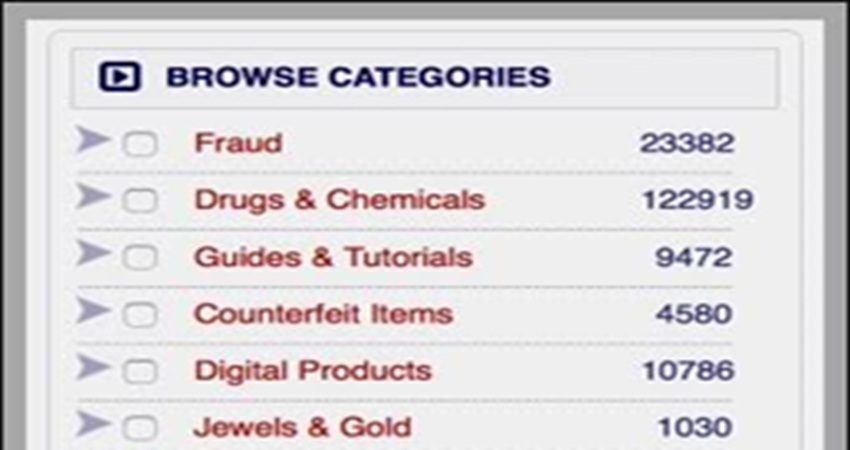
A darknet directory can look authoritative without actually being reliable. Listings may be copied from older pages, based on anonymous claims, affected by impersonation, or left online long after the underlying service has disappeared. For researchers, journalists, security professionals, and ordinary readers, the important question is therefore not simply whether a directory lists a particular service. The more useful question is: what evidence supports the claim?
This guide presents a source-evaluation framework for researching darknet directory claims in 2026. It focuses on verification, provenance, recency, corroboration, and source quality rather than providing live access information for illicit marketplaces.
What Is a Darknet Market Directory?
A darknet market directory is a website, database, forum page, search resource, or other publication that attempts to organize information about services operating on or associated with the dark web. Depending on the publisher, a directory might contain descriptions, historical information, status claims, reviews, technical commentary, or links.
The key problem is that a directory is usually secondary evidence. The publisher may not operate the service it describes and may have no direct ability to establish whether a claim is authentic.
This distinction matters because the dark web is not synonymous with a single marketplace ecosystem. It includes legitimate privacy-oriented services, research resources, forums, criminal infrastructure, and many sites that may be temporary or fraudulent.
For background, see our guide to the differences between the parts of the internet .
Why Darknet Directory Listings Become Outdated
One of the strongest reasons to distrust static “best markets” lists is the short operational lifespan of many darknet marketplaces.
The United Nations Office on Drugs and Crime reported in its 2026 World Drug Report that darknet marketplaces have historically been highly volatile. Its analysis found that marketplaces operating between 2010 and 2023 had an average lifespan of approximately one year and four months, with exits caused by factors including scams, voluntary closures, law-enforcement action, and hacking.
That volatility creates a fundamental SEO and research problem: a page can continue receiving search traffic long after its underlying information has ceased to be accurate.
UNODC also describes a shift toward a more fragmented market environment after the dismantling of major platforms. The implication for researchers is simple: the age of a listing is itself evidence that needs to be evaluated.
Key principle
A directory listing is not a timestamp. Always distinguish between when a directory published a claim and when the underlying event or service status was independently observed.
The Difference Between a Listing and a Verified Source
“Listed,” “active,” “verified,” and “officially confirmed” are not interchangeable descriptions. A strong research process separates them.
| Claim type | What it establishes | Evidence normally needed | Confidence |
|---|---|---|---|
| Listed | A publisher mentions the service. | One directory or publication. | Low |
| Reported active | A source claims recent activity. | Recent, attributable evidence. | Low to moderate |
| Historically documented | The service existed at a particular point in time. | Reliable historical or institutional records. | Moderate to high |
| Independently corroborated | Multiple genuinely independent sources support the same claim. | Two or more independent sources with traceable provenance. | High |
| Officially confirmed | A relevant authority has documented the event or status. | Primary government, court, or law-enforcement documentation. | Very high for the specific documented claim |
Importantly, high confidence in one claim does not automatically validate unrelated claims. An official record that confirms a marketplace existed in the past does not prove that a later directory listing is authentic.
How to Evaluate a Darknet Directory
1. Identify Who Publishes the Information
Start with the publisher rather than the listing itself. Look for an identifiable editorial organization, publication history, author information, update dates, correction policies, and a clear explanation of how listings are evaluated.
An anonymous publication is not automatically false, but anonymity removes one important layer of accountability. A transparent publisher should be able to explain where its information comes from and how it handles errors.
2. Examine the Evidence Behind Each Claim
For every important statement, ask:
- Who originally made the claim?
- When was the claim made?
- Can the original evidence still be examined?
- Does the cited source actually support the statement?
- Has the information been independently corroborated?
3. Check Whether Sources Are Truly Independent
Ten websites repeating identical text do not necessarily provide ten pieces of evidence. They may all have copied one original post.
A stronger evidence chain looks like this:
Primary evidence → independent reporting → directory summary
A weak chain looks like this:
Directory A → Directory B → anonymous forum post → Directory A
The second chain is circular. It creates the appearance of corroboration without adding independent information.
4. Check the Publication Date
A page titled “2026” may still contain information originally published years earlier. Check the publication date, update date, source dates, and event dates separately.
This is particularly important for directories because a historical listing can remain indexed by search engines even after the underlying service has closed, moved, been seized, or become fraudulent.
How to Verify Sources Without Trusting a Directory
The strongest approach is to move outward from the directory and locate the earliest credible source supporting the claim.
Start With Primary Sources
Depending on the question, useful primary or institutional sources can include court documents, government announcements, law-enforcement statements, regulatory records, academic publications, and established cybersecurity research.
The 2026 reporting from Europol demonstrates why primary institutional reporting matters. Recent operations have resulted in the seizure of infrastructure and disruption of large networks, meaning apparently current online claims can become obsolete rapidly.
Check What the Source Actually Says
A common research error is citing a source that is relevant to a topic but does not substantiate the exact claim being made.
For example, a report discussing darknet marketplaces generally does not prove that a particular directory listing is currently authentic. Evidence must be matched to the exact proposition.
Distinguish Historical Verification From Current Verification
A source may conclusively establish that a service existed in 2023 while saying nothing about its status in 2026.
Use explicit labels such as:
- Historical: supported evidence from an earlier period.
- Recently reported: supported by relatively recent reporting.
- Unconfirmed: a claim exists but evidence is insufficient.
- Conflicting: credible sources disagree.
- Closed or disrupted: supported evidence indicates that the service is no longer operating in its previously documented form.
Red Flags in Darknet Directory Claims
Certain characteristics should immediately reduce confidence in a directory. None is conclusive by itself, but several together indicate that additional verification is necessary.
- Claims of being “100% verified” without explaining the methodology.
- No publication or update dates.
- No identifiable editorial process.
- Unexplained “trust scores” or security ratings.
- Copied descriptions appearing across unrelated websites.
- Anonymous claims presented as established facts.
- Excessive promotional language.
- Guarantees that a service is safe or immune from disruption.
- Pressure to click, register, transfer funds, or download files.
- Broken citations or citations that do not support the accompanying claim.
- Old information presented as current without qualification.
For a deeper discussion of manipulation and deceptive behavior, see our guide to social engineering and deception ecosystems .
A Practical Source-Quality Scoring Framework
Researchers can make directory evaluations more consistent by scoring the evidence behind each claim rather than relying on a general impression.
| Criterion | Weight | What to examine |
|---|---|---|
| Primary-source evidence | 30% | Does the claim trace back to an authoritative or original source? |
| Independent corroboration | 25% | Do genuinely independent sources agree? |
| Recency | 20% | How closely does the evidence correspond to the period being discussed? |
| Publisher transparency | 15% | Does the publisher disclose methodology, authorship, and editorial standards? |
| Update and correction history | 10% | Does the publisher correct outdated or inaccurate information? |
This score should be interpreted as a measure of documentation quality, not a safety rating. A well-documented claim about an illicit service does not make that service legitimate or safe.
Directory Claims vs. Reliable Research Evidence
| Evidence type | Typical reliability | Main weakness | Best use |
|---|---|---|---|
| Anonymous directory listing | Low | Unknown provenance | Finding claims that require further research |
| Search-engine result | Low to moderate | Ranking does not establish truth | Discovery |
| Forum discussion | Low to moderate | Identity and incentives may be unclear | Identifying hypotheses and historical leads |
| Independent cybersecurity research | Moderate to high | Methods and coverage vary | Technical and ecosystem analysis |
| Academic or institutional research | High | May not reflect very recent events | Historical and analytical context |
| Government or law-enforcement record | High for the documented event | Scope is limited to what the record establishes | Confirming seizures, investigations, prosecutions, and official findings |
Common Mistakes When Researching Darknet Listings
Assuming Search Visibility Means Legitimacy
Search engines organize information; they do not certify the accuracy, legality, or safety of every result. A page ranking highly can still contain copied, obsolete, or misleading information.
Treating Reviews as Independent Evidence
Reviews can be fabricated, incentivized, selectively published, or copied. They should be treated as claims requiring provenance rather than automatic proof.
Confusing Technical Language With Credibility
References to encryption, cryptography, anonymity, escrow, security audits, or other technical concepts can create an impression of authority. Technical vocabulary is not evidence by itself.
Our privacy-tools guide provides useful background for understanding privacy and security terminology.
Assuming Longevity Equals Trustworthiness
A site being online for a long time does not establish that every claim it publishes is accurate. Conversely, a newly published source is not necessarily false. Evaluate the evidence, not merely the age.
Using One Directory as the Entire Research Base
A directory can be useful for discovering terminology and historical leads, but it should rarely be the sole source for an article, report, or security assessment.
Using Search Resources Without Treating Them as Authorities
Search engines can help researchers discover documents, historical references, and discussions, but discovery and verification are separate steps.
For related search research, see:
These resources should be understood as search and research material rather than proof that a particular listing, service, or destination is trustworthy.
Why “Active” Does Not Mean “Safe”
One of the most important distinctions in darknet research is the difference between operational status and trustworthiness.
A service described as “active” may still be fraudulent, compromised, impersonated, under investigation, or unsafe. Likewise, a service that was previously documented may have disappeared without every directory being updated.
Europol's 2026 cybercrime reporting emphasizes the fragmented and resilient nature of criminal ecosystems online. Recent international operations have also demonstrated that infrastructure can be disrupted at significant scale. These developments reinforce the need to treat current-status claims as time-sensitive rather than permanent facts.
For a more focused discussion of high-risk research environments, see: the high-risk dark web markets research guide .
The 2026 Darknet Landscape: Why Verification Matters More Than Ever
The 2026 evidence points toward a highly fluid environment rather than a stable directory of permanent platforms.
UNODC's 2026 World Drug Report describes darknet marketplaces as highly volatile and notes the fragmentation of the ecosystem following the disruption of major platforms. Its findings also highlight the role of exit scams, voluntary exits, law-enforcement actions, and hacking in marketplace turnover.
Europol's 2026 IOCTA similarly describes a fragmented dark web and emphasizes the ability of cybercriminal ecosystems to adapt despite continuing law- enforcement pressure.
The practical lesson is that a “current directory” should never be evaluated only by the number of entries it contains. The quality of its evidence, update process, provenance, and corrections is much more important.
A Simple Workflow for Evaluating a Directory Claim
- Record the exact claim. Do not paraphrase it prematurely.
- Record the publication date. Note both the directory date and the date of the underlying evidence.
- Find the earliest identifiable source. Trace citations backward whenever possible.
- Look for independent corroboration. Avoid counting copied pages as separate evidence.
- Check authoritative sources. Give appropriate weight to institutional, court, government, and law-enforcement records.
- Separate historical facts from current claims. Do not use old evidence to establish present status.
- Record uncertainty. If evidence conflicts or is incomplete, say so.
- Recheck time-sensitive claims. A claim that was accurate months ago may no longer be accurate.
Frequently Asked Questions
What is a darknet market directory?
A darknet market directory is a publication or database that organizes information about darknet-related services. A directory is a secondary source and should not automatically be treated as proof that its listings are authentic, current, legal, or safe.
How can you tell whether a darknet directory is trustworthy?
Examine its publisher, methodology, citations, publication dates, correction history, and independent corroboration. The strongest directories explain where their information comes from instead of simply labeling listings “verified.”
Why do darknet directory listings become outdated?
Darknet-related services can disappear because of voluntary closures, fraud, hacking, infrastructure failures, or law-enforcement action. Static pages can remain searchable long after their underlying information has become obsolete.
What does “verified” mean on a darknet directory?
“Verified” has no universal meaning. A credible researcher should ask what was actually verified, when it was verified, by whom, and what evidence was used. A label without a methodology has limited evidentiary value.
Can darknet market reviews be trusted?
Reviews should be treated as claims rather than definitive evidence. They may be manipulated, fabricated, selectively displayed, or copied. Stronger conclusions require independent evidence from sources with identifiable provenance.
How often should a darknet directory be updated?
There is no universal interval because different claims have different lifespans. Current-status claims require much more frequent verification than historical information. A directory should clearly distinguish newly verified information from older historical material.
What is the difference between a darknet market and a directory?
A marketplace is a service that facilitates transactions or listings, whereas a directory primarily organizes or describes information about services. A directory may therefore contain claims about a marketplace without operating or independently controlling that marketplace.
Are darknet markets anonymous?
Anonymity should not be assumed. Investigations can combine technical, financial, operational, and human intelligence to identify infrastructure and participants. Privacy technology can reduce some forms of exposure but does not guarantee immunity from investigation.
Why should researchers avoid relying on one source?
A single source can contain mistakes, outdated information, bias, or fabricated claims. Independent corroboration helps establish whether a statement is supported by evidence rather than simply repeated across the web.
Final Takeaway: Evaluate the Evidence, Not the Listing
The biggest mistake in researching darknet directories is treating the directory itself as the authority. A polished interface, large number of listings, “verified” badges, or prominent search ranking does not establish that the underlying information is accurate.
The better approach is evidence-first research: identify the claim, trace its provenance, check its date, seek independent corroboration, consult primary sources, and explicitly record uncertainty.
This approach is particularly important in 2026 because the darknet ecosystem remains fluid. UNODC's latest reporting describes short-lived and fragmented marketplaces, while Europol's current reporting highlights continued disruption and adaptation across cybercriminal ecosystems.
In other words, don't ask only: “Is this directory legitimate?”
Ask the more useful question: “What evidence supports each claim this directory makes?”
For additional research resources, visit Torzle.