Haystack Search Engine Review: Features, Safety & How It Works
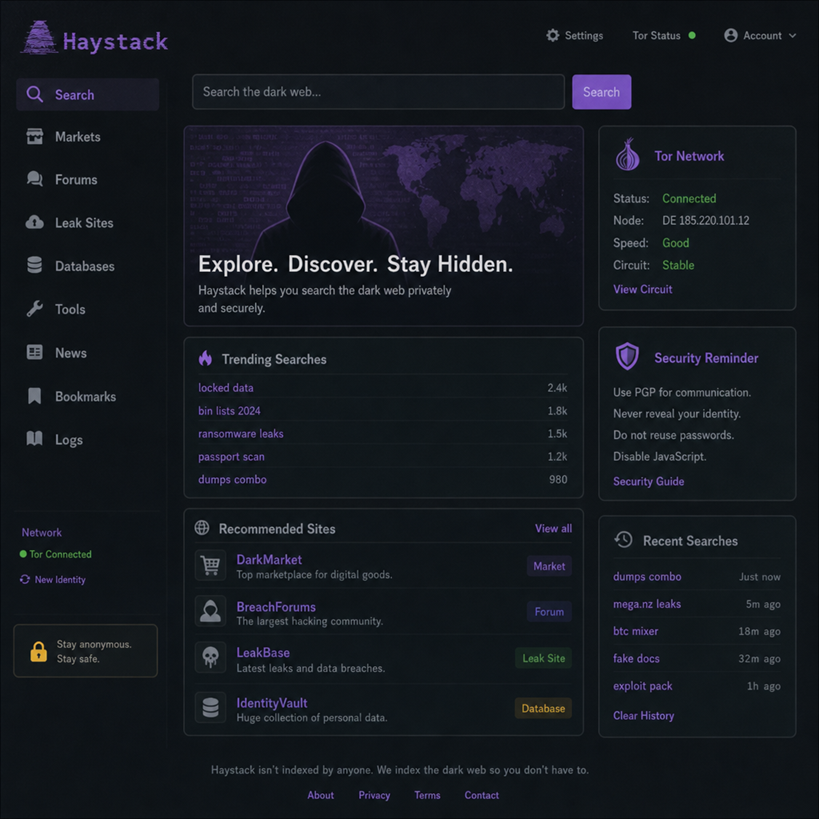
The hidden web contains thousands of websites that are not indexed by traditional search engines like Google or Bing. Finding these resources requires specialized tools designed to search content hosted on privacy-focused networks. Haystack Search Engine is one of the platforms created to help users discover information from the Tor network while maintaining a privacy-focused approach.
In this Haystack Search Engine review, we examine how the platform works, its main features, search capabilities, privacy considerations, strengths, limitations, and how it compares with other popular dark web search engines such as Ahmia and Torch Search.
Unlike conventional search engines that rely heavily on user profiles, advertising data, and personalized tracking, privacy-focused search tools are designed around anonymous discovery. Haystack focuses on indexing hidden services and helping users locate information that exists outside the standard web.
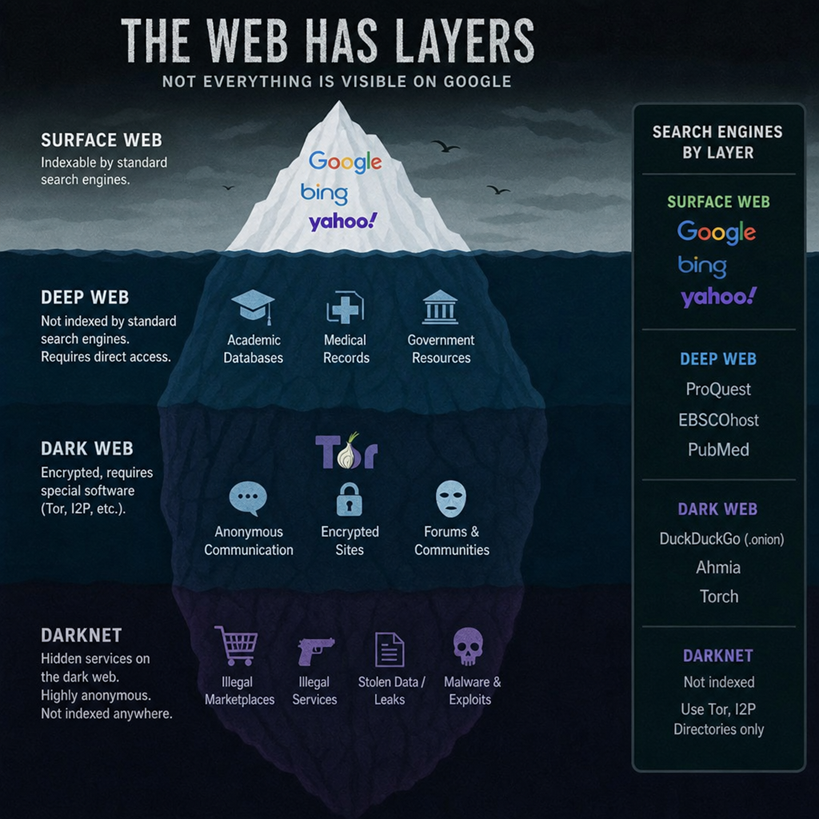
However, using any dark web search engine requires understanding both its capabilities and limitations. Search results may include inactive websites, outdated links, or content that requires careful evaluation. A responsible approach includes understanding how different parts of the internet work, including the relationship between the surface web, deep web, and dark web.
For a broader explanation of these internet layers, see our guide on the differences between the surface web, deep web, and dark web.
What Is Haystack Search Engine?
Haystack is a search engine designed to help users discover websites and resources hosted on the Tor network. Unlike traditional search engines that index publicly accessible websites, Haystack focuses on content associated with hidden services, commonly identified by the .onion domain format.
The purpose of Haystack is to make searching within the Tor ecosystem easier. Because onion websites are not listed in regular search engines, users often rely on specialized indexes and directories to discover available services.
A dark web search engine works differently from Google-style search platforms. Instead of building a massive profile of user behavior, privacy-focused search tools generally focus on retrieving information while minimizing personal data collection.
Haystack is designed around three main concepts:
- Hidden service discovery: Helping users locate websites and resources hosted on the Tor network.
- Privacy-focused searching: Providing a search experience that does not depend on personal profiles or behavioral tracking.
- Information organization: Making difficult-to-find resources easier to discover through search indexing.
While Haystack can help users locate information, it does not provide complete anonymity by itself. Privacy depends on the entire browsing setup, including the browser, device settings, and user behavior.
Users interested in improving their overall privacy approach can explore additional resources such as our guide to best privacy tools.
How Haystack Fits Into the Dark Web Search Ecosystem
The dark web is not a single website or database. It is a collection of hidden services operating through networks such as Tor. Because these services are intentionally separated from normal search engines, specialized indexes are needed to help users locate available information.
Search engines like Haystack serve a similar purpose to traditional search engines but operate within a different environment. They attempt to organize hidden websites and make them searchable through keywords and categories.
Compared with directories that provide manually collected links, search engines can offer a more flexible way to discover information. However, search indexes can become outdated because onion websites frequently change, disappear, or move to new addresses.
This is why users often compare different discovery tools, including Hidden Wiki resources, Excavator, and other Tor-based search platforms.
Understanding how these tools differ helps users choose the right resource depending on whether they need search capabilities, curated directories, or privacy-focused information discovery.
Key Features of Haystack Search Engine
Haystack is designed to simplify information discovery within the Tor network. While traditional search engines focus on the indexed web, Haystack focuses on helping users locate hidden services and resources that are not normally visible through standard search platforms.
The value of a dark web search engine depends on several factors, including index coverage, search accuracy, interface design, and how effectively it handles privacy considerations. Haystack's main features focus on making hidden service discovery more accessible.
1. Onion Website Indexing
The core function of Haystack is indexing websites that use the .onion domain format. These websites operate through the Tor network and are not accessible through regular search engines.
By collecting and organizing information from hidden services, Haystack helps users discover resources without manually searching through large collections of unknown addresses.
However, onion indexing has natural limitations. Websites may disappear, change addresses, or become unavailable, meaning search results can include outdated entries.
2. Keyword-Based Search
Haystack uses keyword-based searching to help users find relevant information. Instead of browsing through long lists of links, users can enter specific terms and receive results related to their query.
More precise searches generally produce better results. Broad keywords may return a large number of unrelated or outdated pages, while specific phrases can improve search accuracy.
3. Simple Search Interface
A major advantage of Haystack is its straightforward design. Users do not need advanced technical knowledge to perform searches.
The simple interface reduces complexity and allows users to focus on finding information rather than learning complicated search systems.
4. Privacy-Focused Searching
Privacy is one of the main reasons users look for alternatives to traditional search engines. Haystack is designed around anonymous information discovery rather than building detailed user profiles.
However, users should understand that a search engine alone does not guarantee complete anonymity. Privacy depends on using appropriate tools and following safe browsing practices.
5. Access to Specialized Content
Haystack can help locate resources that are unavailable through traditional search engines. These may include privacy-related resources, research materials, technical discussions, and other information hosted on hidden services.
The main Haystack Search Engine features include:
- Searchable .onion website indexing
- Keyword-based information discovery
- Simple and beginner-friendly interface
- Privacy-focused search approach
- Access to hidden service resources
How Does Haystack Search Engine Work?
Understanding how Haystack works requires understanding how dark web search engines differ from regular search engines.
Search engines on the surface web use automated crawlers to discover publicly available websites. Dark web search engines face additional challenges because onion websites are intentionally hidden and can frequently change locations.
Haystack works by organizing available information from hidden services into a searchable database. When users enter a query, the search engine attempts to match those keywords with indexed pages and available resources.
The process generally involves three stages:
- Discovery: Finding available onion websites and resources.
- Indexing: Organizing information so it can be retrieved through searches.
- Retrieval: Returning relevant results based on user queries.
Because the dark web changes constantly, maintaining accurate search results is challenging. Websites may go offline, update their addresses, or restrict access. This means no dark web search engine can guarantee that every available service will appear in results.
Is Haystack Search Engine Safe?
A common question users ask is: Is Haystack Search Engine safe?
The answer depends on how the tool is used. A search engine is only one part of the browsing experience, and users should understand the potential risks associated with visiting unknown websites.
Like any search platform that indexes user-submitted or publicly available resources, Haystack results may include inactive pages, misleading links, or websites that should be approached carefully.
Potential Risks When Using Dark Web Search Engines
- Phishing websites: Fake websites may attempt to imitate legitimate services to collect information.
- Malicious downloads: Unknown files from untrusted sources may contain harmful software.
- Scams: Some hidden services may make misleading claims or attempt fraudulent activity.
- Outdated links: Search results may point to websites that no longer exist or have changed ownership.
Users should verify information before trusting any search result. A search engine can help locate information, but it cannot guarantee that every indexed website is trustworthy.
Privacy Practices for Safer Searching
Responsible browsing habits are important when using any privacy-focused search tool. Users should avoid sharing personal information, keep software updated, and understand the limitations of anonymity technologies.
Using privacy tools together creates a stronger security approach. Readers interested in broader privacy protection can explore our guide on privacy tools and security resources.
For users interested in private search outside the Tor ecosystem, our guide on DuckDuckGo privacy features explains how mainstream privacy-focused search alternatives work.
Haystack Search Engine Limitations
Although Haystack provides useful discovery features, it is important to understand its limitations.
- Changing websites: Onion services frequently disappear or move.
- Limited transparency: Search engine indexing methods may not always be publicly explained.
- Variable search quality: Some queries may return limited or outdated results.
- No complete dark web coverage: Some hidden services cannot be indexed because they are private or restricted.
Understanding these limitations helps users develop realistic expectations when using Haystack Search Engine.
Haystack Search Engine Pros and Cons
Like any specialized search platform, Haystack has advantages and limitations. Understanding both sides helps users decide whether it is the right tool for their needs.
| Pros | Cons |
|---|---|
| Privacy-focused search experience | Some search results may be outdated |
| Simple interface suitable for beginners | Limited transparency about indexing methods |
| Access to hidden service information | Search quality can vary depending on keywords |
| Does not require traditional search profiles | Not all onion websites can be indexed |
| Useful for privacy researchers and information discovery | Requires responsible browsing practices |
Advantages of Haystack Search Engine
One of Haystack's biggest advantages is its focus on discovering hidden services through a simple search interface. Instead of manually collecting onion addresses, users can search for information using keywords.
The platform is also useful for users who value privacy-focused browsing. Unlike mainstream search engines that rely heavily on personalization and advertising profiles, specialized search tools are designed around anonymous information discovery.
Limitations of Haystack Search Engine
The biggest challenge facing any dark web search engine is keeping information current. Onion websites frequently change, disappear, or become unavailable, which can affect search accuracy.
Users should also understand that Haystack is not a replacement for general search engines. It serves a specific purpose: helping users locate information within hidden services.
Haystack vs Torch vs Ahmia: Which Dark Web Search Engine Is Better?
Haystack is not the only search engine designed for the Tor network. Other well-known platforms include Torch Search and Ahmia.
Each platform takes a different approach. Some focus on larger indexes, while others emphasize filtering, usability, or privacy-focused discovery.
| Feature | Haystack | Torch Search | Ahmia |
|---|---|---|---|
| Primary Focus | Hidden service search and discovery | Large-scale onion indexing | Privacy-focused onion search with filtering |
| Search Experience | Simple keyword searching | Traditional search engine style | Beginner-friendly interface |
| Privacy Approach | Designed around anonymous searching | Privacy-focused Tor searching | Privacy-focused with additional filtering |
| Search Quality | Depends on indexed content | Broad results but may include inactive links | Cleaner results due to filtering approach |
| Best For | Users wanting simple hidden service discovery | Users looking for broad indexing | Users wanting a more curated search experience |
For users comparing different search methods, our guides on Torch Search techniques and Ahmia Search Engine provide additional details about how these platforms differ.

Haystack Compared With Other Dark Web Resources
Not every dark web discovery tool works like a search engine. Some platforms provide curated collections, directories, or specialized resources instead.
Haystack vs Hidden Wiki
The Hidden Wiki is primarily a directory-style resource that organizes links into categories. Haystack, on the other hand, functions more like a search engine where users enter queries to discover information.
A directory can be useful for browsing categories, while a search engine can be more efficient when looking for specific topics.
Haystack vs Tor Taxi
Tor Taxi focuses on providing access information and resources related to Tor services. Haystack focuses more specifically on search and content discovery.
Haystack vs Excavator
Excavator represents another approach to discovering Tor-related information. Comparing different resources allows users to understand which tools match their specific goals.
Tips for Better Haystack Searches
Getting useful results from any search engine depends on using effective search techniques. Broad searches often return less relevant information, while specific queries usually produce better results.
- Use specific keywords: Detailed searches generally produce more useful results than broad terms.
- Try different search phrases: Alternative wording can reveal different indexed pages.
- Verify information: Do not assume every result is accurate or trustworthy.
- Understand limitations: Some websites may no longer be available when discovered through search.
Frequently Asked Questions About Haystack Search Engine
What is Haystack Search Engine?
Haystack Search Engine is a privacy-focused search platform designed to help users discover information from hidden services hosted on the Tor network.
Is Haystack Search Engine free?
Haystack is generally available as a free search tool. Users should verify current availability because online services can change over time.
Is Haystack legal to use?
Using a search engine is generally legal. However, users must follow applicable laws and avoid accessing or participating in illegal activities.
Does Haystack track users?
Haystack is designed around privacy-focused searching rather than traditional personalized search profiles. Users should still practice responsible privacy habits.
Can Haystack find every onion website?
No search engine can index every hidden service. Some websites are private, unavailable, or intentionally excluded from indexing.
Is Haystack better than Torch?
Haystack and Torch serve similar purposes but have different strengths. Haystack focuses on a simple search experience, while Torch is known for broad onion indexing.
Is Haystack better than Ahmia?
The better choice depends on user needs. Ahmia focuses more on filtering and usability, while Haystack emphasizes hidden service discovery.
Final Verdict: Is Haystack Search Engine Worth Using?
Haystack Search Engine provides a simple way to explore information within the Tor ecosystem. Its biggest strengths are its privacy-focused approach, straightforward interface, and ability to help users discover hidden services that are not available through traditional search engines.
However, users should maintain realistic expectations. Dark web search engines face challenges such as changing websites, incomplete indexing, and varying result quality. Haystack is a discovery tool, not a guarantee that every result is current or trustworthy.
For users interested in privacy research, cybersecurity learning, or understanding how hidden services are organized, Haystack can be a useful resource when combined with responsible browsing practices.
Those exploring privacy-focused technologies can also visit Torzle for additional guides and resources covering search engines, privacy tools, and anonymous browsing concepts.