Ahmia Search Tips: How to Get Better Results From Tor Search
Practical techniques for refining Ahmia searches, evaluating onion-service results, verifying addresses, and understanding the limits of Tor search indexing.
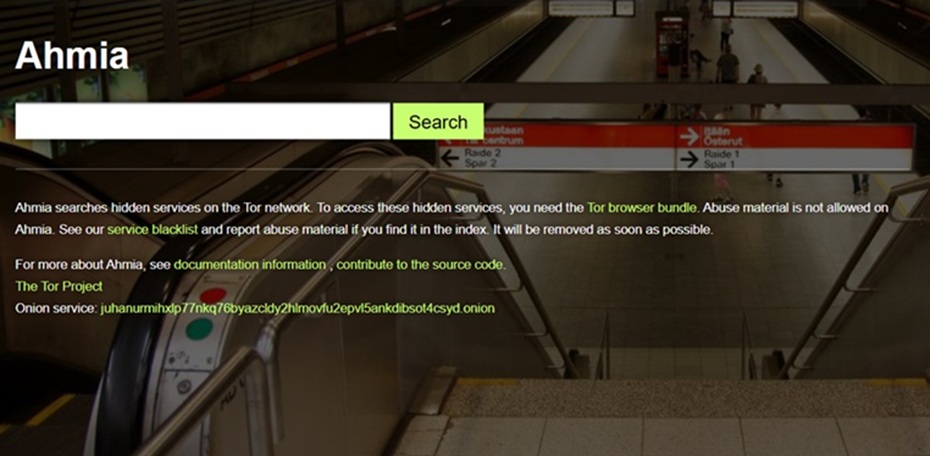
Ahmia is designed to search publicly accessible onion services on the Tor network. That makes it useful for researchers, privacy-focused users, journalists, and anyone trying to understand the onion-web ecosystem without relying exclusively on manually maintained directories.
But searching the onion web is different from searching the conventional web. Indexes are smaller, services can disappear, addresses can change, and a search result does not automatically mean that the destination is trustworthy.
This guide focuses on a practical question: how can you get more useful results from Ahmia while reducing unnecessary noise and avoiding common search mistakes?
If you are new to Ahmia, start with our complete Ahmia Search Engine guide for an overview of how the service works, its purpose, strengths, and limitations.
1. Start With a Specific Search Query
One of the easiest ways to improve search quality is to avoid queries that are too broad. A single generic word can produce a large and less useful set of results, particularly when the same word appears across many different types of onion services.
Instead, begin with the subject, service type, or organization you are researching. Think about the words that would most likely appear in the title or description of the page you want to find.
Example approach
Too broad: privacy
More focused: privacy research archive
More focused: anonymous communication research
More focused: Tor privacy documentation
The objective is not to create an elaborate search string. It is to give the search engine enough context to distinguish your intended topic from unrelated pages.
2. Use Keyword Combinations Instead of Long Questions
Search engines generally work better when you identify the important concepts in your query rather than writing a complete conversational question.
For example, if you are researching privacy-focused publishing, think about the core concepts:
- privacy
- anonymous publishing
- onion service
- journalism
- research
Combine the terms that best describe your research goal and then adjust them based on the results. This iterative approach is usually more useful than trying to construct one perfect query on the first attempt.
3. Search Again When Results Are Too Broad
A useful Ahmia workflow is to treat the first search as a starting point rather than a final answer.
If your results contain too many unrelated pages, add another descriptive keyword. If you receive very few results, remove a less important term and try a broader variation.
| Problem | What to try | Example |
|---|---|---|
| Too many results | Add a specific topic or service term | privacy → privacy journalism |
| Too few results | Remove a less important keyword | anonymous academic privacy archive → privacy archive |
| Irrelevant results | Replace vague terms with descriptive ones | tools → encrypted communication tools |
| Unclear results | Search using a related phrase | privacy forum → anonymous discussion |
4. Search Using Several Related Terms
Different websites may describe the same subject using different terminology. Consequently, a single keyword may not reveal everything relevant in an index.
For example, a researcher studying censorship-resistant publishing could try related concepts such as:
- censorship resistance
- anonymous publishing
- privacy journalism
- uncensored publishing
- freedom of information
Comparing the results from these searches can reveal differences in terminology and help you identify recurring services or organizations.
5. Read the Result Before Following the Link
Search results should be treated as information to evaluate, not as endorsements. Before opening a result, look at its title, description, and the context surrounding the result.
Be particularly cautious when a result appears to imitate a recognizable service, organization, forum, or publication. An onion address that looks convincing is not automatically authentic.
Ahmia itself warns users about fake clones of its service and emphasizes obtaining its correct address from a trusted source. This is a useful reminder that address verification matters throughout the onion ecosystem.
6. Verify Important Onion Addresses
Onion addresses are long and difficult to memorize. That makes them particularly vulnerable to copying mistakes, impersonation, and outdated references.
If a result is important to your research, don't rely solely on the search result. Look for confirmation from an independent source you already trust.
For example, if you are researching an established organization, check whether that organization publishes its own onion address on its official surface-web website or documentation.
Important verification rule
A search-engine result is not proof that an onion service is authentic. Verify important addresses independently before relying on them.
7. Don't Put Personal Information Into Search Queries
Search terms should describe the information you are researching, not reveal unnecessary information about you.
Avoid entering details such as:
- full names when they are not necessary for the research;
- email addresses;
- telephone numbers;
- account usernames;
- passwords or authentication information;
- private addresses or other identifying information.
Ahmia's privacy documentation states that it does not store IP addresses, use cookies, or perform browser fingerprinting, but users should still follow basic privacy hygiene and avoid voluntarily submitting sensitive information.
For broader privacy practices, see Torzle's guide to privacy tools and our resources covering dark-web research and security resources .
8. Understand That Ahmia Does Not Index Everything
No search engine provides a complete map of the Tor network. Onion services can be temporary, unavailable, inaccessible to crawlers, changed, or simply unknown to an index.
Ahmia's purpose is to index publicly accessible onion services, but its index should not be interpreted as a complete directory of every service operating on Tor.
This distinction is important when researching a topic. A missing result does not necessarily mean that a service or piece of information does not exist.
9. Use Search Results as Research Leads
A good search workflow separates discovery from verification.
Ahmia can help you discover pages and services that may be relevant to a research question. Once you identify a potentially useful result, independently evaluate the source, its publication date, its claims, and its relationship to other sources.
This approach is particularly useful for journalists, researchers, academics, and security professionals who need to distinguish between an indexed page and reliable evidence.
10. Compare Results With Other Search Methods
Ahmia is useful, but it should not necessarily be the only discovery tool in your research workflow.
Torzle's broader dark-web search engine guide discusses different approaches to onion search and the differences between search indexes.
You can also learn more about Torch and its approach to onion search or read Torzle's Excavator search-engine analysis to understand why different indexes can produce different results.
| Approach | Main strength | Main limitation | Useful for |
|---|---|---|---|
| Ahmia | Searchable index with filtering | Does not cover every onion service | General onion-service discovery |
| Other onion search engines | Different indexes and coverage | Quality and filtering can vary | Cross-checking discovery results |
| Official organization websites | Direct source for published addresses | Only covers that organization's services | Address verification |
| Curated research resources | Context and human review | May become outdated | Starting points and cross-reference |
11. Use Ahmia for Discovery, Not as a Trust Certificate
One of the most important distinctions is between indexing and endorsement.
A page appearing in a search engine means that the search engine has indexed or otherwise identified it. It does not mean that the page is accurate, reputable, secure, current, or operated by the organization it claims to represent.
Ahmia states that it filters abuse material, but filtering does not turn every remaining result into a trusted source. Apply the same source-evaluation standards you would use on the conventional web.
12. Keep Your Tor Browser Updated
Search quality and browser security are separate issues. Even if you find the right result, outdated software can expose users to avoidable security risks.
When accessing onion services, use the official Tor Browser and keep it updated. Avoid downloading modified browser packages or relying on unofficial software claiming to provide Tor access.
For additional background, see Torzle's guide to safe dark-web and onion-service practices .
Common Ahmia Search Mistakes
The following mistakes can make searches less productive or increase unnecessary risk:
- Using only one vague keyword: broad searches can create unnecessary noise.
- Assuming the first result is the best result: ranking does not establish credibility.
- Trusting an onion address without verification: copied or impersonated addresses can be misleading.
- Assuming an absent result means the service does not exist: indexes are incomplete and constantly change.
- Entering sensitive information into search fields: unnecessary personal information should never be part of a search query.
- Relying on a single source: important findings should be cross-checked.
- Downloading unexpected files: search results can lead to untrusted destinations, so unexpected downloads should be treated cautiously.
A Practical Ahmia Research Workflow
For routine privacy research, a simple workflow can keep the process organized:
- Define exactly what you are trying to find.
- Choose two or three descriptive keywords.
- Run an initial Ahmia search.
- Review titles and descriptions before opening results.
- Refine the query if the results are too broad or too narrow.
- Record potentially useful results separately from verified sources.
- Verify important onion addresses through independent trusted sources.
- Cross-check significant claims against other sources.
- Avoid submitting personal information or unnecessary credentials.
- Document the date of your research because onion services and indexes can change.
Researcher's rule of thumb
Discover with search, verify with sources, and trust only after independent evaluation.
Ahmia Search Tips for Different Research Goals
| Research goal | Suggested approach | Verification step |
|---|---|---|
| Find a privacy resource | Use specific privacy-related keywords | Check the organization's official website |
| Find a research archive | Combine subject + archive + research terms | Compare author and publication information |
| Locate an organization's onion service | Search the organization name | Verify the address on its official site |
| Research a topic | Try several related keyword combinations | Cross-check significant findings |
| Investigate an unfamiliar service | Search its name and related terminology | Look for independent references and warnings |
Where Ahmia Fits in a Broader Privacy Toolkit
Ahmia is best understood as one component of a broader research workflow rather than a complete privacy solution.
Tor provides the network architecture for onion services, while Tor Browser provides the normal user-facing way to connect to those services. Search engines such as Ahmia provide an index that can make discovery easier.
Other privacy tools can address different needs. Torzle's privacy tools guide provides a broader overview of privacy-oriented software and services.
The important point is that no single tool provides complete protection. Good privacy practices also depend on software updates, cautious browsing, source verification, account hygiene, and avoiding unnecessary disclosure of personal information.
Frequently Asked Questions
What is Ahmia used for?
Ahmia is a search engine designed to index and search publicly accessible onion services on the Tor network. It can help users discover privacy-focused websites and other publicly available Tor services without relying entirely on manually maintained link lists.
How can I improve Ahmia search results?
Use specific descriptive keywords, avoid unnecessary words, search using several related terms, and refine your query when results are too broad. For important results, verify the service address and information through an independent trusted source.
Does Ahmia index every onion website?
No. Ahmia does not represent a complete index of every onion service. Services can disappear, change addresses, block crawlers, or remain undiscovered, so a search engine result should never be treated as a complete map of the Tor network.
Is every Ahmia search result trustworthy?
No. Search indexing does not guarantee that an individual website or service is trustworthy. Evaluate results carefully, verify important addresses through trusted sources, avoid sharing sensitive information, and treat unexpected downloads or login requests with caution.
Should I put personal information into an Ahmia search?
No. Avoid entering personal information into search queries. Search terms should be general and relevant to the information you are researching rather than containing names, email addresses, account details, passwords, or other identifying information.
Do I need Tor Browser to visit onion services?
Yes. Onion services are designed to operate through the Tor network, and Tor Browser is the standard way for users to access them. Ahmia's clearnet interface can be used to search its index, but visiting an onion service requires Tor connectivity.
Final Takeaway
The best way to use Ahmia is not to search once and assume the first result answers your question. Treat search as an iterative research process.
Start with focused keywords, refine your queries, compare related searches, evaluate result context, and verify important onion addresses independently. Most importantly, remember that an index is not an endorsement and that no search engine represents the entire Tor network.
If you want the broader explanation of Ahmia's architecture, purpose, filtering, privacy characteristics, and limitations, continue to our Ahmia Search Engine guide .
Disclaimer
This article is provided for educational, privacy, and research purposes. Torzle does not endorse illegal activity or access to unlawful content. Onion services can contain scams, malicious software, misinformation, or illegal material. Follow applicable laws and use privacy and security tools responsibly.