Exploring the Dread Forum: Your Guide to Link Onion on Tor
How the Dread Forum fits into the Tor ecosystem, what “link onion” services are, and how researchers approach anonymous discussion communities with appropriate caution.
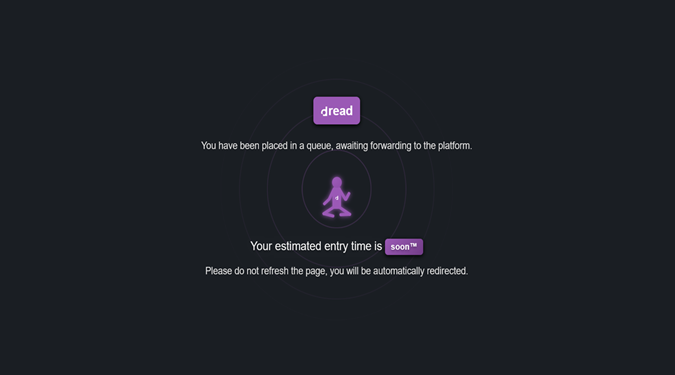
The clearnet most people use daily is only part of the wider internet. Beyond ordinary search results sit privacy-oriented services that require special software such as Tor Browser. Among the best-known discussion communities in that environment is the Dread Forum—a Reddit-like board that runs as a Tor hidden service and centers on anonymous participation.
This pillar guide is written for education, research, and investigation context: how Dread is structured, what link onion Tor addresses are, how access differs from mainstream forums, and which safety and legal boundaries matter. It is not a directory of live onion URLs (those change and are frequently cloned) and it does not provide instructions for illegal activity.
Tor and public discussion tools are legal in many jurisdictions. Content and conduct on any forum can still violate the law. Researchers should verify sources independently and avoid treating community posts as authoritative fact.
What Is Tor and How Does It Work?
Tor (The Onion Router) routes traffic through volunteer relays and uses layered encryption so that no single relay easily sees both who you are and where you are going. That design reduces simple IP-based tracking by websites and passive network observers; it does not make users invulnerable to malware, phishing, or self-doxxing.
Sites hosted as Tor onion services use .onion addresses—often called onion links. People searching for “link onion Tor” are usually asking how those addresses work and how to open them safely in compatible software, not how the clearnet DNS system works.
For fundamentals, see surface web, deep web, and dark web and onion services explained. A practical browser-focused overview is in our Tor network guide.
Understanding the Dread Forum: Features and Purpose
Dread launched in 2018 after major clearnet platforms restricted many darknet-related discussion spaces. Its interface deliberately echoes Reddit: topic communities, voting, threads, and reputation signals—while requiring Tor for normal access.
Features commonly associated with the platform include:
- Subdreads — topic communities similar to subreddits
- Voting — community ranking of posts and comments
- Optional accounts — browsing without login is often possible; registered use may involve stronger account-hygiene norms (for example PGP-related practices discussed in privacy communities)
- Mirrors and uptime strategies — operators and users periodically circulate alternate addresses when primary endpoints are unstable
From a research perspective, Dread functions as a discussion hub about privacy tooling, security incidents, market rumor and scam reports, and Tor-ecosystem news. That mix is exactly why investigators study it—and why casual visitors face high rates of misinformation and social engineering.
Navigating the Dread Forum: User Experience
Familiarity with Reddit-style layouts lowers the learning curve. Threads are grouped by subject communities; search and sorting behaviors resemble other large forums, with the added friction of Tor latency and occasional anti-abuse queues.
Topic-based communities
Conversations cluster around privacy, security, cryptocurrency mechanics, forum meta, and—frequently—marketplace status rumors. Treat market-related threads as unverified community speech, not as consumer guidance.
Discovery and information quality
Users exchange links, warn about scams, and debate tooling. Quality varies widely. Cross-checking claims against independent sources is part of any serious research workflow—see also how to avoid Tor scams.
Moderation
Volunteer moderation aims to limit spam and enforce local rules. Moderation on anonymous networks is incomplete by design; absence of a removal does not imply accuracy or legality.
How Onion Links and Tor Access Fit Together
Opening an onion service requires software that speaks Tor—most often the official Tor Browser from the Tor Project. General pattern for research access:
- Obtain Tor Browser from official project channels only
- Connect to the Tor network
- Enter an onion address obtained from a source you have reason to trust
- Expect address rotation; bookmarks go stale
- Raise security settings when visiting unfamiliar pages
This article intentionally does not publish a live Dread onion URL. Addresses are long, easy to spoof, and change over time. Researchers typically confirm endpoints through multiple independent channels rather than a single blog post or search hit. Onion search tools such as Ahmia and broader deep search engine comparisons illustrate how public indexes work—and why they remain incomplete.
Related reading: dark web resources 2026, Tor Browser safety tips.
Safety and Security Tips for Research on Dread and Tor
Tor improves network privacy; it is not a complete security system. For investigation-oriented use:
- Keep Tor Browser and the host OS updated
- Avoid posting identifying details, reuse of clearnet usernames, or personal metadata in screenshots
- Verify onion strings character by character when a source matters
- Prefer higher Tor security levels on untrusted pages; be cautious with downloads
- Use unique passwords if accounts exist; consider established encryption practices such as PGP basics where communities already rely on them for authenticity—not as a cure-all
- Separate research identities from real-world accounts; see OPSEC guidance for threat-model thinking
Effective privacy depends on technology and behavior. Strong tools fail when users paste real names, recycle passwords, or trust the first mirror they see.
The Role of Anonymity in Online Discussions
Anonymity can support journalism, whistleblowing, and speech under surveillance. It can also reduce accountability and accelerate rumor. Dread is a useful case study in that tension: high privacy expectations, uneven information quality, and continuous pressure from scams and impersonation.
For investigators, the research value is often in patterns—how communities react to seizures, how scam narratives spread, how mirror culture works—rather than in any single post.
Popular Topics Observed on Dread
Threads commonly cluster around:
- Privacy and security — tooling, OPSEC debate, encryption
- Marketplace rumor and scam reports — status claims, exit narratives, vendor disputes (treat as unverified)
- Enforcement and infrastructure news — downtime, arrests reported in media, Tor ecosystem events
- Cryptocurrency mechanics — payment rails discussed in privacy communities
- Forum meta — mirrors, invites, moderation conflicts
Mapping those themes helps researchers understand why onion forums remain relevant to cybersecurity monitoring without treating the board as a reliable encyclopedia.
Dread Forum vs Reddit
| Feature | Dread Forum | |
|---|---|---|
| Primary environment | Tor onion service | Clearnet web/app |
| Access | Tor Browser (typical) | Standard browsers |
| Privacy baseline | Higher network anonymity expectations | Platform and ad-tracking norms vary by design |
| Identity | Strongly pseudonymous culture | Username culture; more real-world linkage risk |
| Audience scale | Smaller, niche | Very large, mainstream |
| Information risk | High scam/mirror noise | Different abuse patterns; easier external verification sometimes |
Reddit maximizes reach and convenience. Dread maximizes anonymity constraints and niche focus. Neither guarantees truthfulness of posts.
Legal Considerations
Tor is lawful in many countries and is used by journalists, researchers, businesses, and private citizens. Forums inherit the same rule: the tool is not the crime; prohibited conduct still is.
- Know the laws that apply where you live
- Do not interpret anonymity as immunity
- Separate academic or defensive research from participation in illegal schemes
- Prefer documented, ethical collection methods when investigating online harm
Frequently Asked Questions
What is the Dread Forum?
Dread is a Reddit-style discussion platform that operates as a Tor hidden service. It is known for privacy-centric communities and extensive talk about security, scams, and Tor-ecosystem events.
What does “link onion Tor” mean?
It usually refers to .onion URLs—onion service addresses opened over the Tor network rather than ordinary DNS websites.
Why doesn’t this guide list a live Dread onion address?
Onion addresses rotate and are heavily spoofed. Publishing a single string in a static article creates long-term phishing risk. Researchers confirm endpoints through multiple independent channels.
Is using Tor or reading Dread legal?
Using Tor is legal in many places. Legality depends on conduct and local law. Reading public discussion is not the same as engaging in criminal transactions.
Is Dread the same as Reddit?
It borrows interaction patterns (communities, threads, votes) but runs on Tor with a different threat model, audience size, and risk profile.
How should researchers treat market and scam threads?
As unverified community claims. Useful for studying narratives and warning patterns; unreliable as operational or consumer advice.
What tools support safer research habits?
Official Tor Browser builds, conservative security settings, link verification practices, and broader privacy tools awareness—plus skepticism toward downloads and mirrors.
Conclusion
The Dread Forum remains one of the most cited examples of a large, Reddit-like community living primarily as a link onion Tor service. For privacy education and investigation, its value is structural: how anonymous boards organize, how mirrors and queues work, and how rumor and scam reports circulate under high anonymity.
Long-term understanding comes from pairing forum literacy with solid Tor fundamentals, independent verification, and clear legal boundaries—not from chasing any one onion string. Continue with Tor Browser guidance, onion services, and research-oriented resource lists.
References and scope
This article is for educational and informational purposes. It draws on widely reported public knowledge of Tor, onion services, and community-style darknet forums. Always prioritize legality, accuracy, and personal security. Technical background on onion routing is documented by the Tor Project and in academic literature on anonymity networks.