Best Deep Search Engines in 2026: Ahmia vs Torch vs Haystack vs Excavator
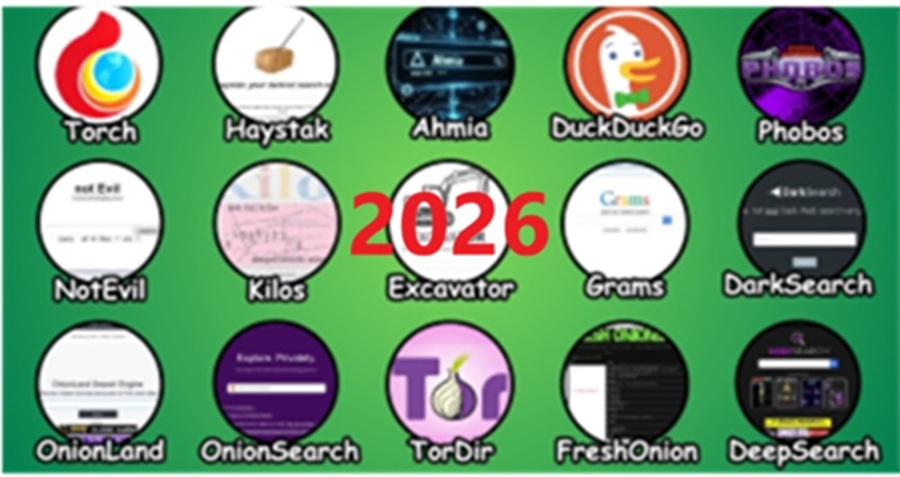
Google, Bing, and other mainstream search engines are strong at finding public websites, but they only cover part of what exists online. Other material sits in private databases, academic systems, archives, and anonymity networks. Specialized deep search engines try to surface more of that landscape—and many put more weight on privacy than commercial search does.
In practice, the tools people mean when they say “deep search engine” often include onion-focused indexes such as Ahmia, Torch, Haystack, and Excavator. They do not replace Google for everyday clearnet search, and they do not map every hidden service. Used carefully, they help researchers, journalists, and privacy-minded users find publicly reachable resources that never appear in ordinary results.
This guide compares four well-known options:
- Ahmia
- Torch Search
- Haystack Search
- Excavator Search
We look at search quality, privacy posture, usability, indexing style, strengths, limits, and who each tool suits best—as of 2026, with the usual caveat that onion indexes change often.
This comparison is for privacy education and research context. Using search tools and Tor is legal in many places; illegal activity remains illegal on any network.
What Is a Deep Search Engine?
A deep search engine is built to find information beyond what mainstream crawlers usually return. Some focus on specialized databases or archives; others—like the four reviewed here—specialize in public Tor / .onion discovery.
“Deep search” is easy to confuse with the deep web and the dark web. They are related but not the same:
- Deep search — methods or tools for finding material outside ordinary result pages.
- Deep web — content not indexed for public search (logins, private databases, paywalls).
- Dark web — a smaller, intentionally harder-to-reach slice of the deep web, often reached with software such as Tor Browser.
For a clearer map of these layers, see different parts of the internet.
Glossary of Deep Search Terms
Short definitions help keep the rest of the comparison precise:
Deep web
Online content that traditional engines such as Google or Bing do not fully index—for example private portals, many academic systems, and subscription services.
Dark web
A subset of the deep web that typically needs special software (often Tor). Sites frequently use .onion addresses.
Onion service / hidden service
A site or service available over Tor’s onion routing, designed to hide visitor and server network locations from casual observers.
Onion routing
Layered encryption of traffic across volunteer relays, which is how Tor protects network metadata better than a normal direct connection.
Search index
The searchable database a crawler builds from pages it could reach. No public onion index is complete or permanently up to date.
Why Use a Deep Search Engine?
Journalists, security researchers, students, and privacy-conscious users turn to these tools when ordinary search is not enough—or when they want less behavioral profiling than ad-driven engines apply.
Legitimate uses include:
- Cybersecurity and threat-intelligence research
- Finding publicly listed
.oniondocumentation or project pages - Privacy and digital-rights research
- Journalism and open-source investigation support
- Learning how anonymous browsing technologies work
- Reducing personalized advertising profiles on routine queries (clearnet privacy engines)
Responsible use stays within the law. A deep search engine only helps locate publicly advertised material; it does not authorize illegal access or transactions.
How We Evaluated These Search Engines
This is not a single “winner” ranking. Each tool was weighed on criteria that matter for research use:
| Category | What we evaluated |
|---|---|
| Privacy | Tracking posture, data collection, fit with anonymous browsing |
| Search quality | Relevance and usefulness of typical results |
| Index coverage | Breadth of what the tool claims or appears to cover |
| Ease of use | Interface clarity and learning curve |
| Reliability | Link rot, consistency, how often indexes feel stale |
| Best for | Audience each engine serves most effectively |
Philosophies differ: some favor cleaner, filtered results; others favor broader discovery and leave more judgment to the user.

Overview of the Leading Deep Search Engines
| Search engine | Primary focus | Best for |
|---|---|---|
| Ahmia | Curated Tor / onion search | Beginners and privacy-conscious users |
| Torch | Large onion-style index | Broad hidden-service discovery |
| Haystack | Privacy-oriented onion search | General anonymous discovery workflows |
| Excavator | Supplemental hidden-service discovery | Technical users comparing multiple indexes |
Ahmia Search Engine Review
Ahmia is one of the best-known engines for publicly reachable Tor hidden services. It aims for a cleaner index than many older lists by filtering a large amount of abusive material from results.
The interface feels closer to a normal search box than to a raw directory, which makes Ahmia a common first stop for people learning how onion search works.
Useful for:
- Publicly accessible
.onionsites - Privacy-focused and cybersecurity education
- Academic or journalistic orientation to Tor services
Strengths
- Clean, beginner-friendly interface
- Active effort to reduce obvious abuse in results
- Straightforward keyword search
- Clearnet and onion access patterns are well documented by the project
Limitations
- Smaller visible index than the broadest crawlers
- Private or unlinked services never appear
- Results can still go stale when services move or die
If you value organization and a gentler learning curve over maximum raw coverage, Ahmia remains one of the stronger deep search starting points in 2026.
Torch Search Review
Torch is among the oldest onion search engines still widely discussed. It is known for a large historical-style index of hidden services rather than heavy curation.
More results often means more noise: outdated links, inactive services, and pages that need manual scrutiny. Researchers who want breadth accept that trade-off.
Strengths
- Large index footprint relative to curated engines
- Simple, lightweight interface
- Fast keyword lookups
- Useful for wide discovery passes
Limitations
- Higher rate of dead or misleading links
- Minimal content filtering
- Dated feel compared with newer UIs
Torch fits experienced users who want coverage first and are comfortable verifying every important hit.
Haystack Search Review
Haystack is usually described as a privacy-oriented onion search option with more attention to usability than legacy indexes. Availability and access models can change; treat live behavior as more authoritative than any static review.
It is often chosen when users want anonymous-network discovery without the sparse feel of a pure research tool or the noise of the largest open indexes.
Strengths
- Comparatively approachable interface
- Privacy-focused positioning
- Practical for general discovery workflows
Limitations
- Typically narrower than Torch-style coverage
- Quality depends on what is currently indexed and reachable
- Service reachability can vary over time
Haystack is a reasonable middle path when you want privacy emphasis and everyday usability more than the largest possible result set.
Excavator Search Review
Excavator is less famous than Ahmia or Torch but shows up in researcher conversations as another way to probe indexed hidden resources. Documentation and community size are smaller, so expectations should stay modest.
Strengths
- Extra coverage when primary engines miss a lead
- Simple keyword-oriented use
- Useful as a secondary check in multi-engine workflows
Limitations
- Smaller public footprint and less documentation
- Index size and freshness vary
- Not ideal as a sole starting engine for beginners
Excavator works best beside Ahmia or Torch when you are cross-checking discovery, not as the only tool in the stack.

Privacy Comparison
People adopt deep search engines partly to avoid the heavy personalization and ad profiling common on the commercial web. Onion-oriented engines generally are not building long-term marketing profiles the way major clearnet engines do—but the search box is only one layer of privacy.
| Search engine | Typical privacy posture | Notes |
|---|---|---|
| Ahmia | High (research-oriented; minimal consumer tracking) | Still verify official endpoints; clones exist |
| Torch | High relative to ad-driven clearnet search | Broader results increase exposure to hostile pages |
| Haystack | High emphasis in positioning | Confirm current operator practices when you use it |
| Excavator | Privacy-oriented niche tool | Smaller ecosystem; validate destinations carefully |
Browser choice, security level, downloads, and operational habits matter as much as the engine. For a wider stack, see best privacy tools.
Deep Search Engines Comparison Table
| Feature | Ahmia | Torch | Haystack | Excavator |
|---|---|---|---|---|
| Primary focus | Safer public discovery | Large index | Privacy and usability | Supplemental research |
| Interface | Clear, modern-leaning | Minimal / legacy | Approachable | Simple |
| Content filtering | Stronger effort | Minimal | Limited | Limited |
| Relative index size | Medium | Large | Medium | Small–medium |
| Beginner friendly | High | Moderate | High–moderate | Moderate |
| Best for | General orientation | Wide discovery | Balanced private search | Extra coverage |
Which Deep Search Engine Should You Choose?
There is no universal winner. Match the tool to the job:
Choose Ahmia if…
- You are new to Tor-related search
- You prefer cleaner result sets
- You want a cautious introduction to public
.onionpages
Choose Torch if…
- You need broader coverage and accept more noise
- You are doing wider research sweeps
- You are willing to verify links aggressively
Choose Haystack if…
- You want a usability-oriented privacy search option
- You are exploring anonymous-network discovery without maximum-index chaos
Choose Excavator if…
- You already use Ahmia or Torch and want another index to cross-check
- You are comparing coverage across multiple sources
Many researchers query more than one engine because no single public index lists every reachable service.
Deep Search Safety Tips and Better Results
No deep search engine can promise that every hit is safe or accurate. Combine search skill with basic operational caution:
- Use up-to-date
Tor Browser
(or another well-maintained Tor client) for
.onionaddresses - Verify long onion strings; phishing clones are common
- Prefer specific keywords over vague terms
- Run the same query on more than one engine when the lead matters
- Do not download untrusted files or enter real identity data into random forms
- Bookmark resources only after independent verification—not because they ranked first
- Treat directory-style pages (including “wiki” lists) as high-risk until checked; see avoiding Tor scams and Hidden Wiki guidance
Optional network tools such as a VPN solve different problems than Tor; they are not required to open onion sites. See Tor Browser vs VPN.
How Deep Search Engines Continue to Evolve
Indexing public onion content remains hard: services appear, vanish, and block bots. Ongoing work in the wider privacy ecosystem points toward better spam resistance, faster refresh cycles, and clearer separation of abusive material—without ever producing a complete map of Tor.
Demand for privacy-preserving search continues as everyday clearnet engines deepen personalization. Deep search tools stay relevant for niche discovery, not as a total replacement for mainstream search.
Frequently Asked Questions
What is a deep search engine?
A search platform aimed at material outside ordinary commercial indexes—including, in this comparison, publicly crawlable Tor hidden services and related privacy resources.
Are deep search engines legal?
The tools themselves are legal in most countries. Users remain responsible for what they access and do under local law.
Do deep search engines track users?
Privacy-oriented engines typically minimize consumer ad tracking. Your browser, extensions, and habits still shape overall exposure.
Can Google search the deep web or all onion sites?
Google covers a large share of the public clearnet, not password-gated deep web systems or most onion services. Dedicated indexes only cover fragments of what is publicly reachable on Tor.
Do I need Tor Browser?
Yes, to open .onion sites in the usual way. Clearnet mirrors of some search projects may load in a normal browser, but onion results still need Tor-compatible software.
Why do onion links from search stop working?
Services change addresses, go offline, or shut down. Indexes lag that churn, which is why multi-engine checks and verification matter.
Related Guides
- Ahmia search engine guide
- Torch search review
- Haystack search engine review
- Excavator search guide
- DuckDuckGo privacy review
- Best privacy tools
- Surface web vs deep web vs dark web
- Tor Taxi overview
- Torzle privacy resources
Conclusion
Deep search engines help surface information that mainstream search often misses. For public Tor-related discovery in 2026, Ahmia is still one of the clearest starting points; Torch favors breadth over curation; Haystack aims at a usable privacy-oriented middle ground; and Excavator is best as a supplemental index.
No engine indexes every hidden service or guarantees safe destinations. Combining tools, verifying addresses, and pairing search with solid browser hygiene remains the practical approach for research and privacy education.