Hidden Wiki Explained: Clones, Scams & Safer Alternatives (2026)
A reference hub for the Hidden Wiki ecosystem—what it is, why “2025” and “2026” versions multiply, how clones work, and how researchers separate stale claims from usable signals.
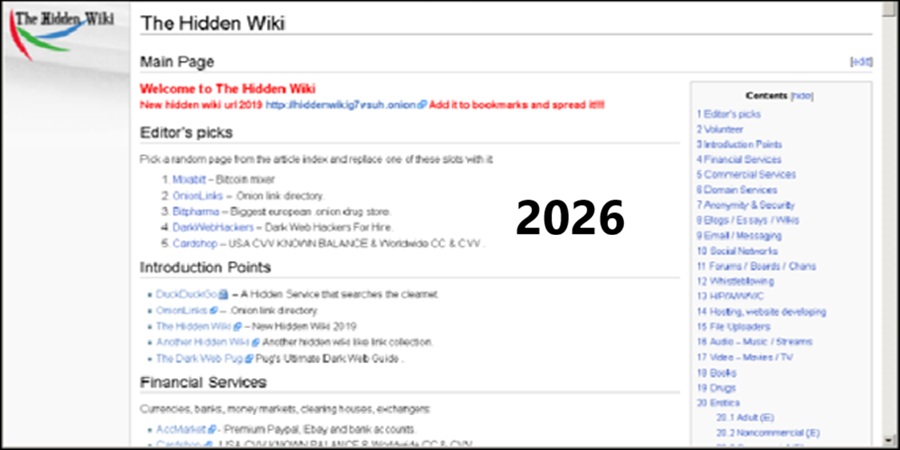
Searches for Hidden Wiki, Hidden Wiki 2026, and Hidden Wiki links usually want one thing: a current, trustworthy directory of .onion sites. That demand is exactly why clones and stale lists thrive.
This page serves as a reference and evaluation center, rather than just a collection of “working links.” If you’re looking for a more in-depth introduction, begin with the cornerstone:Understanding the Hidden Wiki.
The Hidden Wiki is best understood as a directory model and a reusable brand—not one permanent official website.
Year labels (2025, 2026) are often marketing, not governance.
Safer discovery usually means onion search engines + verification—not random wiki mirrors.
Torzle doesn’t share live high-risk market menus. Make sure to use Official Tor Browser installations and run scam checks before diving into any unknown onion pages.
What Is the Hidden Wiki?
The Hidden Wiki is a long-running name for Tor-oriented pages that list onion links in categories—similar in spirit to a human-edited directory. Over time, many unrelated operators reused the name, layout, and reputation.
So when people ask what is the Hidden Wiki, the accurate answer is: a style of onion directory and a cultural label inside Tor discovery, not a single certified institution. Full background: Understanding the Hidden Wiki.
For a broader explanation of the different layers of the internet, see Torzle's guide to the surface web, deep web, and dark web.
Why Is It Called the Hidden Wiki?
The name combines a wiki-style information directory with Tor's hidden-service environment.
The term became widely known through directories that organized hard-to-discover .onion services.
"Hidden" does not mean the listings are secret, trustworthy, or anonymous; it refers to the network environment where onion services operate.
Does the Hidden Wiki Still Exist?
Pages branded Hidden Wiki still appear in 2026. That is not the same as “the original one is alive and official.” Many copies are:
- Republished lists with old links
- Phishing mirrors after outages
- SEO pages on the clearnet ranking for Hidden Wiki keywords
- Partial forks that keep the name and change the content
The useful research question is not “which Hidden Wiki is real?” It is “what evidence supports this particular page’s claims today?”
Why 2025 and 2026 Versions Multiply
Year-stamped titles—Hidden Wiki 2025, Hidden Wiki 2026—match how people search. They rarely prove editorial control, continuous ownership, or fresh verification.
Directories, mirrors, search results, archives, and third-party references can all persist at different speeds. A page describing the Hidden Wiki in 2025 may therefore remain visible in 2026 even when parts of its underlying information are no longer current.
Treat year labels as search packaging. Continuity still requires dates, sources, and independent checks— onion links verification guide.
How the Hidden Wiki Directory Model Works
The directory model organizes resources into categories, making them easier to find than through unstructured browsing.
Categories may include privacy, communication, journalism, research, forums, search, archives, and other services.
A key weakness is that directory information can quickly become outdated.
| Layer | What it is | Evaluation tip |
|---|---|---|
| Brand | “Hidden Wiki” name and familiar layout | Easy to copy; weak proof of trust |
| List content | Categorized onion addresses and notes | Ages fast; can include traps |
| Operator claims | “Official,” “updated,” “verified” | Demand primary evidence |
| Clearnet satellities | Blogs and ads ranking for Hidden Wiki links | High clone/scam pressure |
Directories are not the same as crawlers. For discovery, compare dark web search engines and onion search options.
Hidden Wiki Clones and Scams
Common failure modes:
- Address impersonation — one-character changes
- Post-outage mirrors — “new official links” during panic
- Support social engineering — strangers offering “working” replacements
- Stale authority — old screenshots sold as current truth
Pattern guides: scam detection techniques, post-takedown re-formation, Tor scam checklist.
How Researchers Evaluate Hidden Wiki Claims
- Ignore the brand. Evaluate the specific page and date.
- Prefer primary sources for software and known projects over multipage link blogs.
- Cross-check discovery with onion search tools such as Ahmia and comparisons like Haystak vs Ahmia.
- Label roles — directory vs search engine vs forum vs market— forums vs markets.
- Record last-seen dates. Onion addresses churn.
- Do not publish unverified live lists as a public service— responsible reporting.
Which Hidden Wiki Is the Real One?
This is one of the most common questions surrounding the topic, but it does not have a simple URL-based answer.
Because Hidden Wiki has been used as a name by multiple directories and copies, researchers should avoid treating the name itself as proof of authenticity.
Instead, use a provenance-based approach:
- Identify the publisher. Determine who claims responsibility for the directory.
- Check historical context. Determine whether the page has a documented relationship to the directory it claims to represent.
- Compare independent references. Look for corroborating information from reputable research sources.
- Check freshness. Determine whether the page distinguishes current information from historical entries.
- Look for inconsistencies. Unexpected redirects, suspicious branding, excessive advertising, or unusual requests can indicate an unreliable source.
Hidden Wiki Alternatives (Better Discovery Paths)
| Need | Better path | Resource |
|---|---|---|
| Filtered public .onion search | Onion search engine | Ahmia |
| Compare Tor search tools | Multi-engine hub | Dark web search engine hub |
| Verification method for onion links | Curated criteria, not wiki clones | Onion links guide |
| Deep primer on the wiki model | Pillar guide | Understanding the Hidden Wiki |
| Safe collection habits | Monitoring discipline | Safe monitoring |
Related Torzle Pages
- Understanding the Hidden Wiki
- Onion services explained
- Install Tor Browser safely
- Tor Browser safety tips
- Tor search engines guide
- Hidden Wiki guides index
FAQ
What is the Hidden Wiki?
A known directory-style format for listing onion links by category—and a name reused by many unrelated copies.
Is there one real Hidden Wiki?
No single globally authoritative copy exists for researchers to trust by brand alone.
Is the Hidden Wiki safe?
Not by default. Clones, stale links, and scams are common. Safety depends on verification and Tor hygiene.
Do Hidden Wiki 2025 or 2026 editions mean official updates?
Usually no. Year stamps often follow search demand more than formal version control.
What should I use instead of random Hidden Wiki links?
Official project sources where relevant, onion search engines for discovery, and a documented verification process for any address you must handle.
Next Step
Read the pillar Understanding the Hidden Wiki for full context, then use the dark web search engine hub when your goal is discovery rather than directory folklore.