Best Dark Web Sites Worth Visiting in 2026: Safe & Legitimate Onion Sites
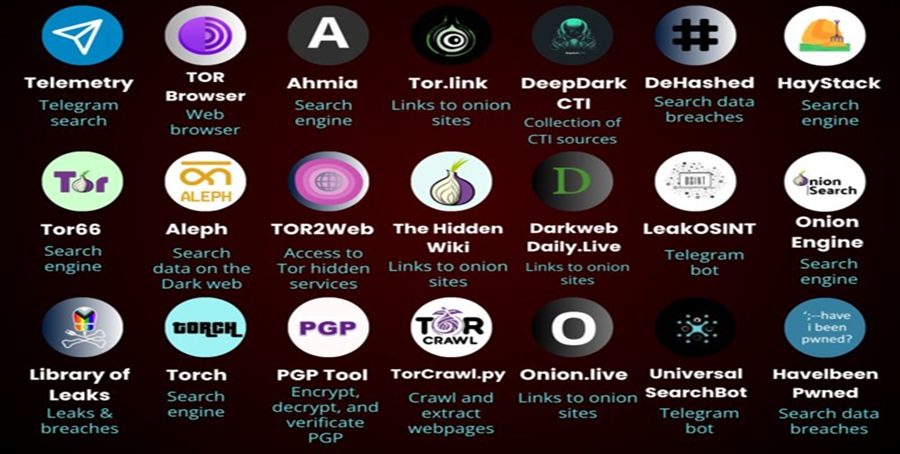
Looking for the best dark web sites does not have to mean searching through questionable directories or visiting illegal marketplaces. The Tor network also hosts legitimate services run by journalists, privacy organizations, researchers and other established groups.
In this guide, we focus on useful and legitimate onion services worth knowing in 2026. The list includes privacy-focused search, journalism, SecureDrop resources and other services with a clear public purpose.
Quick Answer: What Are the Best Dark Web Sites?
Some of the most useful legitimate services include Ahmia for searching publicly accessible onion services, DuckDuckGo for privacy-focused search through Tor, and official SecureDrop services operated by news organizations such as ProPublica and The New York Times.
The important point is that the best dark web sites are not necessarily hidden marketplaces or anonymous forums. For ordinary users, the most useful onion services are often the ones that provide privacy, journalism, research or secure communication.
What Is the Dark Web?
The dark web is a part of the internet that is intentionally hidden from normal search engines and requires special software or networks to access. One of the best-known systems for accessing it is Tor.
Tor uses a network of relays to make it harder for websites and network observers to connect your activity directly to your IP address. Onion services take this idea further by allowing websites to operate inside the Tor network.
If you are new to the subject, our guide to the dark web explained is a useful place to start.
Dark Web vs. Deep Web
These two terms are often confused. The deep web includes ordinary online content that search engines do not index, such as private email accounts, company intranets and online banking pages.
The dark web is a much smaller part of the deep web that is intentionally hidden and generally requires special software or networks to access.
See our guide to the different parts of the internet for a more detailed comparison.
Best Dark Web Sites Worth Visiting in 2026
The following services are selected because they have a legitimate purpose. We have deliberately avoided recommending marketplaces, stolen-data services, malware sites or other destinations associated with criminal activity.
1. Ahmia — Onion Search Engine
Ahmia is one of the better-known search engines for publicly accessible Tor onion services. It is designed to make legitimate onion services easier to discover without requiring users to rely entirely on random link lists.
Ahmia says its goal is to provide search for services on the Tor network. It also maintains filtering and abuse-reporting systems and publishes information about indexed onion domains.
This makes Ahmia particularly useful for people who want to research the Tor ecosystem without depending on unverified directories.
Best for: Finding and researching publicly accessible onion services.
Safety tip: Search results should never be treated as proof that a destination is trustworthy. Verify important services independently.
Learn more with our Ahmia search tips.
2. DuckDuckGo — Privacy-Focused Search
DuckDuckGo is a mainstream privacy-focused search engine that also provides a Tor onion service. This is useful for people who want to perform ordinary web searches while using Tor.
Unlike an ordinary dark web directory, DuckDuckGo is primarily a conventional search service with an additional Tor-accessible option.
It can therefore be a useful starting point when you are interested in privacy rather than hidden services themselves.
Best for: General web searching with a privacy-focused service through Tor.
3. ProPublica SecureDrop
ProPublica is an independent nonprofit newsroom known for investigative journalism. Its SecureDrop system gives potential sources a way to communicate with the newsroom using a system designed for secure and anonymous submissions.
ProPublica explains that its SecureDrop infrastructure is under its direct physical control and is designed to minimize identifying information collected from sources.
This is a good example of why the dark web can have a legitimate social purpose. Onion services are not only about anonymous browsing; they can also help journalists and sources communicate when privacy matters.
Best for: Sources who need to learn about ProPublica's secure submission process.
4. The New York Times SecureDrop
The New York Times also operates a SecureDrop instance for sources. The official SecureDrop directory records the service and provides instructions for verifying the correct onion address.
This is another example of a legitimate onion service with a clear purpose: allowing potential sources to communicate with a major newsroom through a system designed around privacy.
Best for: People looking for the official secure-source submission route for The New York Times.
Always begin with the organization's official tips page or the official SecureDrop directory before attempting to use a submission service.
5. SecureDrop
SecureDrop itself deserves a place on this list. It is an open-source whistleblower submission system used by media organizations and NGOs to accept documents and messages from anonymous sources.
SecureDrop is maintained by the Freedom of the Press Foundation. Its directory lists active SecureDrop instances operated by participating organizations.
The project is particularly interesting because it demonstrates a practical use for onion services: reducing metadata exposure when a source needs to communicate with a newsroom.
Best for: Understanding secure whistleblower submission systems and finding participating organizations.
SecureDrop's documentation also explains that onion services are used for its source and journalist interfaces.
6. CBC SecureDrop
Canada's public broadcaster CBC is listed in the SecureDrop directory. Its SecureDrop instance provides a secure route for potential sources who need to contact the organization.
The important lesson here is that users should find the correct onion address through the organization's official landing page or SecureDrop's directory rather than copying addresses from an unknown link collection.
Best for: Potential sources looking for CBC's official secure submission service.
7. The Guardian SecureDrop
The Guardian is another major news organization represented in the SecureDrop directory. Its presence shows how established news organizations use privacy-preserving technology for sensitive source communication.
If you need to contact a newsroom about sensitive information, use its official source or tips page first and carefully follow its current instructions.
Best for: Secure communication with The Guardian's journalism team when its official process calls for SecureDrop.
8. Washington Post SecureDrop
The Washington Post is also listed among SecureDrop organizations. Like other newsroom implementations, the service is intended for sources who need a more privacy-conscious way to communicate with journalists.
Best for: Potential sources looking for the Washington Post's official secure submission process.
9. Tor Project Resources
If you want to understand onion services instead of simply visiting them, the Tor Project's documentation is one of the most useful resources available.
Learning how Tor works is more valuable than memorizing a list of onion addresses. It helps you understand what Tor can protect, what it cannot protect and why operational mistakes can still expose information.
Best for: Learning about Tor, onion services and privacy technology.
10. SecureDrop Documentation
SecureDrop's documentation is another useful resource for readers interested in the technology behind anonymous source communication.
It explains how SecureDrop uses Tor onion services and provides documentation for sources, journalists and administrators.
Best for: Learning how privacy-focused submission systems work.
Best Dark Web Sites by Category
| Category | Useful Services | Best For |
|---|---|---|
| Onion search | Ahmia | Finding publicly indexed onion services |
| Private search | DuckDuckGo | Searching the web through a privacy-focused service |
| Investigative journalism | ProPublica SecureDrop | Secure source communication |
| News sources | The New York Times, CBC, The Guardian, Washington Post | Official SecureDrop submission systems |
| Privacy research | Tor Project resources | Learning how onion services work |
| Secure communication technology | SecureDrop documentation | Understanding privacy-preserving journalism tools |
How to Find Legitimate Dark Web Sites
The biggest problem with dark web directories is not finding an address. It is knowing whether the address is genuine.
Onion addresses can be copied, changed or impersonated. A convincing website can still be a phishing page. That is why a good rule is to treat an onion address as something that must be verified, not something that is trustworthy simply because it ends in .onion.
Use the Organization's Official Website
When an established organization operates an onion service, look for information about it on that organization's normal website.
For SecureDrop services, the SecureDrop directory is another useful verification source. Its directory identifies active instances and provides information about participating organizations.
Do Not Trust Random Onion Lists
Random directories can contain outdated, copied or malicious addresses. They may also mix legitimate services with illegal destinations.
If an address matters, verify it from a primary source.
Watch for Lookalike Websites
Phishing is not limited to the normal web. Attackers can create websites that imitate well-known services and attempt to steal passwords, cryptocurrency or other information.
Our guide to social engineering and deception ecosystems explains why convincing online impersonation can be difficult to spot.
Are Dark Web Sites Safe to Visit?
Some legitimate onion services are relatively low-risk, but there is no universal safety guarantee. The Tor network is a privacy technology, not a safety certification system.
A website can use Tor and still contain scams, malicious files, phishing attempts or illegal material.
Common Risks
- Fake onion addresses and phishing sites
- Malicious downloads
- Credential theft
- Fraud and scams
- Outdated or abandoned onion services
- Illegal content
- Attempts to trick visitors into revealing personal information
Simple Safety Rules
- Use the official Tor Browser obtained from the Tor Project.
- Verify important onion addresses through trusted sources.
- Keep Tor Browser and your operating system updated.
- Do not download files simply because a site tells you to.
- Do not enter passwords or personal information into an unverified website.
- Do not assume Tor provides perfect anonymity.
- Leave a site if it asks you to perform something illegal or suspicious.
You can also read our guide to privacy tools for broader online privacy advice.
Does Tor Make You Completely Anonymous?
No. This is one of the most important points to understand before visiting onion services.
Tor is designed to provide strong privacy protections, but your behavior still matters. Logging into an account connected to your real identity, revealing personal information, downloading unsafe files or changing important browser settings can affect your privacy.
Think of Tor as a privacy tool rather than an invisibility cloak.
How Does an Onion Service Work?
An onion service is a website or network service that operates through Tor rather than exposing a normal public web address. Its address ends in .onion.
Connections between Tor users and onion services remain within the Tor network rather than requiring the connection to reach a conventional internet exit server.
This can provide useful privacy properties for both visitors and service operators.
However, privacy technology does not remove the need for normal security practices. You still need to think about phishing, malware, account security and the information you voluntarily disclose.
Why Do Legitimate Organizations Use Onion Services?
There are several good reasons.
Privacy
Onion services can reduce the amount of identifying network information exposed during communication.
Access to Information
In some countries, normal websites or communication platforms may be blocked or monitored. An onion service can provide another way to reach information.
Source Protection
News organizations can use onion services as part of systems designed to protect confidential sources.
Research and Security
Researchers and security professionals can use legitimate Tor services to study privacy technology and understand how hidden services operate.
Dark Web Search Engines: What Should You Use?
If your goal is simply to find legitimate onion services, a curated or filtered search service is generally more useful than a random directory.
Ahmia is particularly relevant because it is designed specifically to index publicly accessible Tor services. Its own documentation explains that it does not host the indexed onion content and provides filtering mechanisms.
For normal internet searches while using Tor, a privacy-focused search engine such as DuckDuckGo can be more appropriate.
Our guide to Tor search engines provides additional background.
What About Dark Web Forums?
Forums are one of the most commonly discussed parts of the dark web, but they require more caution than established public-interest services.
Forums can change operators, disappear without notice and attract scams or malicious users. Some may also contain illegal material or discussions about criminal activity.
For background, you can read our article about the Dread dark web discussion forum.
This article does not recommend criminal marketplaces, illicit services or communities that facilitate illegal activity.
Is Visiting the Dark Web Illegal?
Simply using privacy technology or visiting an onion service is not automatically the same thing as committing a crime. However, laws differ between countries, and illegal activity remains illegal regardless of whether it happens on the surface web, deep web or dark web.
Users should understand the laws that apply in their own country and avoid content or activities that are unlawful.
How to Choose the Best Dark Web Sites
Instead of asking whether a site is popular, consider whether it has a clear purpose and a trustworthy operator.
- Known operator: Is the organization identifiable?
- Official verification: Can you confirm the onion address from a primary source?
- Clear purpose: Does the service explain what it does?
- Security information: Does it provide sensible security guidance?
- Reputation: Is it connected to an established organization?
- Transparency: Does the service provide contact or documentation information?
These criteria are much more useful than simply counting how many people link to a particular onion address.
Dark Web Sites vs. Privacy Tools
Not every privacy goal requires visiting the dark web. A privacy-focused browser, password manager, encrypted messaging service or other security tool may solve your problem without requiring an onion service.
If your main goal is improving everyday privacy, explore our guide to privacy protection apps.
Frequently Asked Questions
What are the best dark web sites in 2026?
The best legitimate dark web sites are generally services with a clear public purpose. Examples include Ahmia, privacy-focused search services, Tor Project resources and official SecureDrop services operated by established news organizations.
What is the most useful dark web site?
It depends on what you want to do. Ahmia is useful for discovering publicly indexed onion services, while SecureDrop is useful for secure source communication with participating organizations.
Are all dark web sites illegal?
No. Legitimate organizations use onion services for privacy, journalism, research and secure communication. However, the dark web also contains illegal services, so users should be selective about what they access.
Can Google index dark web sites?
Traditional search engines generally do not index onion services in the same way that they index ordinary websites. Specialized services such as Ahmia can index publicly accessible onion services.
Can I open an onion site with a normal browser?
Onion services are designed to be accessed through Tor. The safest approach is to use the official Tor Browser rather than unofficial tools or browser extensions that claim to provide access.
Is Tor completely anonymous?
No. Tor provides strong privacy protections, but no technology guarantees perfect anonymity. Your accounts, downloads, browser behavior and the information you reveal can still affect your privacy.
How can I tell whether an onion site is legitimate?
Verify the address through the organization's official website or a trusted directory. Do not assume an address is legitimate simply because it ends in .onion.
Final Verdict: Which Dark Web Sites Are Worth Visiting?
The best dark web sites in 2026 are not necessarily the most mysterious ones. The most useful services are often the legitimate organizations using Tor to solve real privacy and communication problems.
Ahmia is useful for discovering publicly indexed onion services. Privacy-focused search services can provide another way to search the web through Tor. SecureDrop is valuable for journalism and whistleblower communication, while established news organizations provide official onion services for specific privacy-sensitive purposes.
The most important rule is simple: verify before you visit. Onion addresses can change, and an unofficial copy can lead to a phishing site. Use primary sources, keep your software updated and never assume that Tor makes every website safe.
If you want to learn more about privacy, Tor and the dark web, explore the other guides on Torzle.
Sources and Verification
The recommendations in this article were checked against official or first-party resources, including Ahmia's documentation, SecureDrop's official directory and documentation, and official information from participating news organizations.
- Ahmia — official information about its onion search service and indexing policies.
- SecureDrop — official directory of active news and NGO instances.
- ProPublica — official information about its SecureDrop system.
- The New York Times SecureDrop directory entry.
- Tor and SecureDrop documentation covering onion services and security considerations.
Because onion addresses and services can change, readers should verify the current address from the relevant organization's official website before connecting.