Deep Search Guide 2026: How to Find Information Beyond Traditional Search Engines

Most people use search engines like Google or Bing every day to discover information online. However, these traditional search engines only index a portion of the internet. A large amount of online information exists outside normal search results, including private databases, academic resources, password-protected content, and hidden services.
This is where deep search becomes valuable. Deep search refers to methods, technologies, and specialized search tools designed to locate information beyond traditional search engine indexes.
Unlike ordinary web searches, deep search focuses on discovering content that is difficult to find through standard search methods. This includes specialized databases, privacy-focused resources, and, in some cases, websites hosted on anonymous networks.
Understanding deep search requires knowing the difference between the surface web, deep web, and dark web. Each represents a different layer of the internet with different levels of accessibility and indexing.
This guide explains what deep search is, how deep search engines work, and how privacy-focused tools such as Ahmia Search Engine , Torch Search , and Haystack Search Engine fit into the modern search ecosystem.
What Is Deep Search?
Deep search is the process of finding information that is not easily available through conventional search engines. While Google and similar platforms crawl billions of publicly accessible pages, many online resources remain outside their indexes.
These resources may include:
- Private databases and academic repositories
- Archived websites and specialized collections
- Members-only platforms
- Privacy-focused search indexes
- Hidden services accessible through anonymous networks
A deep search engine attempts to organize information from these less-visible parts of the internet and make discovery easier.
It is important to understand that deep search does not automatically mean illegal or dangerous content. Many legitimate organizations rely on deep search techniques for research, journalism, cybersecurity analysis, and protecting online privacy.
Deep Search vs Surface Web Search
Traditional search engines are designed primarily for the surface web. They use automated crawlers to discover publicly available websites, analyze their content, and store information in massive indexes.
Deep search operates differently because much of the information it targets cannot be discovered through ordinary crawling methods.
| Feature | Traditional Search | Deep Search |
|---|---|---|
| Indexed Content | Public websites | Specialized databases and hidden resources |
| Privacy Focus | Often limited | Usually a major priority |
| Personalization | Common | Usually reduced or avoided |
| Hidden Services | Not indexed | Some tools can discover them |
Understanding the Layers of the Internet
To understand deep search, it helps to understand how the internet is structured.
The Surface Web
The surface web contains websites that can be accessed normally through browsers and indexed by search engines. News websites, blogs, online stores, and public pages are examples of surface web content.
The Deep Web
The deep web includes online information that search engines cannot normally index. This includes private accounts, medical portals, online banking systems, subscription databases, and internal company systems.
Most of the deep web is completely legitimate and exists because certain information requires authentication or privacy protection.
For a detailed explanation of internet layers, see our guide: Different Parts of the Internet: Surface Web, Deep Web, and Dark Web .
The Dark Web
The dark web is a smaller section of the deep web that uses anonymity networks such as Tor. Websites hosted on these networks often use special addresses ending in .onion.
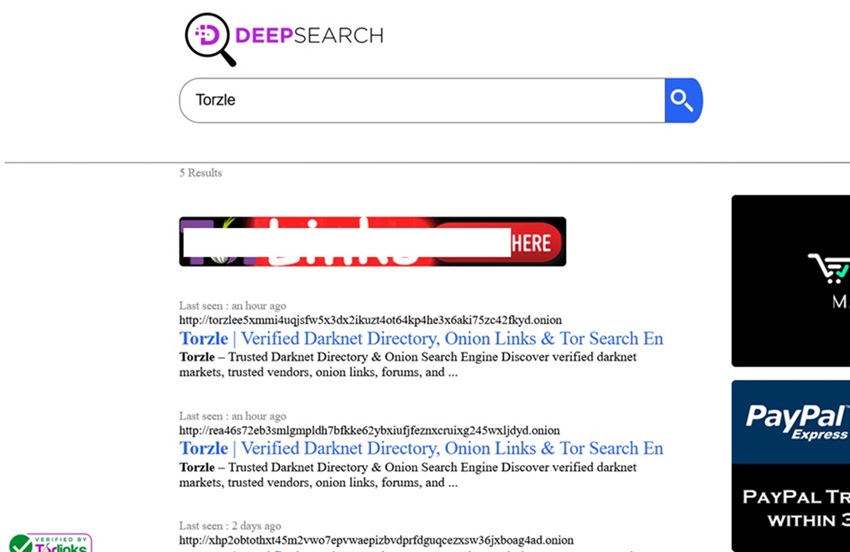
Dark web search engines are specialized examples of deep search tools because they attempt to organize information that traditional search engines cannot access.
How Do Deep Search Engines Work?
Deep search engines use different methods from traditional search platforms. Instead of relying only on standard web crawlers, they may collect information from specialized indexes, community submissions, and privacy-focused networks.
The general process involves several stages:
- Discovering available sources
- Collecting and organizing information
- Creating searchable indexes
- Returning relevant results based on user queries
Because deep web content changes frequently, maintaining accurate indexes can be challenging. Websites may disappear, move locations, or restrict access.
Best Deep Search Engines and Privacy-Focused Search Tools in 2026
The term deep search engine can refer to different types of tools depending on what information a user wants to discover. Some focus on academic databases and specialized indexes, while others focus on privacy protection and anonymous networks.
For users interested in privacy-focused discovery, several platforms provide different approaches to finding information beyond traditional search engines.
Ahmia Search Engine: A Privacy-Focused Deep Web Search Tool
Ahmia Search Engine is one of the best-known privacy-focused search engines designed to index Tor hidden services.
Unlike traditional search engines that focus on public websites, Ahmia specializes in discovering information from the Tor network while attempting to remove harmful or unwanted results from its index.
Ahmia is often recommended as a starting point for users researching hidden web search because it provides a cleaner interface compared with many other onion search tools.
Key characteristics of Ahmia include:
- Focus on indexing publicly available Tor hidden services
- Filtering of some abusive or harmful content
- Simple keyword-based search interface
- Privacy-oriented search experience
For beginners exploring deep web search engines, Ahmia provides a more approachable experience compared with older and less organized alternatives.
Torch Search Engine: One of the Oldest Onion Search Platforms
Torch Search is one of the oldest known onion search engines. It has historically been associated with broad indexing of Tor-based websites.
Torch represents an earlier generation of deep search tools. Its approach focuses on collecting a large number of indexed pages rather than heavily filtering results.
Because hidden services frequently change or disappear, maintaining a large index is a major challenge for any onion search engine.
Common characteristics associated with Torch include:
- Large historical index of onion pages
- Simple search functionality
- Minimal interface design
- Broad discovery capabilities
Users comparing deep search engines often look at Torch alongside newer platforms because of its historical importance in anonymous search.
Haystack Search Engine: Exploring Anonymous Search
Haystack Search Engine represents another approach to privacy-focused discovery.
Haystack focuses on organizing hidden web information through search technology designed for anonymous environments.
Like other deep search platforms, its usefulness depends on index quality, available content, and how frequently information is updated.
Important factors when evaluating Haystack include:
- Search interface simplicity
- Ability to discover hidden resources
- Privacy-focused design
- Ease of use for new users
Deep Search Engines Comparison: Ahmia vs Torch vs Haystack
Different deep search engines have different strengths. Some prioritize filtering and usability, while others focus on broader indexing.
| Feature | Ahmia | Torch | Haystack |
|---|---|---|---|
| Primary Focus | Cleaner hidden service discovery | Large historical index | Anonymous search experience |
| Search Style | Keyword search | Keyword search | Keyword search |
| Filtering | Higher emphasis | Limited | Varies |
| Beginner Friendly | High | Medium | Medium |
| Privacy Focus | Strong | Strong | Strong |
DuckDuckGo and Private Search Alternatives
Not all deep search involves hidden networks. Many users are simply looking for more private alternatives to mainstream search engines.
DuckDuckGo privacy features provide a good example of mainstream private search.
DuckDuckGo focuses on reducing tracking by avoiding personal search profiles. Instead of building advertising profiles based on individual search history, it emphasizes contextual search results.
The difference between DuckDuckGo and deep web search engines is the type of information they discover:
- DuckDuckGo searches the public web with stronger privacy protections.
- Deep search engines focus on specialized indexes and less visible online resources.
- Dark web search engines focus specifically on anonymous networks.
For many privacy-conscious users, combining private search tools with secure browsing practices provides a more complete privacy strategy.
Essential Privacy Tools for Deep Search
A deep search strategy is not only about finding information. Protecting privacy while researching is equally important.
Our guide on the best privacy tools covers important categories such as privacy browsers, encryption tools, and security-focused applications.
Common privacy practices include:
- Using privacy-focused browsers
- Keeping software updated
- Avoiding unnecessary personal accounts during research
- Verifying information from multiple sources
- Understanding how online tracking works
Deep Search and Anonymous Browsing
Deep search and anonymous browsing are closely connected because many users searching beyond traditional indexes are also concerned about privacy.
Anonymous networks such as Tor provide privacy features by routing traffic through multiple relays, helping separate a user's connection from the destination website.
However, privacy tools work best when combined with good security habits. Search engines alone cannot guarantee complete anonymity.
Users researching anonymous networks may also find these resources useful:
Deep Search vs Dark Web Search: What Is the Difference?
The terms deep search and dark web search are often used together, but they describe different concepts.
| Deep Search | Dark Web Search |
|---|---|
| Finding information beyond normal search results | Finding information specifically on anonymous networks |
| Can include databases and private resources | Usually focuses on .onion websites |
| Broader concept | A smaller category within deep search |
Understanding this difference helps users choose the right tool. Someone researching academic resources may need deep search methods, while someone studying anonymous networks may need specialized onion search engines.
How to Perform an Effective Deep Search
A successful deep search requires more than entering a broad keyword. Because deep search engines often work with specialized indexes, the quality of your query directly affects the quality of your results.
Unlike traditional search engines that use extensive personalization and behavioral signals, many privacy-focused search tools rely heavily on the accuracy of the user's search terms.
Use Specific Search Terms
Broad keywords often produce irrelevant results. More specific phrases help narrow the search and improve accuracy.
For example, instead of searching for a general topic, combine multiple descriptive terms that explain exactly what you are looking for.
Understand Search Engine Limitations
No deep search engine contains a complete copy of the internet. Indexes can become outdated because websites change, disappear, or restrict access.
A missing search result does not always mean information does not exist. It may simply mean that a particular search engine has not indexed that resource.
Compare Multiple Sources
Deep search works best when combined with information verification. Different search engines may index different sources, meaning results can vary significantly between platforms.
Researchers often compare information from multiple databases and search tools instead of relying on a single source.
Common Deep Search Mistakes to Avoid
Many users approach deep search the same way they use normal search engines. However, hidden and specialized indexes require a different mindset.
Expecting Google-Like Results
Deep search engines are not designed to replace mainstream search engines. Their purpose is discovering specialized information that may not appear in ordinary search results.
Ignoring Privacy Settings
Privacy-focused searches should be combined with good browsing habits. Browser settings, extensions, account usage, and network configuration can all affect privacy.
Trusting Every Search Result
Search engines provide access to information, but they do not guarantee that every result is accurate, safe, or trustworthy.
Always evaluate sources carefully and avoid interacting with unknown websites without understanding the risks.
Is Deep Search Safe?
Deep search itself is simply a method of finding information. The safety of the experience depends on the tools used, the websites accessed, and the user's security practices.
Privacy-focused search engines can reduce tracking and provide greater control over online activity, but they cannot eliminate every possible security risk.
Good security practices include:
- Keeping browsers and operating systems updated
- Avoiding unnecessary personal information sharing
- Verifying websites before trusting them
- Using reputable privacy tools
- Understanding the difference between privacy and complete anonymity
Deep Search and Online Privacy
The growing interest in deep search reflects a larger shift toward online privacy. Many users are becoming more aware of how search history, browsing habits, and personal data are collected.
Privacy-focused search engines provide an alternative approach by reducing unnecessary tracking and giving users more control over their digital footprint.
Combining private search tools with secure browsing practices creates a stronger privacy foundation.
For users interested in improving their overall privacy strategy, explore our guide: Best Privacy Tools for Secure Browsing .
Frequently Asked Questions About Deep Search
What is deep search?
Deep search is the process of finding information that is not easily discovered through traditional search engines. It may include specialized databases, private resources, and privacy-focused search indexes.
Is deep search the same as the deep web?
No. Deep search is a method of discovering information, while the deep web refers to online content that is not indexed by normal search engines.
Deep search can include methods for exploring deep web resources, but the two terms are not identical.
What is the best deep search engine?
The best deep search engine depends on the user's needs. Ahmia, Torch, and Haystack each provide different approaches to discovering specialized online information.
- Ahmia focuses on organized hidden service discovery.
- Torch is known for its historical onion indexing.
- Haystack provides another privacy-focused search approach.
Can Google search the deep web?
Google indexes a large portion of the public internet, but it does not index most private databases, protected content, or anonymous network services.
Specialized deep search tools exist because certain types of information are outside the reach of traditional search engines.
Are deep search engines legal?
Using search engines and privacy tools is generally legal. However, users must follow the laws that apply in their location and avoid unlawful activities.
Do deep search engines track users?
Privacy-focused search engines often attempt to reduce tracking by limiting data collection. However, privacy policies vary between platforms, so users should review how each service handles information.
Why do deep search results change frequently?
Many specialized websites and hidden services change locations, go offline, or update their structure. Because of this, deep search indexes can become outdated faster than traditional web indexes.
The Future of Deep Search
As concerns about privacy, censorship, and information access continue to grow, deep search technology will likely become increasingly important.
Future search systems may combine improved indexing technology with stronger privacy protections, creating more user-controlled ways to discover information online.
The goal of deep search is not simply finding more websites. It is helping users locate valuable information that traditional search methods may overlook.
Conclusion: Understanding the Power of Deep Search
Deep search provides a way to explore information beyond traditional search engines. From specialized databases to privacy-focused search tools, it expands how users discover and interact with online resources.
Tools such as TorZon Market, listing general goods and digital products , Torch , and Haystack demonstrate different approaches to organizing information outside conventional search indexes.
However, effective deep search requires more than a search engine. Understanding internet layers, practicing good privacy habits, and verifying information sources are essential parts of responsible online research.
As the internet continues to evolve, deep search will remain an important concept for anyone interested in privacy, information discovery, and understanding how the modern web is organized.